

Maya went vegan a month ago for ethical reasons, and so far, she feels good. Her kitchen has beans, tofu, leafy greens, whole grains, and fruit. The uncertainty starts in the supplement aisle, where bottles of B12, vitamin D, algae oil, iodine, zinc, calcium, and multivitamins compete for attention. She wants to support her health, but she doesn't want to buy everything on the shelf.
The practical answer to what supplements should vegans take isn't a long universal shopping list. It works better as a three-tier system: core nutrients, conditional supplements that depend on diet, sun exposure, location, and lab results, and food-first nutrients that usually deserve a meal-planning solution before a pill. That approach keeps the plan focused without treating a well-planned vegan diet as inadequate.
Table of Contents
- What Supplements Should Vegans Take A Practical Guide
- Why Vegan Diets Create Specific Nutrient Gaps
- Non-Negotiable Supplements Every Vegan Needs
- Conditional Supplements That Depend on Your Diet and Lifestyle
- Quick Reference Table of Vegan Nutrients and Sources
- Testing Status and Knowing When to See a Clinician
- Smart Shopping Tips for Vegan-Friendly Supplements
- A Simple Tiered Plan You Can Start This Week
What Supplements Should Vegans Take A Practical Guide
Maya is standing in the supplement aisle, comparing bottles of B12, vitamin D, algae oil, iodine, iron, calcium, zinc, and selenium. The practical answer to what supplements should vegans take is not a universal shopping list. It is a three-tier plan: nutrients that require a dependable source, supplements that depend on diet and sun exposure, and nutrients best handled through food first.
Vitamin B12 belongs in the first tier. Anyone avoiding animal foods needs a reliable supply from a supplement or consistently fortified foods. A 2024 review found deficient B12 concentrations in 52% of vegan individuals compared with 1% of omnivores, while typical UK vegan diets in another review provided only 0.5 ± 0.08 micrograms of B12 per day, roughly 10% of the intake in the average UK diet 2024 review of vitamin B12 status in plant-based diets.
Vitamin D often belongs next, especially with limited sun exposure, darker skin, winter conditions, or little fortified food. Vegan D3 made from lichen is one option. Omega-3 from microalgae, iodine, iron, calcium, zinc, and selenium are conditional. Their place depends on the foods eaten regularly, local food fortification, sun exposure, and, for some nutrients, test results.
For example, fortified plant milk, iodised salt, tofu, legumes, seeds, and time outdoors may cover several needs. Someone who avoids fortified foods or iodised salt, has heavy menstrual bleeding, or lives with an absorption condition may need a different plan.
The simplest starting point: buy B12 first, review vitamin D next, then audit your food pattern before adding anything else.
The following guide explains supplement forms, adult dosing ranges, food checks, testing questions, and shopping habits. The goal is a short list matched to your actual routine.
Why Vegan Diets Create Specific Nutrient Gaps
Plant foods provide fiber, protein, minerals, and many vitamins. Nutrient gaps arise for more specific reasons: some nutrients are scarce in unfortified plants, some have lower absorption from plant sources, and others depend on food fortification or environmental exposure.
Vitamin B12 is the clearest example. Plants don't reliably manufacture or store the active B12 humans need, so unfortified beans, grains, vegetables, mushrooms, seaweed, and nutritional yeast can't be treated as dependable sources. In the review cited above, subnormal B12 status appeared in 50% to 70% of vegetarians or vegans across several countries, showing why fortified foods and supplements matter B12 evidence review.
Vitamin D follows a different pathway. The body can produce it through sunlight, but dietary sources are limited, and sun exposure varies with season, latitude, clothing, skin pigmentation, and time spent outdoors. Plant-based diets can therefore remain low in vitamin D even when someone eats a broad range of whole foods.
Absorption changes the calculation
Iron and zinc exist in legumes, tofu, seeds, nuts, whole grains, and leafy greens, but plant foods also contain phytates that can reduce mineral absorption. This doesn't make plant sources useless. It means preparation and meal combinations matter, and a blood test is more informative than guessing from a food label.
Pairing lentils or tofu with peppers, citrus, broccoli, or another vitamin C-rich food can support non-heme iron absorption. Soaking, cooking, fermenting, and sprouting can also improve the usability of minerals in some foods.
Calcium often depends on whether a person chooses fortified plant milk, fortified yoghurt, calcium-set tofu, or greens with useful calcium availability. Iodine is similarly pattern-dependent. Iodised salt can provide a consistent source, while the iodine content of seaweed varies and shouldn't be approached casually.
Long-chain omega-3 fats add another layer. Flax, chia, hemp, and walnuts provide ALA, but the body must convert ALA into EPA and DHA. A microalgae supplement supplies EPA and DHA directly, without relying on conversion.
Non-Negotiable Supplements Every Vegan Needs
Vitamin B12 belongs in the starter kit
If your usual meals contain no animal products, set up a dependable B12 routine from the start. A systematic review found vegan B12 intake of only 0.24 to 0.49 micrograms per day, compared with the 2.4 microgram daily recommendation systematic review of vitamin B12 in plant-based diets. Fortified foods can help, but a dedicated supplement makes intake easier to track.
A practical adult approach is 50 to 100 micrograms of cyanocobalamin daily, or about 2,000 micrograms weekly. Cyanocobalamin is well studied, while methylcobalamin is another widely available form. Tablets, lozenges, liquids, and chewables all work as formats. Choose the one you can take consistently and check that the label states the amount clearly.
Nutritional yeast counts only when its label confirms fortification and provides a meaningful amount. Relying on several fortified products every day can create gaps if your routine changes. For comparison, this methylcobalamin supplement shows the kind of clearly labelled B12 product shoppers may encounter.
Vitamin D depends on exposure, but often deserves attention
Vitamin D is more conditional than B12 because sunlight can supply it, while exposure varies with season, latitude, clothing, skin pigmentation, and time outdoors. A review of plant-based diet nutrients describes adult supplementation in autumn and winter at roughly 800 to 2,000 IU daily, depending on individual circumstances review of plant-based diet nutrients.
Choose vegan D3, usually labelled cholecalciferol from lichen. Take it with a meal containing some fat, which can support absorption. If testing shows a low level, or a health condition affects vitamin D metabolism, follow your clinician's different recommendation.
Magnesium does not automatically belong on every vegan's starter list. Someone considering it can compare a product such as Herbswell Magnesium Capsules with their diet, medications, and clinician's advice. That keeps magnesium in the individual review tier rather than treating it as a universal requirement.
Conditional Supplements That Depend on Your Diet and Lifestyle
The conditional tier covers nutrients whose supply depends on your usual food pattern, sun exposure, or lab results. Review a typical week rather than an ideal day. Note whether you regularly use fortified foods, cook with iodised salt, eat legumes and seeds, spend time outdoors, or have previously had low ferritin or vitamin D.
Omega-3 works best as a direct-source decision
Ground flaxseed, chia, hemp, and walnuts provide ALA, an omega-3 fat that the body can convert only in limited amounts. If fortified foods are not part of your routine, an algae-derived EPA and DHA supplement may be a practical choice. A review of plant-based diets describes 250 to 500 milligrams per day of combined EPA and DHA as a vegan-compatible benchmark, although individual needs differ plant-based diet review.
A product such as vegan omega-3 gummies shows one algae-based format shoppers may encounter. Check the Supplement Facts panel for the actual EPA and DHA amounts. The total oil weight on the front label does not necessarily equal the amount of these two fats.
Iodine requires a routine check
Consistent use of iodised salt and suitable fortified foods may cover iodine without a separate tablet. If you avoid iodised salt and rarely eat seaweed, discuss your intake with a clinician or dietitian before supplementing. Kelp products can contain widely varying iodine amounts, so a natural source is not automatically predictable.
Iron should follow evidence, not fatigue alone
Beans, lentils, chickpeas, tofu, tempeh, pumpkin seeds, fortified cereals, and leafy greens provide non-heme iron. Pairing these foods with vitamin C-rich produce at the same meal can support iron absorption. Fatigue has many possible causes, so an iron supplement is better guided by bloodwork showing low iron stores. Unneeded iron can cause side effects and may not suit some health conditions.
Calcium is usually a food-first calculation
Check plant milks and yoghurts for fortification, and choose tofu set with calcium sulfate when available. If your regular meals provide little calcium, a dietitian can assess the gap and help select an appropriate supplement form.
Zinc and selenium vary with the menu
Soaking legumes and sprouting or fermenting grains can improve mineral availability. Zinc deserves closer review when meals rely heavily on refined foods and contain few legumes, nuts, or seeds. Selenium often has a food-based solution, so do not assume a tablet belongs in every vegan routine. Review your regular foods and local guidance first.
Conditional means conditional: these nutrients deserve attention, but they do not all belong in every vegan's shopping basket.
Quick Reference Table of Vegan Nutrients and Sources
Use the table as a screening tool, not a diagnosis. Risk labels describe common planning challenges, not your personal nutrient status.
Vegan Nutrients at a Glance Risk, Food Sources, and Supplement Form
| Nutrient | Vegan Intake Risk | Best Food Sources | Supplement Form if Needed |
|---|---|---|---|
| B12 | High | Fortified foods | Cyanocobalamin or methylcobalamin, regular schedule |
| Vitamin D | Moderate | Fortified foods, suitable sun exposure | Vegan D3 from lichen |
| EPA/DHA omega-3 | Moderate | Fortified foods, ALA foods such as flax and chia | Microalgae EPA/DHA |
| Iron | Moderate | Lentils, beans, tofu, seeds, fortified foods | Only after dietary review and bloodwork |
| Calcium | Moderate | Fortified plant milk, calcium-set tofu, suitable greens | Individualised calcium product |
| Iodine | Moderate | Iodised salt, carefully selected seaweed | Clinician-guided iodine product |
| Zinc | Moderate | Legumes, whole grains, nuts, seeds | Zinc product if intake is consistently low |
| Selenium | Low to moderate | Selenium-containing foods | Usually food-first |
| Protein | Low with varied meals | Legumes, tofu, tempeh, seitan, nuts, seeds | Protein powder when convenient |
Fortified foods can support several nutrients at once, but labels differ. For broader food context, this guide to vitamins found in foods for skin health can help you think about food variety beyond supplement bottles.
This is a starting point, not a diagnosis. Lab values, medications, pregnancy, medical conditions, and changes in diet can alter the recommendation.
Testing Status and Knowing When to See a Clinician
Supplements are more useful when they answer a known need. A new vegan can ask a clinician about a baseline panel that includes serum B12, methylmalonic acid or holotranscobalamin, 25-hydroxyvitamin D, ferritin with CRP, a full blood count, and TSH for thyroid context. The right panel depends on symptoms and medical history, but this combination gives a more useful starting picture than a single vitamin test.
Home B12 spot tests are available, yet their results can be inconsistent. A clinician-ordered blood draw provides a stronger basis for deciding whether the dose and form are appropriate.
Match symptoms with action
Don't treat every tired day as proof of deficiency. Sleep, stress, energy intake, thyroid function, iron status, and many other factors can affect how you feel.
Arrange a clinical appointment if you have:
- Persistent fatigue: Ongoing exhaustion deserves assessment even after you start supplements.
- Tingling or numbness: Tingling in the hands or feet can occur with B12-related nerve involvement.
- Hair shedding with low ferritin: A clinician can interpret ferritin alongside inflammation markers and blood count.
- Heavy menstrual bleeding and pallor: Blood loss can increase the likelihood of iron depletion.
- Unexplained weight changes: These may require thyroid or broader medical evaluation.
- Relevant health conditions: Pernicious anemia, celiac disease, gut absorption problems, and pregnancy change the advice.
People over 60, people taking metformin, and people with gastrointestinal absorption issues may need closer B12 management. A clinician can decide whether a higher dose, a different form, or another treatment route is appropriate.
Retesting after starting a new plan can confirm whether it is working. A common practical approach is to reassess after several months, then move toward periodic review once results are stable, with timing set by your clinician.
Testing isn't an emergency ritual. It's a routine way to replace guesswork with information.
Smart Shopping Tips for Vegan-Friendly Supplements
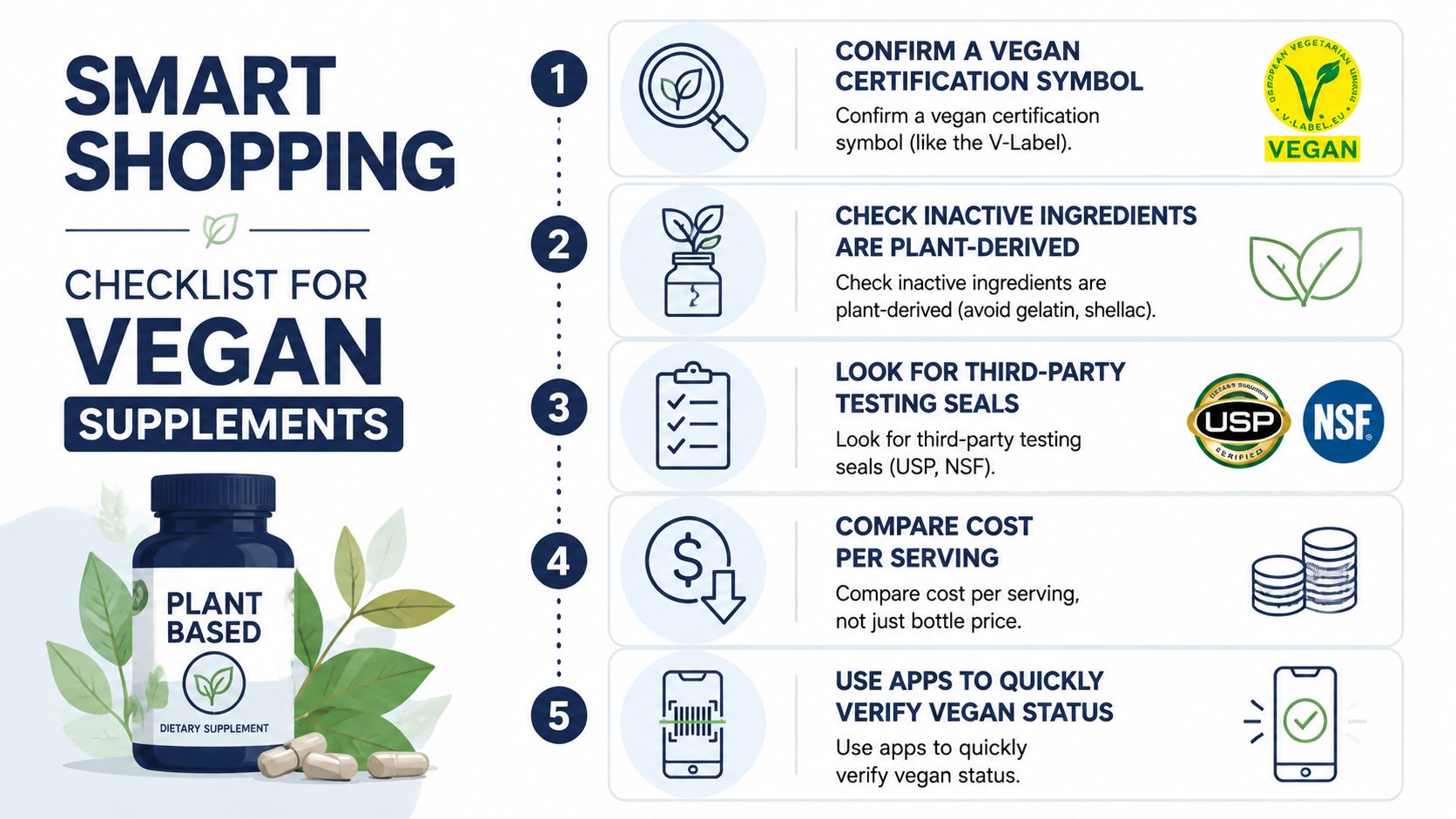
A supplement can be chemically suitable yet still fail your dietary requirements because of its capsule, coating, or inactive ingredients. Start with the label, not the marketing image.
Read the active and inactive ingredients
For B12, look for cyanocobalamin or methylcobalamin and a clearly stated dose. For vitamin D, confirm that D3 comes from lichen rather than lanolin. For omega-3, the source should be microalgae, and the label should show EPA and DHA separately or together.
Iron forms differ in tolerance. Ferrous bisglycinate or ferrous fumarate may be preferable for some people, while calcium citrate can be useful when stomach acid is low. These choices still need to fit your health history, medication schedule, and lab results.
Watch for:
- Gelatin capsules: Common in softgels, including some omega-3 products.
- Shellac coatings: These may appear in tablets or lozenges.
- Unclear blends: Proprietary blends can hide individual amounts.
- Duplicated nutrients: A multivitamin plus separate products may stack B12, vitamin D, zinc, or iron.
- Old lozenges: Check expiration dates and storage instructions.
Decide between a multivitamin and individual products
A multivitamin offers convenience, but it may under-dose the nutrients that matter most for vegans or include nutrients you don't need. Separate B12 and vitamin D products make the dose easier to control, while conditional products should follow your dietary review or testing.
Look for transparent dosing and independent quality checks such as USP, NSF, or ConsumerLab where available. Compare cost per serving rather than bottle price, and don't pay extra for a decorative label that conceals the amounts.
For shoppers who want to compare categories and ingredient-focused products in one place, Supplemynts Inc provides an online supplement marketplace with vegan options, vitamins, minerals, proteins, and purpose-based collections. Use the ingredient list and your personal plan to make the final choice.
A Simple Tiered Plan You Can Start This Week
A manageable first week might mean adding one supplement, checking one food habit, and postponing everything that needs testing. You do not need to rebuild every meal or buy several bottles at once.
Tier one, the foundation: Take a regular B12 supplement. Practical schedules include 50 to 100 micrograms daily or about 2,000 micrograms weekly, depending on the product and your clinician's advice. Add vegan vitamin D if sun exposure or fortified-food intake is limited, using the adult range discussed earlier as a starting point.
Tier two, conditional support: Consider algae-derived EPA and DHA when fortified foods and ALA-rich foods do not make omega-3 intake dependable. Review iodine if you rarely use iodised salt or eat seaweed. Iron, calcium, zinc, and selenium should follow a review of your meals, symptoms, medications, and laboratory results.
Tier three, food-first habits: Build meals around legumes, tofu or tempeh, whole grains, nuts, seeds, vegetables, and fortified foods. Ground flax or chia can add ALA, calcium-fortified plant milk can support calcium intake, and iodised salt may help meet iodine needs when appropriate for your health.
Review the plan yearly. Arrange earlier testing if symptoms or a medical condition raise concern. A short list of well-chosen products is easier to use correctly than several overlapping bottles.
This short video walks through the same three-tier approach step by step.
Supplemynts Inc offers vitamins, minerals, proteins, and vegan-friendly options that can be browsed by ingredient or health purpose. Use its clearly labelled products alongside your diet review and, where appropriate, lab results to choose only the support you need.





Please complete your information below to login.
Sign In
Create New Account