

Taking resveratrol and quercetin together isn't automatically better than taking either alone. The popular advice to pair them for enhanced absorption or longevity moves faster than the human evidence. A useful decision starts with a less exciting question: What outcome are you trying to improve, and has the actual formulation been tested in people?
These plant compounds have credible biological activity, but that doesn't make every capsule, combination, or anti-aging claim credible. Understanding the difference between a swallowed dose, a measured blood level, and a meaningful health benefit will help you judge both the science and the label.
Table of Contents
- Resveratrol and Quercetin at a Glance
- What Human Trials Actually Show
- How These Polyphenols Act in the Body
- Why the Synergy Claim Often Falls Short
- Practical Doses and Formulation Choices
- Safety Flags and Medicine Interactions
- Decide Whether This Pair Fits You
Resveratrol and Quercetin at a Glance
Resveratrol and quercetin are polyphenols, a broad family of plant compounds. Supplement labels often present them as a matched longevity pair, even though they belong to different chemical classes and don't necessarily reach your tissues in the forms pictured on the bottle.
Resveratrol versus quercetin snapshot
| Feature | Resveratrol | Quercetin |
|---|---|---|
| Compound class | Stilbene polyphenol | Flavonol flavonoid |
| Familiar sources | Grapes, red wine, Japanese knotweed | Onions, apples, capers, tea |
| Oral absorption | Substantial absorption can occur | Limited and formulation-sensitive |
| Unchanged parent in circulation | Very little remains unchanged | Much of the absorbed compound becomes metabolites |
| Doses used in human research | Study-specific, including gram-level combination testing | Study-specific daily milligram doses |
| Clearest human signal | Endpoint-specific investigation, not general wellness proof | Blood-pressure findings are more encouraging than weight-loss findings |
| Main caveat | Cell-culture exposure isn't equivalent to human blood exposure | A large labeled dose doesn't establish high systemic exposure |
The compound-class row tells you what these ingredients are, not which is better. Resveratrol is a stilbene, while quercetin is a flavonol, a subgroup of flavonoids. Their food sources also explain why eating these compounds and taking concentrated supplements are different decisions.
Absorption isn't the same as bioavailability
A review of polyphenol bioavailability reports that resveratrol's oral absorption can reach approximately 70–75%, while systemic bioavailability of the unchanged parent compound is about 1%. The same review describes a human beverage comparison in which quercetin uptake was approximately 50% higher with wine than vegetable juice, while resveratrol uptake didn't differ significantly among the tested beverages.
Those findings answer different questions. Absorption concerns movement out of the digestive tract; unchanged systemic bioavailability concerns how much of the original molecule reaches circulation after intestinal and liver processing.
Resveratrol has poor water solubility and undergoes extensive glucuronidation and sulfation. These processes attach chemical groups to the molecule, producing conjugated metabolites. Low unchanged exposure doesn't prove that every metabolite is inactive, but it does mean that experiments using free resveratrol cannot be translated directly into capsule benefits.
Label-reading rule: Milligrams tell you how much an ingredient contains, not how much unchanged compound reaches your tissues.
The beverage comparison isn't a reason to start drinking wine. It's a reason to ask whether a formulation was tested under conditions resembling how you'll use it.
What Human Trials Actually Show
Ask which endpoint was measured, not whether an ingredient is healthy. Body weight, waist circumference, blood pressure, laboratory markers, and disease outcomes are separate questions. A favorable result for one doesn't establish benefits for the others.
The clearest place to start is quercetin and weight management. The human findings don't support treating it as a fat-loss supplement.
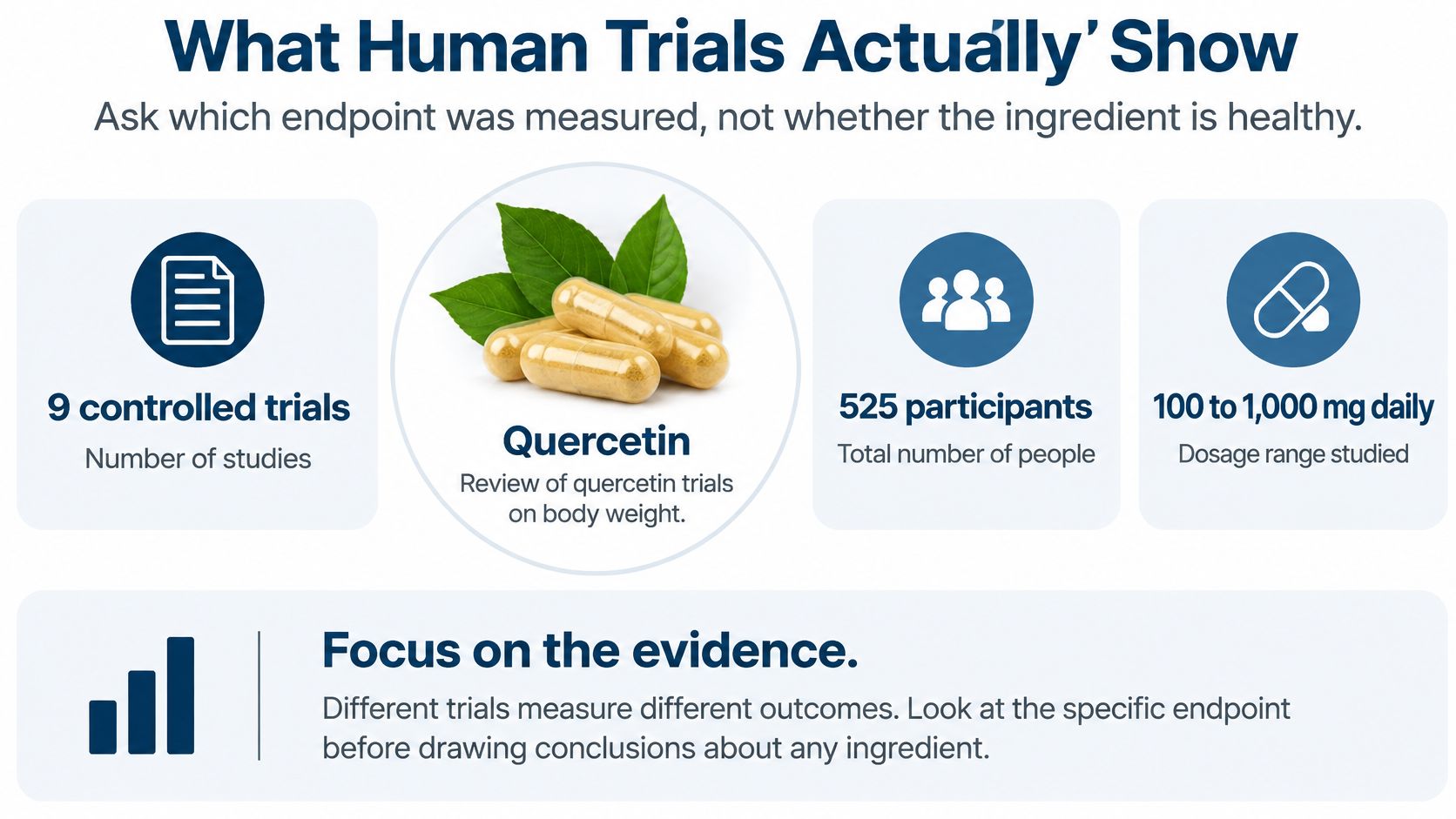
The U.S. National Library of Medicine's quercetin overview summarizes a review of 9 controlled trials involving 525 participants, using 100–1,000 mg daily for 2–12 weeks, that found no effect versus placebo on body weight or waist circumference. It also describes a later analysis of 17 randomized trials involving 896 participants, using 30–1,000 mg daily for 2–12 weeks, that reported statistically significant reductions in systolic and diastolic blood pressure.
Human evidence by question asked
| Question | What was studied | Result | How to read it |
|---|---|---|---|
| Weight or waist size | Controlled quercetin trials summarized above | No effect versus placebo | Not an evidence-based fat-loss choice |
| Blood pressure | Pooled randomized quercetin trials summarized above | Significant systolic and diastolic reductions | Encouraging, but products and populations differ |
| Short-term side effects | The controlled weight-review trials | No drug-related adverse reactions recorded | Reassuring for those regimens, not proof of long-term safety |
| General wellness | Mixed resveratrol investigations involving laboratory and vascular endpoints | No single result establishes broad wellness benefits | Don't substitute wine-related folklore for clinical evidence |
What the blood-pressure result means
Statistically significant doesn't automatically mean clinically sufficient. A pooled result needs context: the starting blood pressure, participants' health conditions, formulation, and accompanying treatment all affect how useful the finding is.
Someone whose blood pressure is already normal shouldn't assume they'll experience the same change as someone with high pressure. Nor does a favorable supplement result give anyone permission to stop prescribed therapy. Blood-pressure treatment requires a plan based on repeated measurements and overall cardiovascular risk.
For resveratrol, questions about metabolic markers, vascular function, and inflammation remain endpoint-specific. A change in a laboratory measurement isn't interchangeable with feeling better, preventing illness, or living longer. There's no sound shortcut from an interesting mechanism to a general anti-aging prescription.
Tolerance has boundaries
The absence of recorded drug-related reactions in short quercetin trials is useful information. It doesn't establish safety during prolonged use, pregnancy, or combinations with prescription medicines.
A useful benefit claim names the outcome, preparation, dose, duration, and population. If a label says only that a blend supports total wellness, it hasn't told you enough to connect that promise to a human trial.
How These Polyphenols Act in the Body
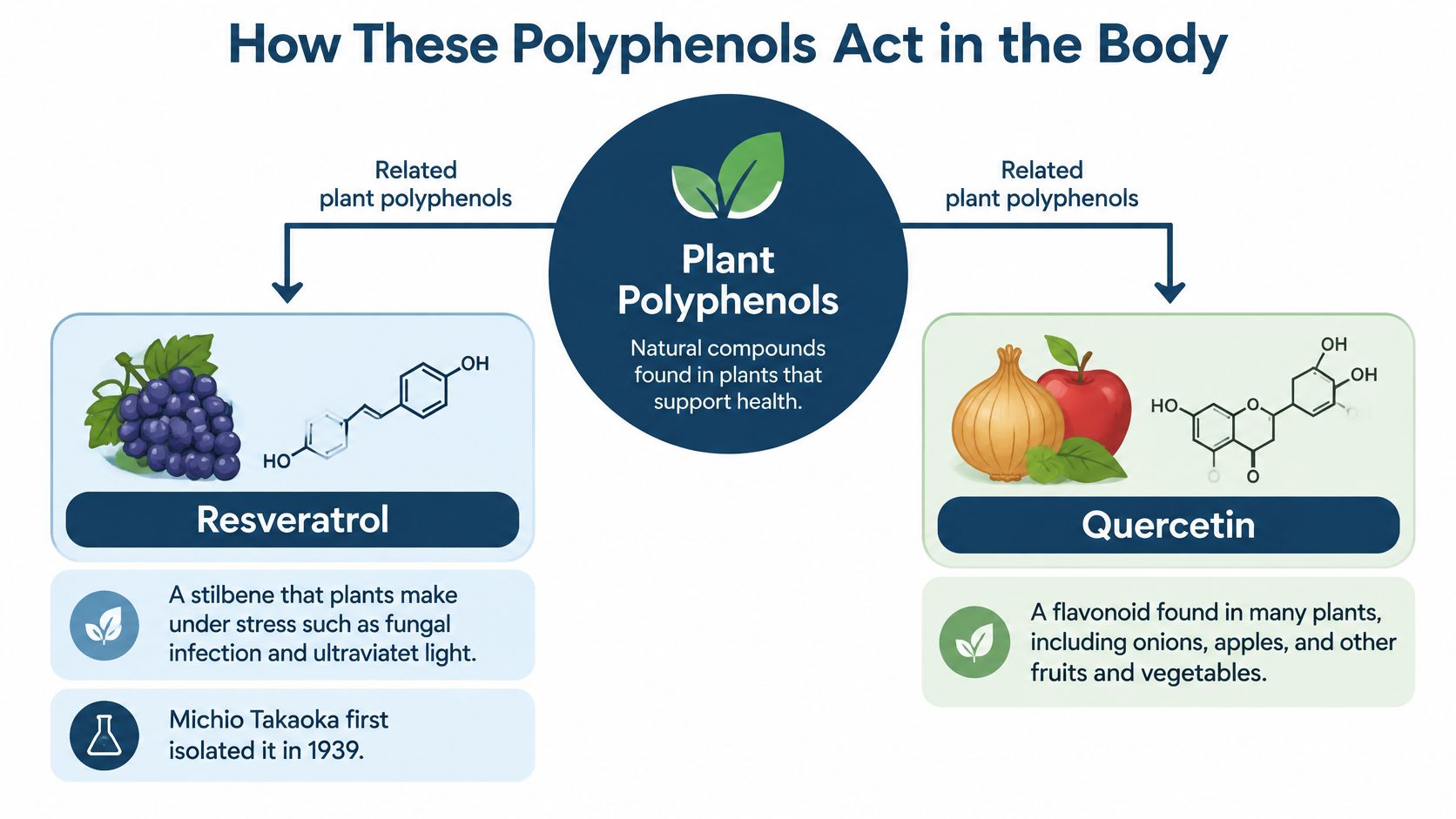
Resveratrol's story began in plant chemistry, not the wine aisle. A review of resveratrol's research history records that Michio Takaoka first isolated it in 1939 from Veratrum grandiflorum, and describes the 1997 report by Jang and colleagues on broad biological activities related to cancer chemoprevention and other disease pathways.
Plants produce resveratrol in response to stresses such as fungal infection and ultraviolet radiation. Quercetin, by contrast, is familiar across everyday foods, including onions, apples, capers, and tea. Neither compound's role in a plant establishes what a concentrated supplement will accomplish in a person.
A mechanism is a testable explanation
Swallowing a capsule is like mailing a letter that the intestine and liver rewrite before delivering it to distant tissues. Researchers therefore need to establish which molecular forms arrive, where they go, and whether the resulting exposure changes a meaningful outcome.
Pathways discussed in aging and metabolic research include:
- Sirtuin and AMPK signaling, involved in cellular energy sensing and stress responses.
- Nrf2-linked defense, involved in regulating the cell's own antioxidant-response machinery.
- Mitochondrial quality control, involving maintenance and removal of damaged cellular energy-producing structures.
- Inflammatory and vascular signaling, possible routes through which these compounds could affect laboratory or physiological measurements.
These are research hypotheses, not a checklist of proven capsule benefits. Changing a pathway in cultured cells doesn't establish rejuvenation in humans.
Sirtuin discussions often lead readers toward NAD-related products. For terminology and context, you can explore the basics of NAD supplements from 10 Rx Home, while keeping that separate from evidence that combining products improves outcomes.
Likewise, a quercetin phytosome product listing identifies a formulation category, not proof that the product reproduces every proposed pathway effect. Research attention establishes scientific interest; a measurable personal benefit requires a different kind of evidence.
Why the Synergy Claim Often Falls Short
Synergy sounds precise, but supplement marketers often use it without specifying what improved. A review discussing resveratrol and quercetin pharmacokinetics describes a human test using 2 g resveratrol with 500 mg quercetin in which quercetin did not alter resveratrol pharmacokinetics; it also reports quercetin absorption estimates of roughly 3–17% in healthy individuals.
That combination result matters because the proposed laboratory explanation sounds plausible. Quercetin can affect enzymes involved in resveratrol metabolism in experimental models, yet the proposed metabolic brake didn't produce a measurable pharmacokinetic advantage in that human test. Stacking poorly absorbed ingredients doesn't automatically solve their delivery problems.
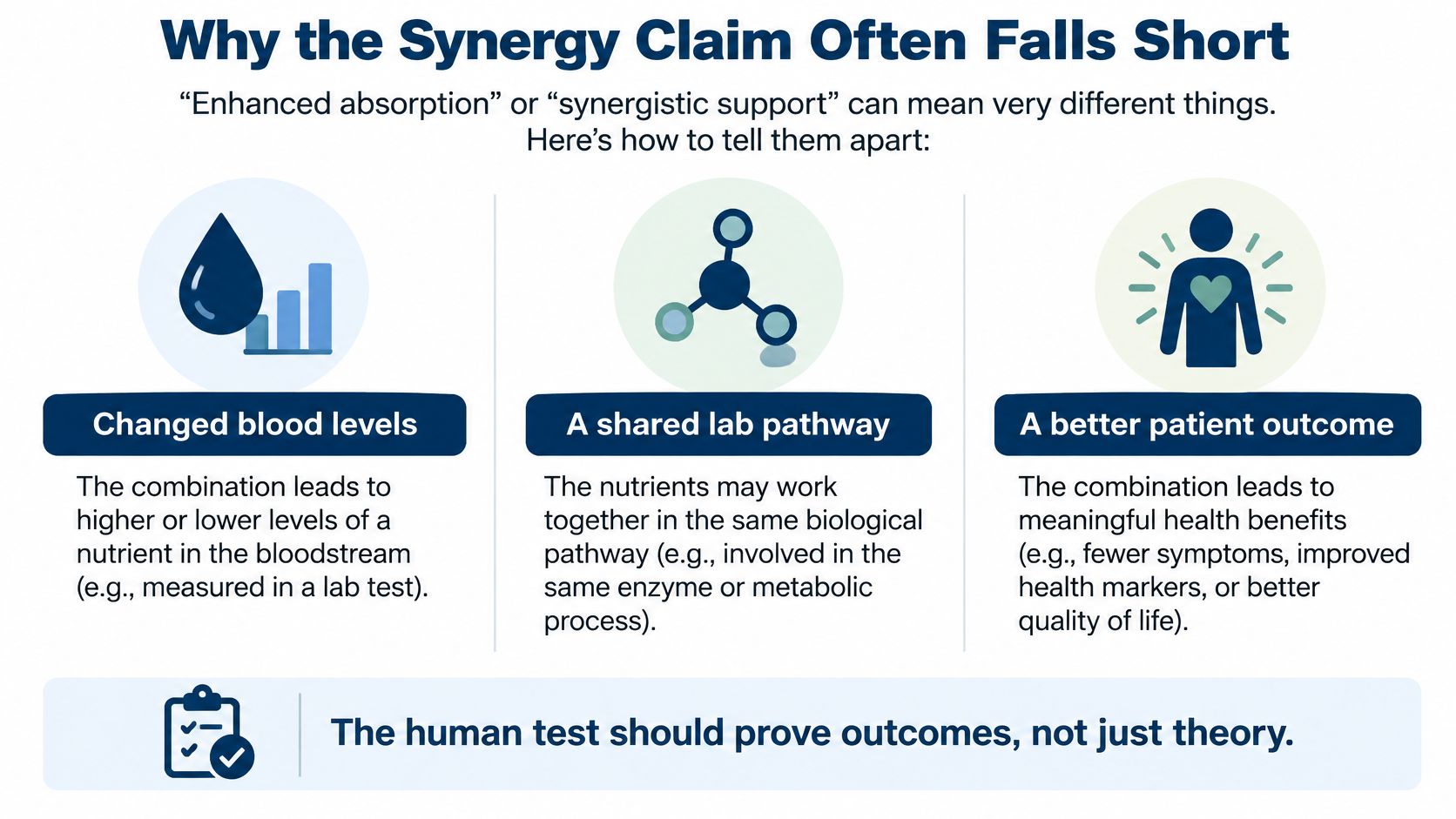
Separate exposure, mechanisms, and outcomes
A claim about changed blood levels is a pharmacokinetic claim. A claim about shared cellular signaling is a mechanistic claim. A claim about improved symptoms or health measurements is a clinical claim.
What a synergy claim must prove
| Claim | Minimum proof | Current human picture |
|---|---|---|
| Enhanced bioavailability | Higher resveratrol AUC or Cmax versus the same resveratrol dose alone | Not demonstrated in the combination test described above |
| Metabolic synergy in cells | A reproducible interaction in a laboratory assay | Doesn't predict oral exposure |
| Clinical synergy | Better outcomes with the combination than either ingredient alone | Not established by a pharmacokinetic study |
| Metabolites detected | Named conjugates measured in blood or urine | Detection establishes exposure, not a health benefit |
AUC, or area under the curve, summarizes exposure over time. Cmax is the highest measured concentration. Even an improvement in either measurement would still leave the clinical-benefit question unanswered.
A shopper's formulation checklist
- Find human testing. A cell experiment can justify further investigation, but it can't establish enhanced absorption in shoppers.
- Check the comparator. The combination should be compared with the same resveratrol dose taken alone.
- Identify the measured molecule. Free resveratrol, total conjugates, and a named metabolite aren't interchangeable outcomes.
- Require ingredient amounts. A blend that hides individual doses prevents a meaningful comparison with tested preparations.
- Separate delivery technology from pairing. Micronization, lipid systems, and food-matrix effects require their own evidence.
A combination may be reasonable when each ingredient has an independent purpose. The fact that they share a capsule isn't evidence of synergy.
The human result doesn't prove that every possible formulation will fail. It does mean that a seller needs formulation-specific evidence rather than relying on an appealing biochemical story.
Practical Doses and Formulation Choices
Choose a supplement by matching its identity and intended use to human evidence, not by selecting the largest number on the front label. There's no established universal dose for this pair, and a research exposure isn't automatically an appropriate starting dose.
Use the actual Supplement Facts panel. A product title, including a fermented resveratrol listing, can help you locate an ingredient, but it doesn't replace checking the serving instructions, standardization, and supporting formulation evidence.
Read the label in a useful order
Identify the chemical form. Look for whether resveratrol is specified as trans-resveratrol and whether quercetin is listed as aglycone, dihydrate, or a delivery complex. Record the amount of the active ingredient, not just the weight of the botanical extract or carrier.
Match the intended outcome. Don't copy a dose from an absorption experiment when your goal is blood-pressure management. Ask whether the product resembles the preparation used for that endpoint.
Reject hidden amounts. Prefer clearly stated individual quantities over a proprietary blend. Standardization should identify what the extract provides.
Check food instructions. Follow the formulation's directions about meals. Don't assume that advice for an ordinary powder applies to an encapsulated or lipid-based preparation.
Change cautiously and measure deliberately. If your clinician agrees a trial is appropriate, decide when to reassess and what would count as benefit, intolerance, or a reason to stop. Avoid adding several supplements simultaneously.
Formulation types and what each can claim
| Form | What it can claim | Evidence needed |
|---|---|---|
| Ordinary powder or capsule | A declared amount of each ingredient | Dose-matched human trials for an outcome claim |
| Food or wine matrix | Exposure may differ by matrix | Human blood or urine measurements using that matrix |
| Micronized or nanoparticle material | A proposed solubility advantage | Human AUC or Cmax comparison with a standard form |
| Lipid or encapsulated system | A proposed change in delivery | Human exposure measurements versus an unencapsulated dose |
Decide how you'll judge the result
For blood-pressure tracking, use a validated upper-arm monitor with the correct cuff size and a consistent measurement routine. Record readings rather than selecting only the best result, and let your clinician interpret them alongside prescribed treatment.
For another target, agree on the relevant laboratory or functional measurement before buying. A vague feeling of detoxification isn't a useful endpoint, and a before-and-after photograph won't establish whether a formulation improved systemic exposure.
Don't pay extra for a technical delivery term unless the seller can explain what was measured in humans. Better dissolution, higher blood exposure, and better health outcomes are different claims.
Safety Flags and Medicine Interactions
Natural doesn't mean interaction-free. Resveratrol and quercetin may influence platelet function, drug-metabolizing enzymes, and transporters. However, an enzyme effect in a laboratory model doesn't by itself prove that someone will experience a clinically important interaction.
The HelloPharmacist interaction assessment flags concerns involving anticoagulant and antiplatelet treatment and identifies quercetin as a potential interactor with warfarin, cyclosporine, some statins, losartan, and certain antibiotics. The evidence isn't equally strong for every medicine, so medication review is more useful than treating the entire list as proven emergencies.
When to review resveratrol and quercetin first
| Situation | Why it matters | Evidence quality | Practical step |
|---|---|---|---|
| Anticoagulant or antiplatelet medicine | Possible added effects on platelets and bleeding | Mechanistic evidence plus clinical concern | Ask the prescriber before starting |
| Warfarin | Quercetin is reported as a potential interactor | Limited evidence, not a large outcome trial | Involve the anticoagulation clinic |
| Cyclosporine, some statins, losartan, certain antibiotics | Possible enzyme or transporter effects | Often theoretical or sparse human evidence | Obtain a medication review |
| Blood-pressure medicines | Possible additional pressure-lowering effects | Human endpoint findings, but combination risk isn't well quantified | Review with the prescriber and agree on monitoring |
| Upcoming surgery | Uncertainty about bleeding and drug handling | Precaution, not an established event rate | Follow the surgical team's stop plan |
| Pregnancy or breastfeeding | Supplemental-dose safety isn't adequately established | Insufficient human evidence | Avoid unless a clinician directs use |
Bring the whole supplement list
A pharmacist needs the product name, serving amount, individual ingredient quantities, other botanicals, and complete medication list. Include over-the-counter medicines, occasional pain relievers, and wellness products you don't consider medicines.
A quercetin-and-bromelain combination listing, for example, should be reviewed as a combination rather than entered into your medication record as quercetin alone. Additional ingredients can change the questions the pharmacist needs to investigate.
Before a procedure: Ask your surgical team when to stop and restart supplements. Don't invent a washout period from general advice online.
Short-term tolerance in selected trial participants doesn't clear long-term use or prescription-drug combinations. People with complex treatment plans need an individualized assessment even when the supplement label gives ordinary adult directions.
Stop a self-directed trial and seek medical advice for unusual bruising or bleeding, severe headache, rash, or a sudden change in a medicine's familiar side effects. Severe or rapidly worsening symptoms need urgent assessment, not an online dose adjustment. Don't independently stop a prescribed medicine to make room for a supplement.
Decide Whether This Pair Fits You
A sensible decision doesn't require you to dismiss plant compounds or accept the longevity story. It requires a clear purpose, a safe medication context, and a way to decide whether continuing is worthwhile.
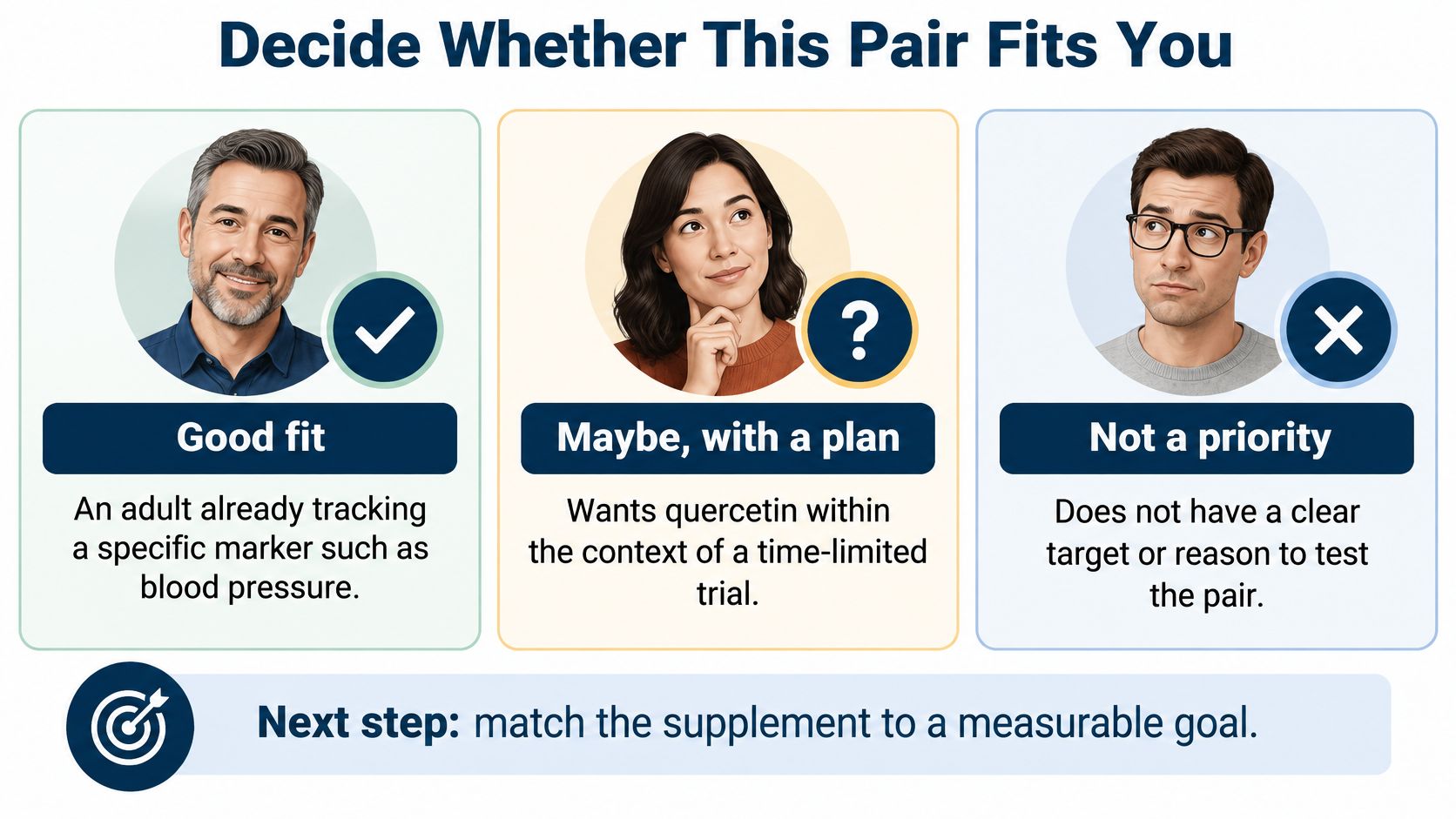
Consider a monitored trial
You're an adult already tracking a relevant marker, you understand the uncertainty, and a medication review hasn't identified a reason to avoid supplementation. A clinician-supported, time-limited trial may be reasonable, particularly when the intended ingredient and outcome match human evidence.
That still doesn't establish a reason to buy both ingredients. Choose each ingredient for its own purpose, rather than assuming the pair deserves a place in your routine.
Choose not yet
Your goal is weight loss, general anti-aging, or an undefined improvement in wellness. Alternatively, the blend hides its amounts or relies mainly on a synergy promise.
In those situations, postpone the purchase. A clear target is more useful than a complicated supplement schedule, and declining an inadequately supported product is a valid nutrition decision.
Don't self-start
You're pregnant or breastfeeding, have surgery planned, or take medicines that require an interaction review. Contact your clinician or pharmacist before adding the pair, including if you already use cardiovascular treatment.
Write down your plan before shopping:
- The purpose: Name the health measurement you hope to change.
- The preparation: Record the ingredient form and proposed serving amount.
- The safety review: List prescriptions, over-the-counter medicines, and other supplements.
- The reassessment: Agree on when to evaluate benefit and what would prompt stopping.
If you can't explain what success would look like, you're not ready to evaluate the supplement. Buy only after the decision makes sense without the marketing language.
At Supplemynts Inc, we offer saw palmetto-based supplements, omega/fish oil products, vegan supplements, probiotic supplements, and powder supplements alongside our broader dietary-supplement selection. Visit Supplemynts Inc with your written ingredient plan, compare labeled forms and serving amounts, and take any unresolved resveratrol and quercetin interaction questions to your pharmacist before purchasing.



Please complete your information below to login.
Sign In
Create New Account