


You're standing in the supplement aisle, turning a tub over in your hands, wondering if it belongs in your cart or back on the shelf. The label promises muscle, recovery, and convenience, but you already eat chicken, eggs, and yogurt, so what would this add? That question is the right place to start, because protein powder benefits depend less on the tub and more on the gap, if any, in your current diet and training.
Table of Contents
- Why People Reach for Protein Powder in the First Place
- How Protein Works Inside the Body
- The Five Real Benefits of Protein Powder
- Whey, Casein, Pea, Soy, and Rice Compared
- How Much to Take and When to Take It
- When More Protein Is Not Better
- How to Spot a High-Quality Protein Powder
Why People Reach for Protein Powder in the First Place
A busy trainee finishes a morning workout, showers, and rushes to work with no time to cook eggs or blend a proper breakfast. A shake takes a minute, travels well, and delivers a measured serving. That small moment explains most purchases better than any label claim.
Protein powder is a concentrated, shelf stable source of protein made from foods like milk, eggs, soy, peas, or rice. It is not a separate nutrient and it is not uniquely anabolic. Think of it as a delivery format, similar to how canned beans deliver legumes without soaking and simmering.
Who tends to find it useful
Different people reach for it for different practical reasons, and the pattern is usually about consistency rather than magic.
- People who lift regularly: Training raises the value of hitting a higher daily total, and a serving after a session is easy to repeat.
- Busy professionals and travelers: Powder needs no refrigeration before mixing and no cooking, unlike meat, dairy, eggs, or legumes.
- Older adults: Appetite and chewing comfort can make large protein rich meals harder, so a small drink can close a shortfall.
- Plant based eaters: A pea or soy powder can add protein without planning every meal around tofu or lentils.
None of that means food is inferior. Whole foods bring fiber, vitamins, minerals, and satiety that a shake does not fully replace. Powder earns its place when meals consistently fall short, when schedules are tight, or when you want a predictable serving before work.
Price matters too. A tub only makes sense if you use it on low protein days instead of letting it sit behind the oats. Some readers also plan recovery more broadly, for example when they find optimal recovery supplement options alongside training, sleep, and food choices.
If your meals already meet your target most days, powder mainly buys convenience. If they don't, it can buy adequacy.
That distinction sets the tone for everything that follows. The benefit is not the scoop itself. It's whether the scoop helps you reach an evidence based total, with a complete protein, on days when food alone is not getting you there.
How Protein Works Inside the Body
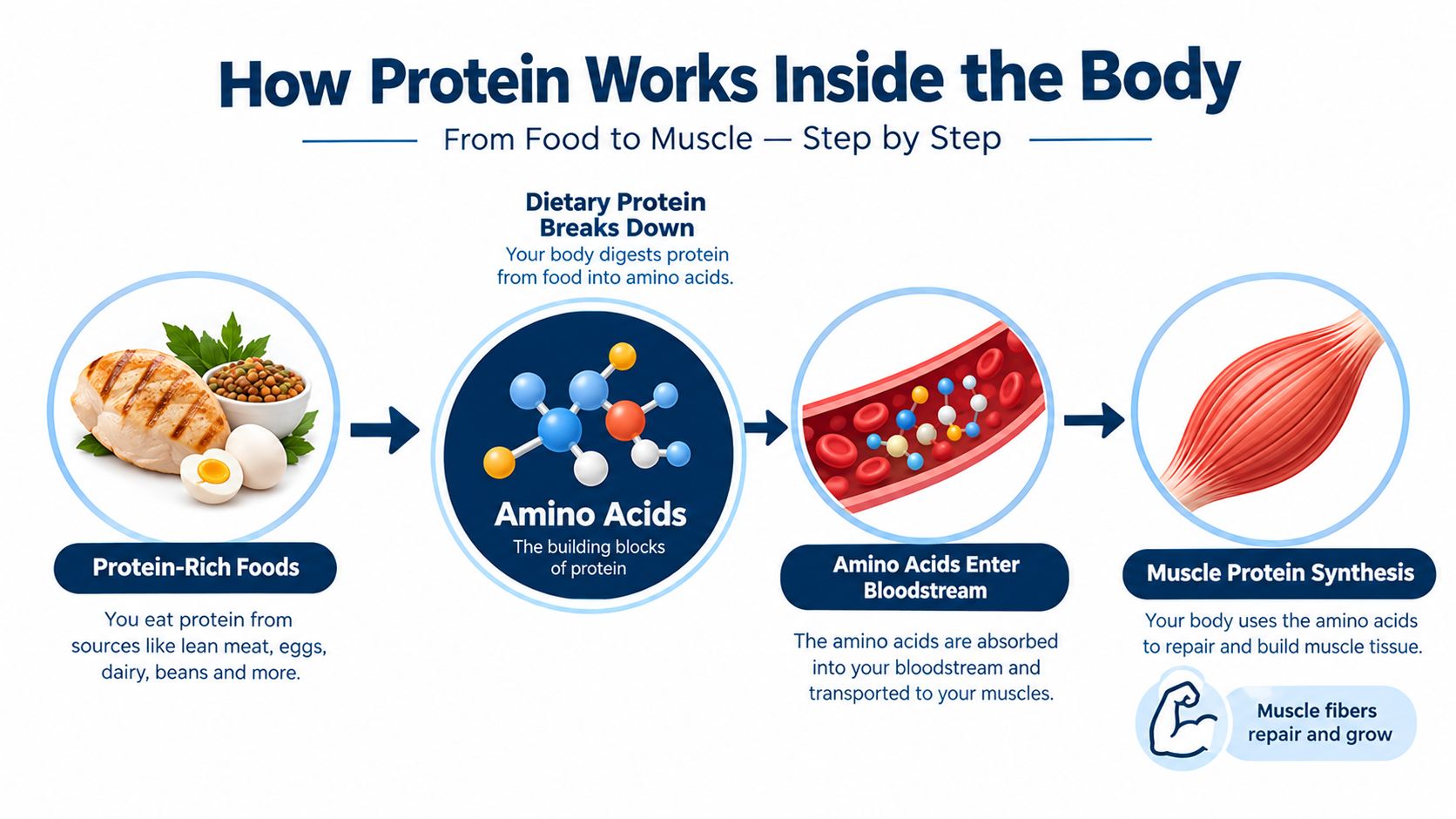
When you eat protein, digestion breaks it into amino acids, the small building blocks your body reassembles into muscle, enzymes, immune proteins, skin, and other tissues. Some amino acids are essential amino acids, meaning you must get them from food because your body cannot make enough of them. A complete protein supplies all of them in useful proportions.
The diagram below maps that journey from a meal to repaired muscle fiber.
The construction crew analogy
Muscle protein synthesis, often shortened to MPS, is your body building new muscle protein. Protein provides the bricks, resistance training sends the work order, and total calories, sleep, and rest pay the crew and keep the site running. Without the work order, extra bricks mostly sit unused or get burned for energy.
Leucine gets special attention because it helps switch MPS on, like a foreman signaling the crew to start. That does not mean leucine alone builds the wall. You still need the full set of essential amino acids, which is why products such as NOW Sports branched chain amino acids capsules are a different tool from a complete protein serving that supplies the whole building kit.
Why the daily total matters most
Age changes the math. A 2022 systematic review and meta-analysis on added protein during resistance exercise found small extra gains in lean body mass and lower body strength, with significant lean mass benefits for adults aged 65 and older at roughly 1.2 to 1.59 g per kilogram per day, and for younger adults at at least 1.6 g per kilogram per day.
That review is useful because it keeps expectations honest. The added gains were small, and they depended on resistance exercise, not on powder by itself. A sedentary adult who already eats enough protein should not expect a shake to remodel muscle without a training stimulus.
Think in steps. First, estimate what your meals already provide. Second, compare that with a target that fits your age and training. Third, use food first, and use powder only to fill the remaining gap reliably.
Practical rule: Train to give protein a job, eat enough total energy to support the work, then use powder to make the protein target easier to hit.
The Five Real Benefits of Protein Powder
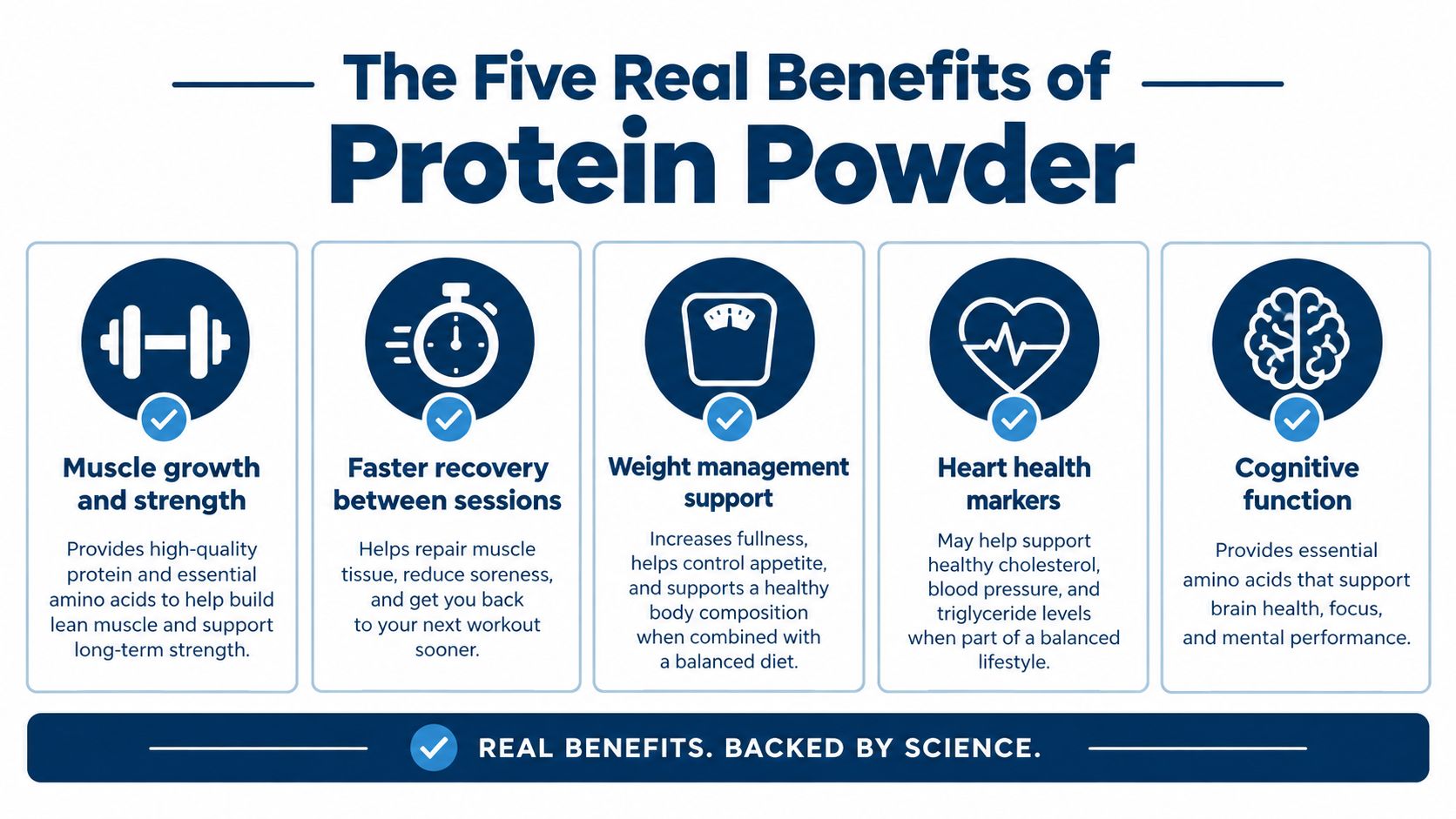
The strongest claims are narrower than marketing suggests, but they're real when baseline intake is low and training is consistent. The infographic below summarizes the five areas where powder can help.
Muscle growth and strength
A 2017 meta-analysis of 49 studies with 1,863 healthy adults found protein supplementation during prolonged resistance training added an average 2.49 kg to one repetition maximum strength and 0.30 kg to fat free mass compared with training alone. Those are modest, meaningful gains, not a transformation from the scoop alone. Progressive overload still does the heavy lifting.
Readers who track that overload in an app may find the GrabGains muscle building app useful for logging sessions, because protein only helps when the training signal is progressing.
Recovery between sessions
After hard training, muscle tissue needs amino acids to repair and remodel. A protein serving supports that process, especially when the next proper meal is hours away. It won't erase soreness or replace sleep, and it won't fix a program that is too much, too often.
Some athletes also look at adjacent recovery ingredients, such as NOW Sports HMB capsules for sports recovery, but that is separate from meeting total protein first. Get the basics right before adding extras.
The short video below gives a visual walkthrough of how protein fits into post workout recovery.
Weight management, convenience, and older adults
- Weight management support: Higher protein meals tend to be filling, and preserving lean mass during a calorie deficit matters for function and appearance. Powder can help you keep protein up when total calories come down, though it does not cause fat loss by itself.
- Convenience: A measured serving removes guesswork on hectic days. You know roughly what one shake contributes, which makes weekly consistency easier.
- Older adult muscle maintenance: Appetite often drops with age, and small low protein breakfasts are common. Adding powder to oatmeal or yogurt can raise meal quality without requiring a large plate of meat.
Each benefit shares the same condition. Powder helps most when it raises an otherwise insufficient total, and it helps least when it stacks extra calories on top of an already adequate diet.
Whey, Casein, Pea, Soy, and Rice Compared
Most shoppers do not need the perfect protein. They need one they'll tolerate, afford, and use consistently, with a solid amino acid profile for their dietary pattern. Digestion speed matters, but it matters less than total intake over the day.
Protein Powder Types at a Glance
| Type | Digestion Speed | Amino Acid Profile | Best For |
|---|---|---|---|
| Whey concentrate | Fast | Complete, rich in essential amino acids | General use and post workout convenience |
| Whey isolate | Fast | Complete, more filtered, very little lactose | People who want whey with less lactose and fat |
| Casein | Slow | Complete, releases amino acids gradually | Evening use or long gaps between meals |
| Pea | Moderate | Provides essential amino acids, lower in methionine | Plant based eaters, often in blends |
| Soy isolate | Moderate | Complete plant protein | Plant based eaters who want a standalone option |
| Rice | Moderate | Lower in lysine, incomplete alone | Blending with pea rather than solo use |
Dairy options in plain terms
Whey comes from the liquid left during cheese making. Concentrate is less filtered and usually cheaper, with a bit more lactose and fat. Isolate is filtered further, so it's typically leaner and easier for some people with lactose sensitivity, though it is not suitable for a milk protein allergy.
Casein is the other milk protein, and it forms a thicker texture that digests slowly. People often use it in a pudding style snack before bed, not because nighttime protein is magic, but because a slow, filling serving fits that slot. If whey after training and normal meals already cover your day, casein is optional.
Plant options without the confusion
Pea protein is made from yellow split peas and is popular for its neutral place in blends. On its own it is relatively low in methionine, which is why brands often pair it with rice. The blend logic is simple, each covers the other's weaker spot.
Soy protein isolate is the plant option that stands alone most easily because it is complete. Some people avoid it for taste, allergy, or personal preference, and that's fine. Nutritionally, it remains one of the strongest plant choices when total dose is adequate.
Rice protein is hypoallergenic for many people and blends well, but it's low in lysine. Treat it as a supporting player. A pea and rice blend makes more sense for muscle goals than rice alone, especially if powder provides a large share of your daily protein.
Collagen deserves a quick note because it confuses many buyers. It is incomplete, with little or no tryptophan, so it should not be your main muscle focused protein even if you use it for other reasons. Count it differently from whey, soy, or a good plant blend.
Choose by constraints first. Milk allergy rules out whey and casein, lactose intolerance may push you toward isolate or plant options, and a vegan diet points to soy or a pea based blend. Then choose by taste and texture, because the best amino acid profile fails if the shake makes you skip it.
How Much to Take and When to Take It
Labels make dosing sound fixed, but your dose should come from your body weight, your meals, and your goal. Start with the daily total, then decide how many servings, if any, you need from powder. Most confusion disappears once you work in that order.
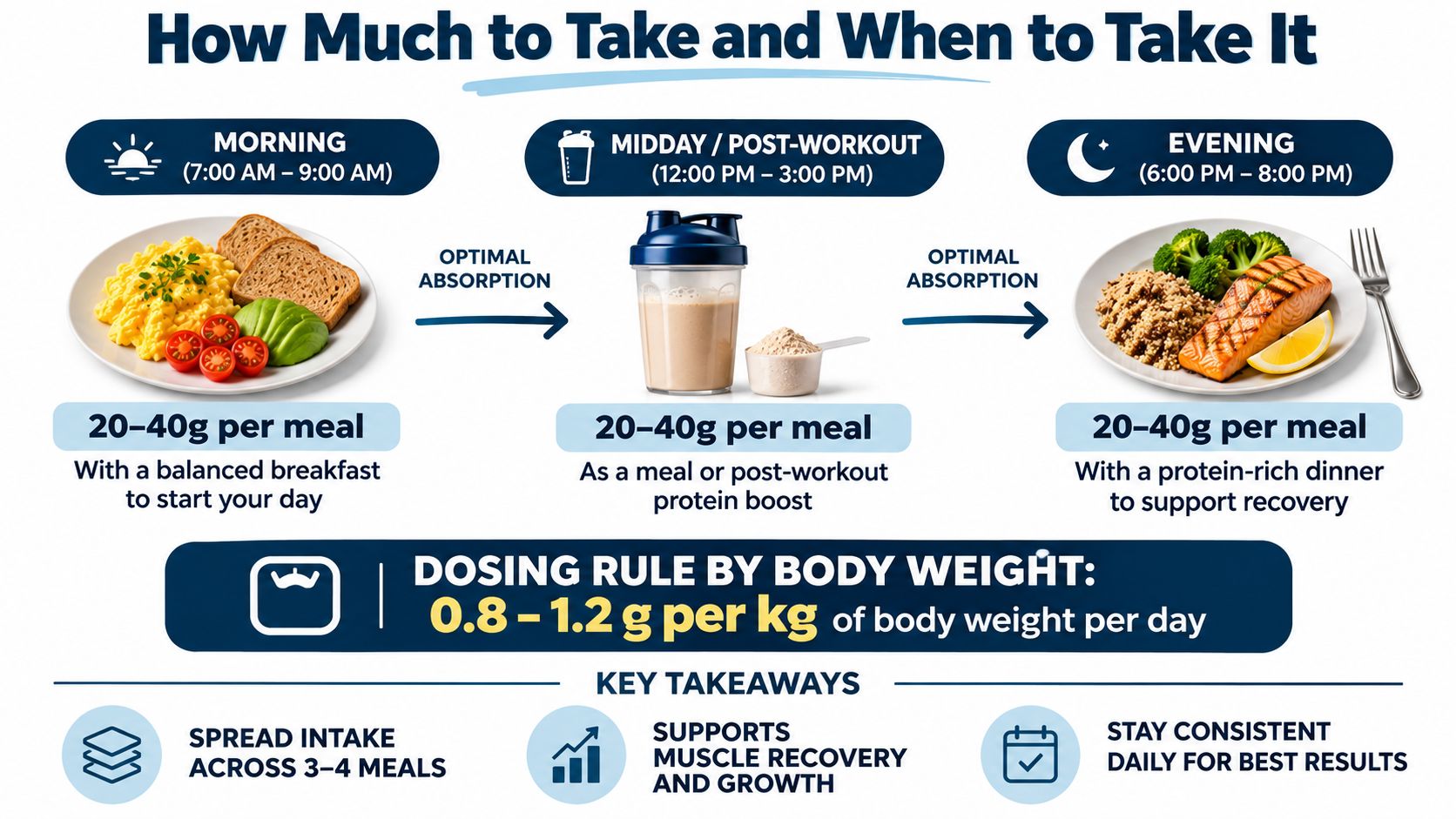
The timeline below shows a practical way to spread intake across a training day.
A body weight rule you can use today
A systematic review and meta-analysis indexed in Nutrition Reviews describes benefits largely plateauing around 1.6 g per kilogram per day in younger adults, with servings around 0.25 g per kilogram. For a 75 kg adult, that works out to about 120 g per day, split into servings of roughly 19 g or more.
Use that as a benchmark, not a command. If lunch and dinner are protein rich, you may need powder only at breakfast. If you're smaller, older, or training lightly, your sensible target may sit lower, and a clinician should guide targets when kidney or liver disease is present.
Products like Anabol Naturals amino balance crystalline powder sit in the amino acid category rather than replacing a full meal plan, so don't count a small amino serving the same way you'd count a complete protein meal.
Timing without obsessing over the clock
- After training: A shake is convenient if your next meal is delayed, but a normal protein rich meal works too.
- At breakfast: This is often the lowest protein meal, so adding powder to oats or a smoothie can fix the weakest link.
- Before bed: Useful if dinner was light and your daily total is short. It is not required if the day already hit target.
Spread protein across several solid meals first. Timing fine tunes a good total, it does not rescue a low one.
When More Protein Is Not Better
Doubling scoops feels productive, but muscle does not scale that way. Once you cover the plateau discussed in the section above, extra protein is mostly burned for energy or contributes extra calories. You pay more, and you may displace fiber rich foods that your gut and overall diet need.
The leucine lesson
Higher leucine on a label can sound like faster growth, but acute signals are not the same as long term tissue gain. A systematic review and meta-analysis on leucine in older people found leucine raised the muscle protein fractional synthetic rate, with a pooled standardized mean difference of 1.08, yet it did not significantly increase lean body mass or leg lean mass.
That is a useful warning for younger trained adults too. Isolated leucine generally does not independently improve mass, strength, or recovery when overall protein and training are already adequate. Buy for a meaningful complete protein dose, not for a single amino acid headline.
Kidneys, digestion, and the bulky myth
Healthy adults usually tolerate higher protein, but context matters. A 2025 review discussing protein intake and kidney considerations notes very high intake has been linked with faster kidney function decline in some older adults with cardiovascular disease, while low intake can also be harmful when kidney function is normal. If you have kidney disease, diabetes with kidney involvement, or liver disease, get an individualized target instead of copying an athlete target.
Digestion is the more common limit. Whey concentrate, large servings, sugar alcohols, and rich flavor systems can cause bloating or loose stools in sensitive people. Smaller servings, isolate, or a plant blend may sit better, and persistent symptoms deserve medical advice.
And no, powder will not accidentally make you bulky. Muscle gain requires sustained training, enough calories, and time. If anything, excess shakes make people gain unwanted weight through extra calories and added sugars, not through sudden muscle.
How to Spot a High-Quality Protein Powder
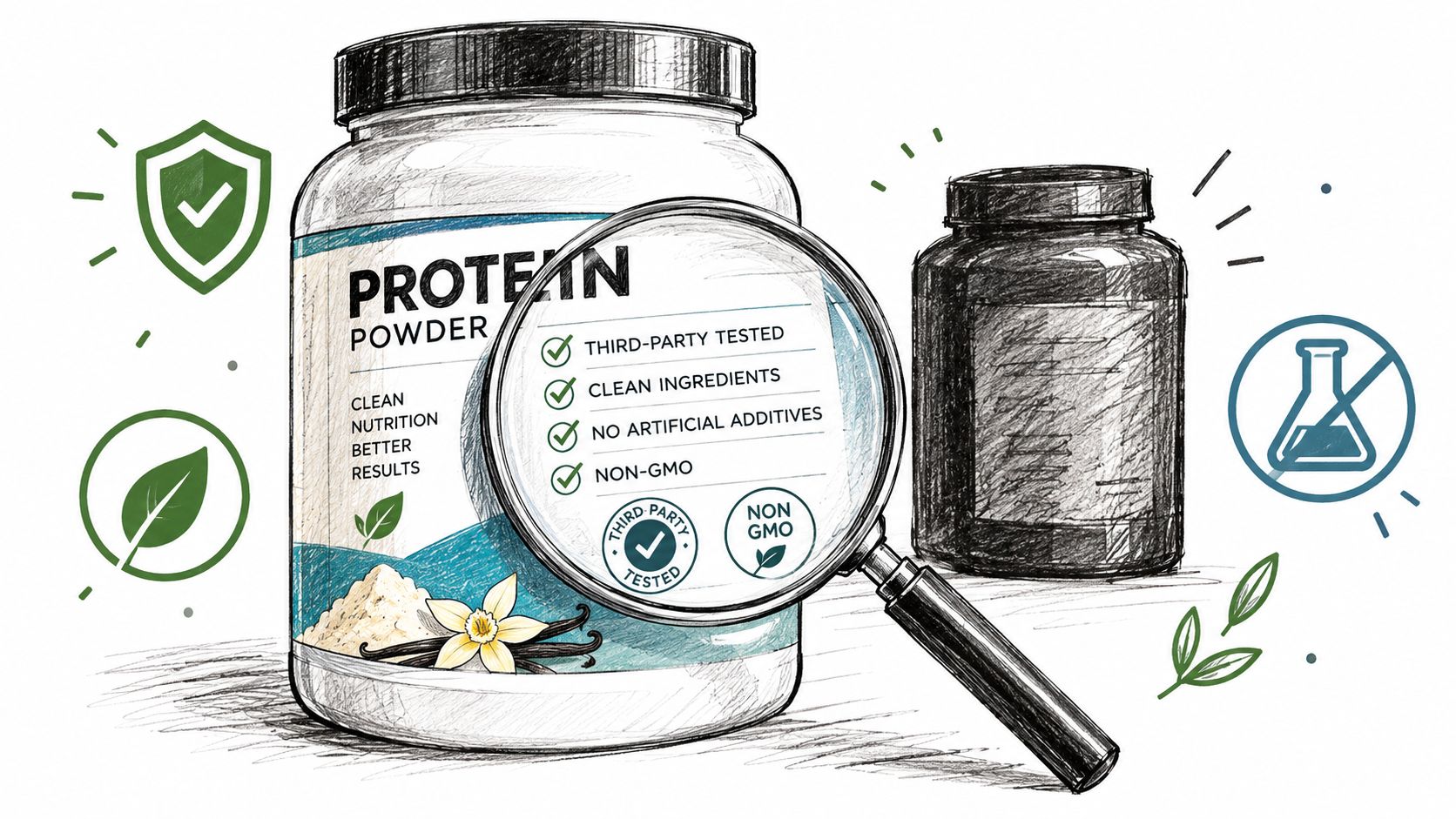
A good product needs to do two jobs, deliver the protein on the label and avoid adding unnecessary risk through poor sourcing or weak testing. That second job gets skipped in most benefit lists. You cannot taste contaminants, so you have to shop by verification.
This illustration captures the idea, put the tub under a magnifying glass before it becomes a daily habit.
What recent testing means for shoppers
In October 2025, Consumer Reports testing of 23 protein powders and shakes reported that more than two thirds exceeded its experts daily lead concern level, and some exceeded it by more than ten times. That was a limited sample, not proof that every powder is unsafe, and it should prompt verification rather than panic.
The regulatory backdrop explains why your own checks matter. The FDA does not generally pretest or approve dietary supplements before sale, and federal rules do not set broad limits for heavy metals in these products. Frequent users, pregnant people, and parents considering products for children should be especially careful.
A short checklist for your next purchase
- Third party certification: Look for programs such as NSF Certified for Sport or Informed Choice, which test identity, potency, and contaminants.
- Certificate of analysis: A current certificate should show what was tested, including heavy metals, and match the product and lot you are buying.
- Protein per serving clarity: Check grams of protein per serving, serving size in scoops, and added sugar, not just big numbers on the front.
- Ingredient complexity: Shorter lists are easier to judge. Be cautious with proprietary blends, stimulants, herbs, or high dose extras you did not intend to take daily.
- Frequency and moderation: Daily use adds cumulative exposure, so rotate with whole food protein and avoid using multiple servings by default when one closes the gap.
Plant based does not automatically mean cleaner, and dairy based does not automatically mean safer. Raw material origin, growing region, and manufacturing controls drive contaminant levels. Verified testing beats source based assumptions every time.
Start with your gap, pick a complete protein that fits your diet, confirm independent testing, and use the smallest serving pattern that consistently hits your target. That is how protein powder benefits stay benefits, rather than becoming an expensive habit with avoidable uncertainty.
Browse the proteins category at Supplemynts Inc to compare powder supplements, including plant based and collagen based options, alongside vitamins, minerals, and other wellness products organized by health purpose. You can shop with free shipping within the continental United States and a 60 day return policy, then choose a verified, complete protein that fits your daily target, training schedule, and dietary needs.







Please complete your information below to login.
Sign In
Create New Account