


What does “N-acetyl cysteine 1000 mg” tell you about the amount your body uses, the effects you can expect, or the safety of taking it every day? The label gives you a fixed quantity of NAC in the serving, but it doesn't tell you how much reaches the bloodstream, whether that amount has been studied for your goal, or whether it resembles medical NAC treatment.
N-acetyl cysteine, usually shortened to NAC, has a dual identity. It's used as a supplement associated with glutathione production, respiratory mucus support, and ongoing research in several health areas. It also has a well-established medical role as an antidote for acetaminophen poisoning. Those uses involve different doses, evidence standards, and levels of supervision.
This guide focuses on dose literacy. You'll learn what a 1,000 mg serving means, why it isn't equivalent to an overdose-treatment protocol, what oral absorption can and can't tell you, how evidence varies by use, and which medication or health factors deserve professional review.
Table of Contents
- Introduction to N-Acetyl Cysteine
- What NAC Is and How It Works in Your Body
- Evidence and Common Uses for NAC
- Understanding the 1000 mg Dose
- Safety, Side Effects, and Interactions
- How to Choose a Quality NAC Supplement
- Frequently Asked Questions About NAC
Introduction to N-Acetyl Cysteine
Could a product labeled N-acetyl cysteine 1000 mg deliver the same type of exposure used in medical treatment? No. The number identifies the amount of NAC in a serving, not the dose that reaches particular tissues or the strength of an expected effect.
NAC is derived from cysteine, an amino acid the body uses to produce glutathione. Glutathione supports cellular protection and normal detoxification pathways. NAC also has mucolytic properties, meaning it can alter the thickness of airway mucus. These mechanisms explain why NAC attracts interest, but they do not establish every supplement claim as a treatment.
Oral NAC is extensively metabolized, so the labeled quantity should not be read as a direct measure of unchanged NAC in systemic circulation. Formulation, serving frequency, intended use, tolerance, medicines, and overall health all affect whether a supplement routine is appropriate.
The practical question is whether 1,000 mg fits your goal and risk profile. This section maps why that number can mislead and what to check instead.
NAC also has a distinct medical role. The U.S. Food and Drug Administration approved oral NAC solution for acetaminophen poisoning in 1978, followed by approval of intravenous NAC for accidental and intentional overdoses in 2004, as summarized in this clinical review of NAC's medical history and dosing. Medical use is weight-based, time-sensitive, and supervised. It should not be inferred from the strength printed on a supplement bottle.
A 1,000 mg capsule may therefore be a reasonable supplement serving for some purposes, while offering no basis for self-treating poisoning or another acute condition. Review the intended outcome, product directions, side effects, medication interactions, and any relevant medical diagnosis before using NAC regularly. A pharmacist or clinician can help distinguish general supplementation from treatment that requires clinical oversight.
What NAC Is and How It Works in Your Body
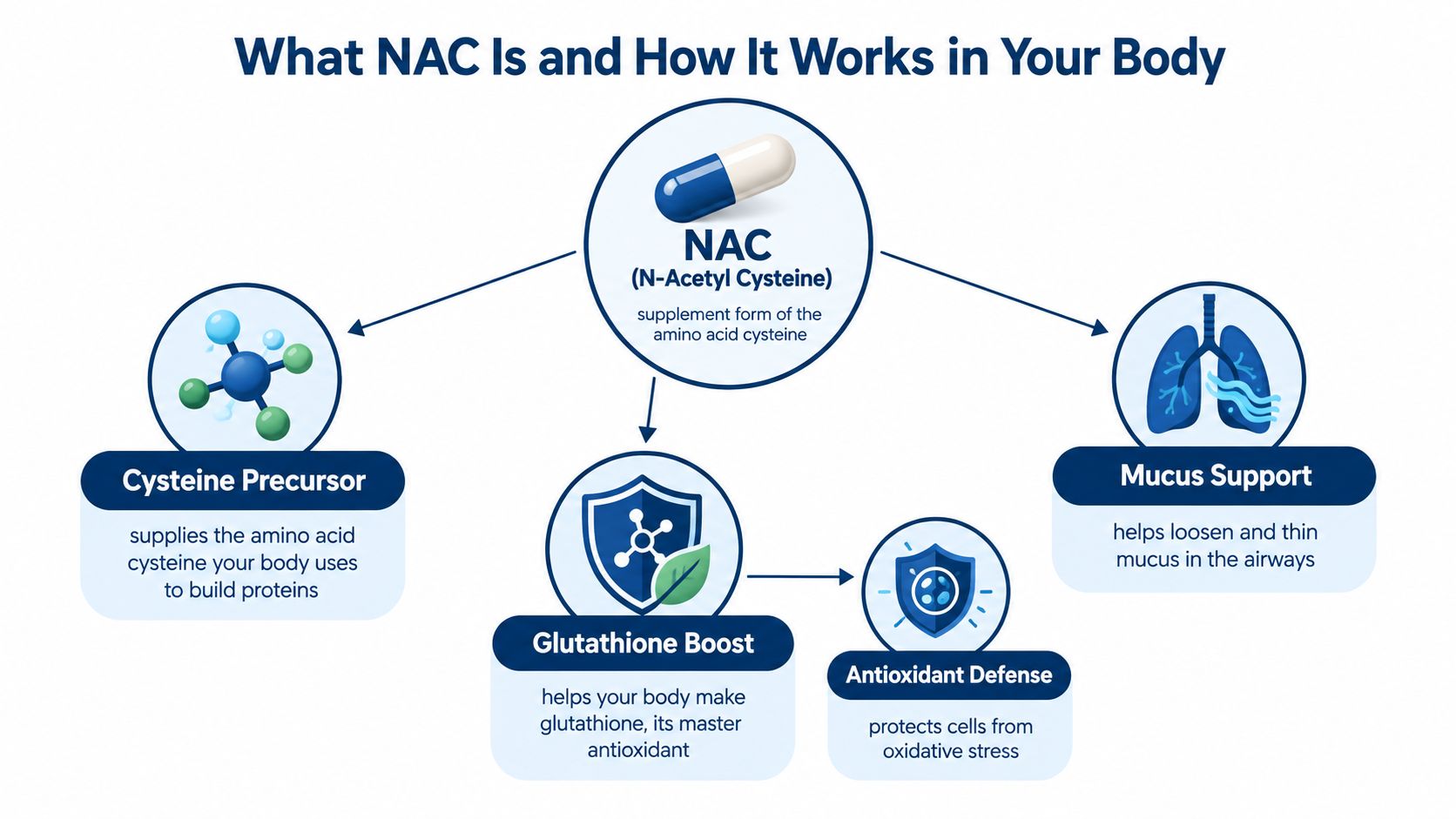
Think of your cells as a production facility. Cysteine is one of the key raw materials, and glutathione is a finished product the facility assembles from several components. NAC supplies a form of cysteine that can help address one limiting step in glutathione production.
Glutathione helps cells manage oxidative stress, the ongoing chemical pressure created by normal metabolism and environmental exposures. It also participates in liver processing pathways and supports the body's ability to handle reactive compounds. Calling it a “master antioxidant” is useful as shorthand, but it doesn't mean that taking NAC automatically neutralizes every source of damage or guarantees better health.
From precursor to cellular support
After oral intake, NAC is processed in the digestive tract, liver, and other tissues. Some material becomes cysteine, which the body can use for glutathione synthesis or other physiological needs. Some NAC may remain available as NAC, but the relationship between a capsule's labeled amount, plasma concentration, and tissue effects isn't simple.
That distinction matters because biological activity doesn't depend only on unchanged NAC in the blood. Metabolites such as cysteine may contribute to downstream effects, and conventional blood measurements may not capture every tissue-level action. At the same time, a plausible mechanism isn't the same as proof that a supplement improves a particular condition.
NAC also affects mucus. In the airways, it can help break chemical bonds within mucus, making secretions less thick and easier to clear for some people. That role is different from glutathione support, although both help explain why NAC appears in respiratory and antioxidant discussions.
What the mechanism can't prove
A supplement that supports a biochemical pathway doesn't necessarily correct a diagnosed disease. Glutathione production is only one part of liver function, immune activity, respiratory health, mood regulation, or metabolic health. Diet, sleep, medications, underlying disease, and the cause of oxidative stress all influence outcomes.
For readers comparing NAC with other antioxidant products, a product such as reduced L-glutathione supplies glutathione itself rather than NAC as a cysteine precursor. That doesn't make one universally superior. It means the products represent different points in the same broader antioxidant network, with different absorption and evidence questions.
NAC can support a pathway. It can't replace diagnosis, remove the cause of an illness, or guarantee that more substrate produces more glutathione.
Evidence and Common Uses for NAC
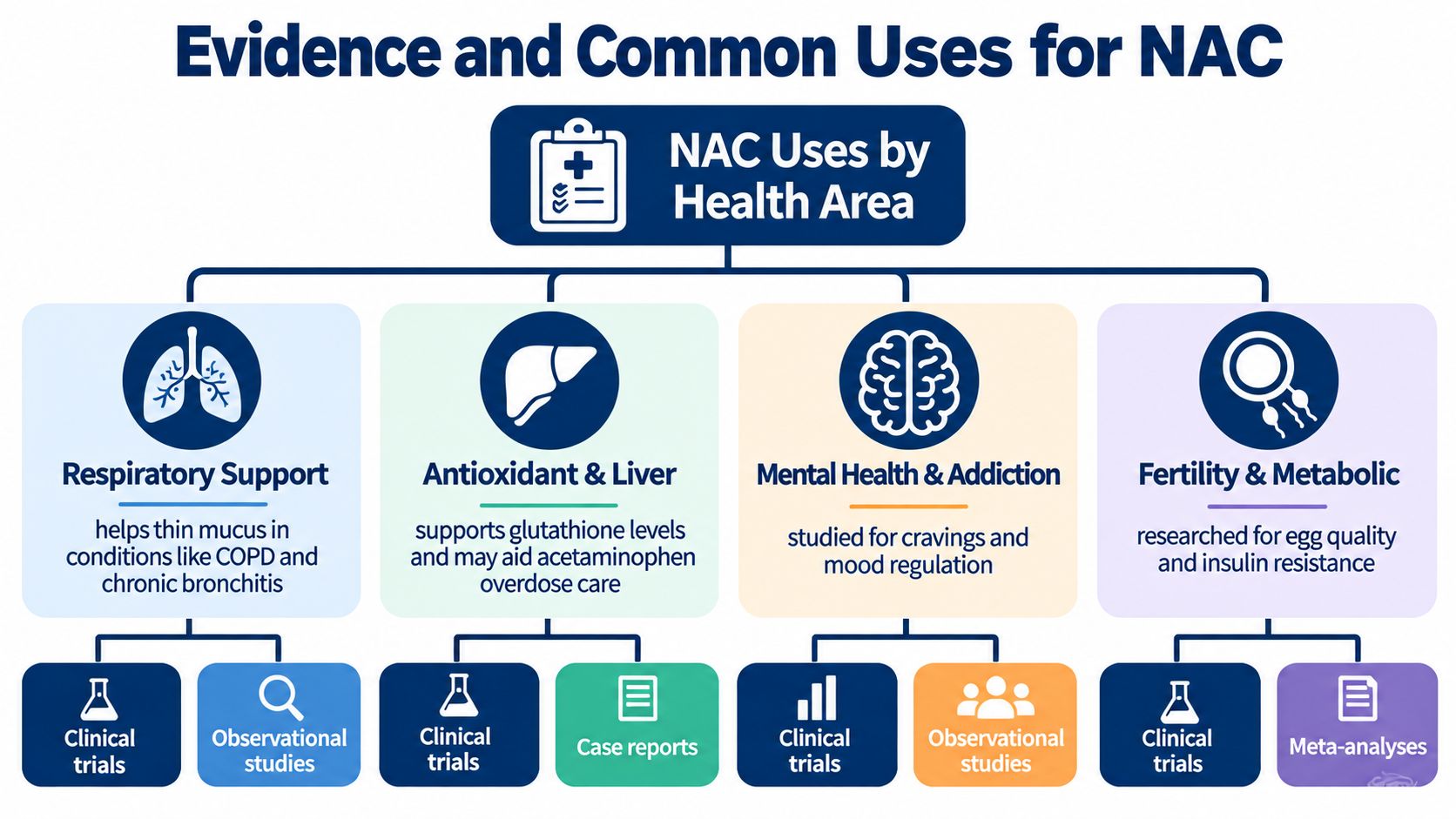
NAC has a wider research profile than many routine supplements, but the strength of evidence changes sharply by indication. Its clearest clinical identity is the treatment of acetaminophen poisoning. For other uses, the relevant question is whether research has demonstrated a consistent patient benefit, not merely whether NAC affects glutathione or mucus in laboratory settings.
Respiratory support
NAC's mucus-thinning action is the most practical reason it appears in respiratory products. It may help loosen thick secretions in conditions involving problematic mucus, including chronic respiratory disease. The outcome depends on the condition, baseline mucus burden, formulation, adherence, and the rest of the person's treatment plan.
NAC shouldn't be presented as a replacement for prescribed inhalers, antibiotics when indicated, pulmonary rehabilitation, or urgent evaluation of breathing difficulty. A person with unexplained shortness of breath needs assessment rather than a supplement experiment.
Liver and antioxidant applications
NAC supports the body's glutathione system and has a major role in emergency care for acetaminophen toxicity. That medical use is established, but it doesn't mean a daily supplement prevents liver injury or treats fatty liver disease. For liver concerns, the cause of abnormal tests matters, and clinicians may need medication review, laboratory testing, imaging, or changes in alcohol, diet, and metabolic risk factors.
For people exploring broader liver-support products, a daily liver-support formula represents a different formulation question. Combining several products can make it harder to identify the source of side effects and may duplicate ingredients.
Brain, addiction, fertility, and metabolic research
Researchers have studied NAC in areas such as cravings, mood regulation, compulsive symptoms, fertility, and insulin resistance. These findings are best treated as indication-specific and incomplete, rather than as proof that NAC improves mental health, reproductive outcomes, or metabolic control for healthy consumers.
A clinical overview reports licensed drug dosing commonly falls between 600 and 1,200 mg per day, while some trials have studied doses up to 3,000 mg per day. The same overview emphasizes that the appropriate amount depends on the intended use, formulation, duration, and medical context, as described by Everyday Health's clinical overview of NAC uses and risks.
For general immune education, a foundational immune system toolkit can help place supplements alongside basic health practices rather than treating NAC as a standalone immune solution. NAC may be relevant to antioxidant biology, but it isn't a universal immune enhancer.
Understanding the 1000 mg Dose
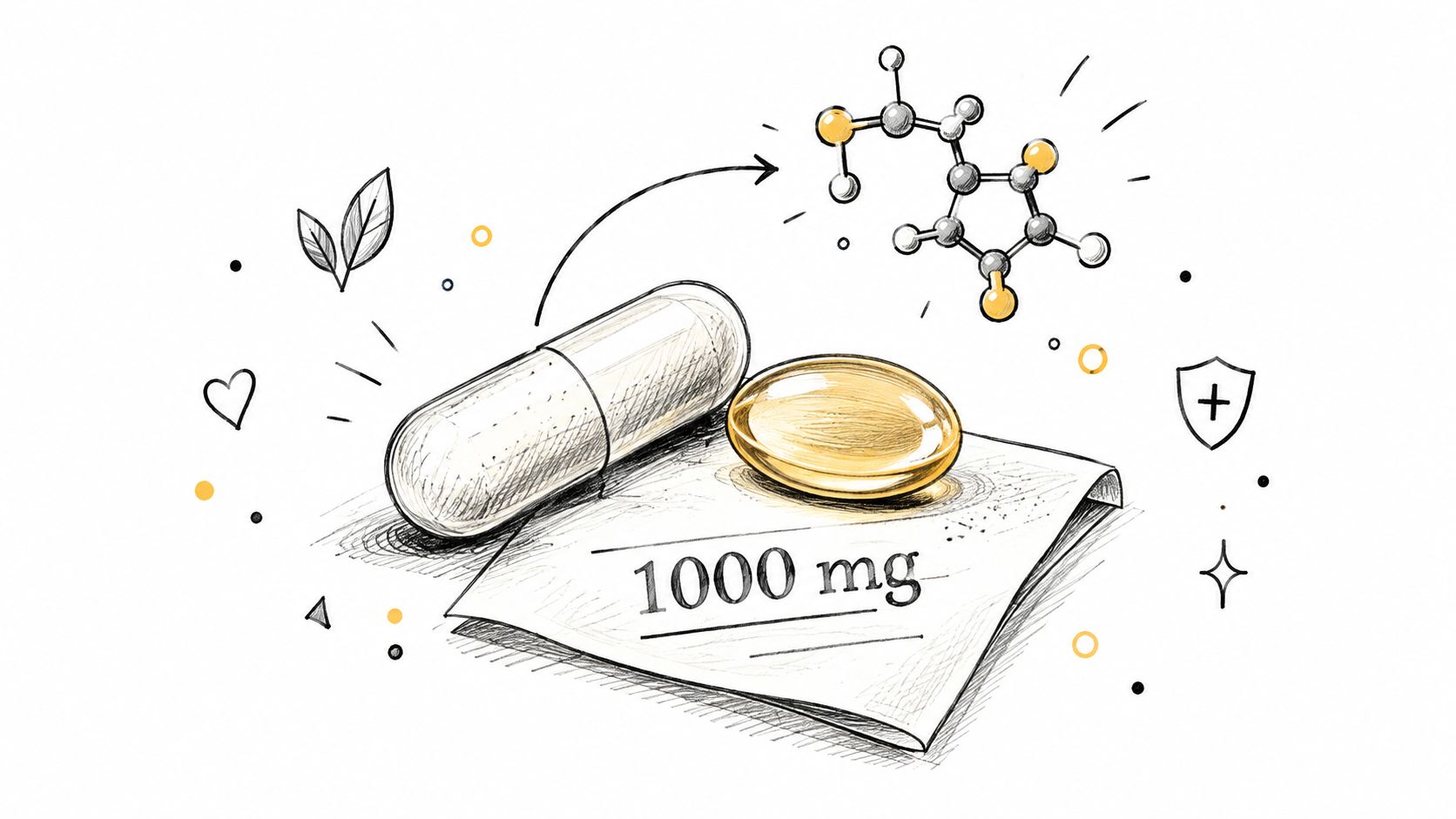
Does a 1,000 mg NAC label mean your body receives 1,000 mg of active NAC? Only partly. The number states how much the manufacturer supplies per serving. It does not show how much survives digestion, enters circulation, reaches tissues, or has been studied for your specific goal.
Administered amount versus absorbed amount
The Texas Health and Human Services NAC monograph reports oral bioavailability of approximately 4% to 10%. NAC is substantially deacetylated in the intestinal mucosa and lumen before it reaches systemic circulation. The same source describes peak concentrations generally occurring within 1 to 2 hours after oral intake and an elimination half-life of about 6.25 hours.
For a 1,000 mg oral serving, only a small proportion appears unchanged in systemic circulation, and exposure is relatively brief. That does not make the remainder irrelevant. Metabolism into cysteine and other compounds may contribute to NAC's biological effects, so free NAC levels alone do not capture every possible action.
Dose literacy means separating the labeled amount from the delivered exposure. Formulation, excipients, food intake, timing, and individual metabolism can affect how two products with the same label perform. A larger serving also does not automatically provide greater benefit when evidence for a wellness goal is limited or inconsistent.
Why the overdose protocol is different
Acetaminophen poisoning requires urgent medical assessment. The traditional oral protocol uses a 140 mg/kg loading dose, followed 4 hours later by 70 mg/kg every 4 hours for 17 additional doses, totaling 72 hours and 1,330 mg/kg, according to the clinical analysis of NAC treatment for acetaminophen poisoning.
This is a weight-based, repeated, time-sensitive medical regimen, not a supplement schedule. In that analysis, hepatotoxicity among patients at probable risk of liver injury occurred in 6.1% when treatment began within 10 hours of ingestion, compared with 26.4% when treatment began 10 to 24 hours afterward, as reported in the clinical analysis of NAC treatment for acetaminophen poisoning. Treatment within 8 hours was protective regardless of the initial acetaminophen concentration, although NAC remained indicated when treatment was delayed up to 24 hours.
A 1,000 mg tablet is not an antidote dose. If excessive acetaminophen may have been taken, do not calculate supplement equivalents or wait for symptoms. Contact emergency services or poison control immediately.
Safety, Side Effects, and Interactions
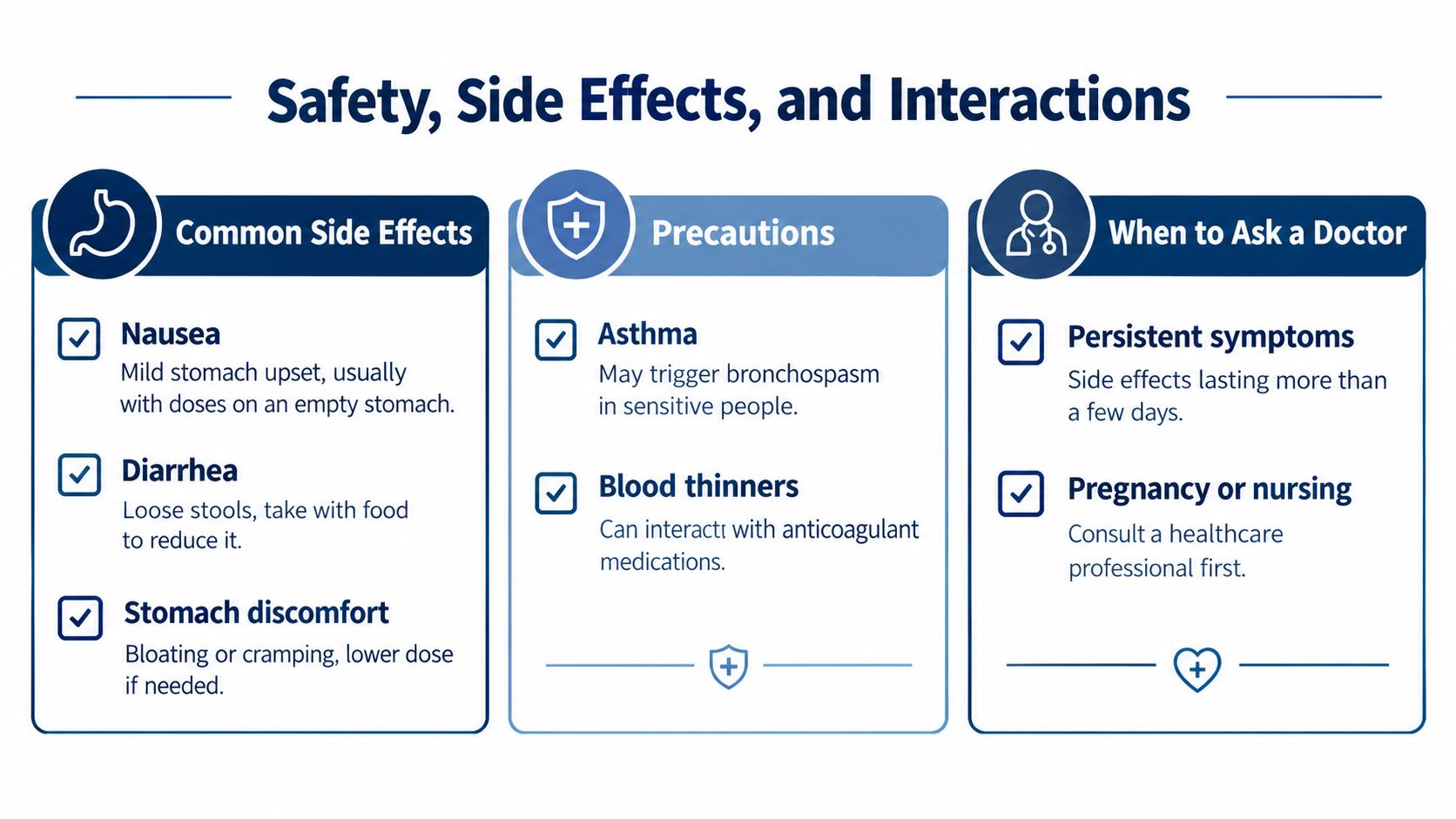
For routine oral use, the limiting issue is often tolerability rather than a theoretical need to keep increasing the dose. NAC can cause nausea, vomiting, diarrhea, gas, reflux, abdominal discomfort, and an unpleasant sulfur-like taste or odor. These effects can make a product difficult to take consistently, even when the serving looks reasonable on paper.
Taking NAC with food may improve stomach comfort, although food can alter exposure. Some people may also tolerate a divided daily amount better than one large serving, but product directions and clinician advice should take priority. Don't split, crush, or modify a product unless the label allows it.
Medication and health checks
NAC has pharmacologic considerations beyond digestive upset. Reviews describe platelet-inhibiting or anticoagulant effects, so anyone with a bleeding disorder or taking anticoagulant or antiplatelet medicines should obtain professional advice before using it. Concomitant nitroglycerin may increase the risk of hypotension, making medication review especially important.
Discuss NAC before use if you:
- Take blood thinners: Include anticoagulants and antiplatelet medicines in the discussion.
- Use nitroglycerin: Ask whether NAC could affect blood pressure or treatment safety.
- Have asthma: A sensitive person may need individualized guidance because airway reactions are possible.
- Expect surgery: Tell the surgical and anesthesia teams about supplements in advance.
- Are pregnant or breastfeeding: Use clinician guidance rather than assuming a supplement is automatically suitable.
- Manage chronic disease: Liver, kidney, respiratory, cardiovascular, and metabolic conditions can change the risk-benefit assessment.
The NCBI Bookshelf clinical summary on acetylcysteine distinguishes oral gastrointestinal effects from hypersensitivity reactions associated mainly with intravenous administration. That distinction matters. A consumer capsule isn't the same exposure as hospital IV therapy, and hospital reactions shouldn't be casually generalized to every oral product.
Medication check: Give your pharmacist the exact product label, serving size, medicine list, and reason for use. Interaction advice is more reliable when the professional can review the complete picture.
Stop and seek medical advice if symptoms are persistent, severe, or unusual. Don't use NAC to self-treat suspected poisoning, unexplained jaundice, significant breathing trouble, or a diagnosed liver condition without appropriate medical care.
How to Choose a Quality NAC Supplement
A product's availability doesn't prove that it's FDA-approved for efficacy. The FDA has stated that NAC is excluded from the statutory dietary-supplement definition because it was approved as a new drug before being marketed as a supplement, while the agency has contemplated enforcement discretion for certain NAC-labeled products. That regulatory history is different from approval of every NAC supplement or confirmation of every claim.
Read the label as a specification
Start with the serving panel, not the marketing headline. Confirm whether the product provides 1,000 mg per capsule, per serving, or per day, and check how many capsules make up the serving. Look for a clear ingredient name, an identifiable manufacturer, lot or expiration information, storage instructions, and warnings that match your circumstances.
Third-party testing can add useful quality information, but it doesn't prove that NAC will treat a condition. Certifications such as NSF or USP may be relevant where present and verifiable. They address aspects of manufacturing or product verification, not personalized effectiveness.
For a practical explanation of serving sizes, blends, and label terminology, these supplement label insights from NexiHerb LLC provide useful consumer context. Apply the same scrutiny to NAC products that you would to any other supplement.
Choose flexibility over headline strength
A 1,000 mg serving may be convenient for some adults, but a lower-strength capsule can make adjustment easier when stomach symptoms occur or when a clinician recommends a different routine. For example, a 600 mg NAC product, such as Life Extension N-Acetyl-L-Cysteine, may offer a different serving format. That doesn't make it any better. It illustrates why dose flexibility can matter more than the largest number on the bottle.
Avoid stacking multiple NAC-containing products. Also be cautious with labels that promise detoxification, immune protection, liver repair, or disease treatment without explaining the evidence or intended use. If you're comparing broader liver formulas, a milk thistle and eleuthero product raises the same questions about ingredients, interactions, and claim boundaries.
A quality decision has four parts:
- Identity: The label clearly states the NAC amount and serving.
- Quality controls: The manufacturer provides credible testing or manufacturing information.
- Purpose: The product matches a defined, realistic goal.
- Safety: Your clinician or pharmacist has reviewed relevant medicines and conditions.
Frequently Asked Questions About NAC
Is morning or evening better?
Neither timing is universally established as superior. Choose a consistent time you tolerate, and follow the product directions. If NAC upsets your stomach, taking it with food may help.
Can I take NAC every day long-term?
Long-term use should be based on a clear reason and periodic professional review. A daily supplement routine isn't automatically appropriate just because the product is available without a prescription.
Does NAC normally smell bad?
Yes. A sulfur-like odor or taste is characteristic of NAC and doesn't automatically indicate spoilage. Follow storage instructions, and don't use a product with other signs of damage or deterioration.
Is 1,000 mg a standard dose?
No. Research and licensed drug dosing vary by indication, formulation, and medical context. A fixed 1,000 mg serving isn't a substitute for clinical dosing.
Supplemynts Inc offers NAC and other dietary supplements through an online store with ingredient-based categories, product search, direct support, and published shipping and return policies. Visit Supplemynts Inc to compare labels and serving formats, then review your choice with a pharmacist or clinician if you take medication or have a medical condition.






Please complete your information below to login.
Sign In
Create New Account