


You're standing in front of a supplement shelf, or comparing product pages in several browser tabs. One capsule promises antioxidant support, another combines luteolin with quercetin, and a third highlights a liposomal delivery system. You're interested in a luteolin supplement for brain fog, recovery after exercise, or general inflammation support, but the labels don't answer the questions that matter most: What does luteolin do, how strong is the evidence, how much is reasonable, and will your body absorb it?
The last question deserves more attention than it usually gets. Luteolin has a substantial research history, but oral absorption is limited, and long-term safety at supplement doses remains unsettled. A sensible buying decision therefore depends less on choosing the largest milligram number and more on understanding the compound, evaluating the evidence, checking the formulation, and matching the product to your own health situation.
Table of Contents
- Why You Might Be Considering a Luteolin Supplement
- What Luteolin Actually Is and Where It Comes From
- The Benefits Buyers Talk About and What the Evidence Shows
- The Bioavailability Problem Most Labels Don't Talk About
- Luteolin Dosage, Timing, and Safety Basics
- How to Choose a Quality Luteolin Supplement
- Putting It All Together Before You Buy
Why You Might Be Considering a Luteolin Supplement
A wellness shopper might begin with a simple goal. Perhaps afternoon concentration feels less reliable than it used to, or a hard workout leaves lingering stiffness. After reading about plant flavonoids, they compare luteolin with quercetin and find phrases such as “anti-inflammatory,” “brain support,” and “immune modulation” repeated across product pages.
That language can sound more definitive than the research is. A supplement label may describe a biological pathway, while the buyer is trying to solve a practical problem. Those are different things. Evidence that luteolin influences inflammation signaling in cells doesn't automatically show that a capsule will improve a person's concentration, joint comfort, or recovery.
Luteolin is usually positioned as a plant-derived bioactive compound, not as a mainstream vitamin or mineral. A 2023 review summarizes anti-inflammatory, antioxidant, neuroprotective, and analgesic activity across laboratory and animal models, while also citing earlier work focused on anti-inflammatory effects. That history suggests a research foundation built over time, rather than a compound that appeared suddenly as a wellness trend. The review in PMC is useful because it shows both the breadth of proposed activity and the difference between mechanistic research and proven outcomes in people.
Before buying, ask four questions:
- What is luteolin? Know the compound and its natural sources.
- Which benefits have human support? Separate clinical findings from cell and animal research.
- What dose and timing make sense? Account for absorption and personal risk.
- How can you judge quality? Look for identity, potency, testing, and formulation details.
The most useful mindset is curiosity without overconfidence. A luteolin supplement may fit a carefully considered routine, but the strongest product claim isn't necessarily the strongest evidence.
What Luteolin Actually Is and Where It Comes From
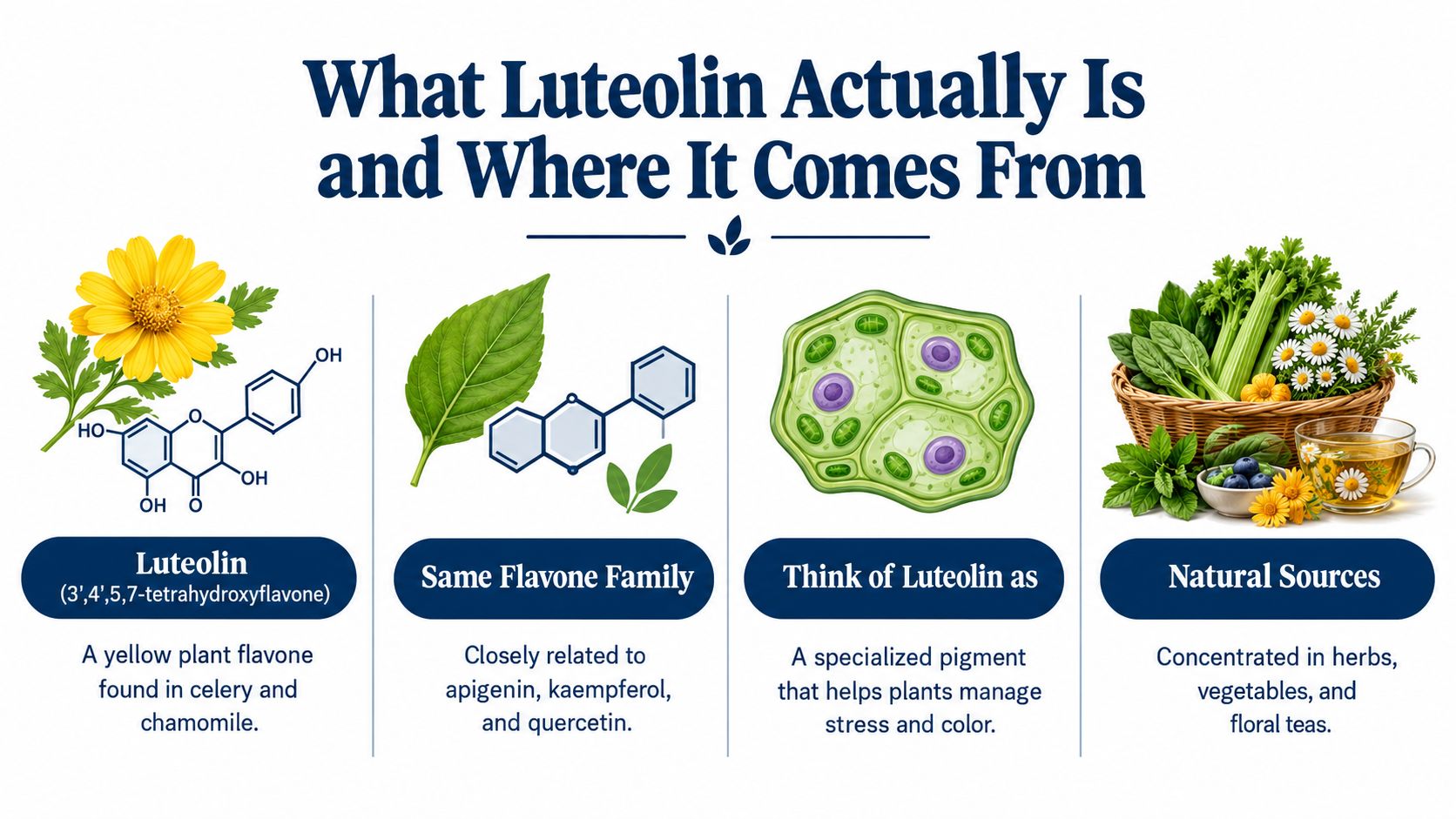
Luteolin is a flavone, a type of plant polyphenol with the chemical name 3',4',5,7-tetrahydroxyflavone. Flavones belong to the larger flavonoid family, alongside compounds such as apigenin, kaempferol, and quercetin. A simple analogy helps: think of the flavonoid family as a box of plant-colored crayons. Luteolin is one specific crayon, with its own structure and biological behavior.
Plants produce luteolin in a range of herbs, vegetables, and flowers. Food and tea sources include celery, parsley, chamomile, artichoke leaves, and green pepper. The compound contributes to the complex chemistry of plants, but eating a luteolin-containing food isn't equivalent to taking a concentrated capsule.
Food sources and concentrated extracts
Dietary exposure from ordinary foods is generally small, often described as under 1 mg per day, so anyone seeking a concentrated amount would need an extract rather than relying on typical meals. The exact amount in food can vary with the plant, growing conditions, preparation, and serving size.
Commercial products may use standardized luteolin extracts, including highly purified material derived from sources such as peanut shells or citrus peels. “Natural” describes the origin, not automatically the dose, purity, absorption, or safety profile. A plant-derived ingredient can still require careful testing and clear labeling.
Why the chemical form matters
Labels may list free luteolin, also called the aglycone, or a related glycoside such as luteolin-7-O-glucoside. These forms can behave differently during digestion and metabolism. The source plant also doesn't tell you how much active compound is present in the finished capsule.
That distinction sets up the central buying issue. Natural occurrence doesn't guarantee meaningful systemic exposure, and a high-purity ingredient isn't automatically effective if the body absorbs very little of the active form.
The Benefits Buyers Talk About and What the Evidence Shows
Luteolin's reputation comes from several overlapping research areas. Laboratory studies have examined pathways connected with NF-κB, COX-2, mast cell activity, oxidative stress, and microglial signaling. These mechanisms help researchers form hypotheses, but they don't prove that a retail luteolin supplement will deliver a specific result in a person.
The four most common marketing themes are brain support, immune modulation, joint and exercise-related inflammation, and cellular antioxidant health. Human evidence exists in some adjacent or early-stage settings, but it remains much thinner than the promotional language often suggests.
| Benefit Area | Proposed Mechanism | Human Trial Evidence | Evidence Rating |
|---|---|---|---|
| Brain and cognitive support | Modulation of microglial signaling and neuroinflammation pathways | Early and limited human research, including pilot and adjunct approaches | Preliminary |
| Immune modulation | Effects involving inflammatory signaling and mast cell activity | Human evidence is limited and doesn't establish broad immune benefits | Preliminary to limited |
| Joint and exercise-related inflammation | Influence on inflammatory mediators and oxidative stress | Small or adjunct research areas, without a firm conclusion for routine supplementation | Limited |
| Cellular and antioxidant health | Antioxidant activity and regulation of cellular stress pathways | Mechanistic support is stronger than direct outcome evidence | Mechanistic |
Brain and cognitive claims
Researchers have studied luteolin in connection with neuroinflammation and microglia, immune-related cells in the nervous system. That makes brain fog and cognitive support understandable areas of interest. Still, a pathway finding doesn't establish that luteolin improves memory, attention, or daily mental performance for healthy supplement users.
Some human investigations have examined luteolin alongside other compounds, including quercetin, rather than testing luteolin alone. That makes it difficult to identify which ingredient contributed to an observed change.
Immune and inflammatory claims
Luteolin's effects on inflammatory signaling are among the best-established reasons for studying it. The evidence summarized in this review of luteolin's pharmacological activity includes anti-inflammatory and antioxidant findings across in vitro and in vivo models. Those results support continued investigation, not a guarantee that a capsule treats an inflammatory condition.
For broader context on how botanical compounds are discussed in healthy-aging routines, readers may find REVETIX science-based aging support useful. It's best used as background reading, not as a substitute for condition-specific medical advice.
Joint, recovery, and antioxidant positioning
Exercise recovery products often connect luteolin with oxidative stress and inflammation. That's biologically plausible, but the practical question is whether a particular formulation produces a noticeable benefit in people. A comparison with another flavonoid product, such as Amazing Formulas Quercetin 500 mg, also illustrates why ingredient comparisons need more than a shared “antioxidant” label. Different compounds, doses, formulations, and trial designs can't be treated as interchangeable.
Evidence rule: A plausible mechanism can justify research. It can't, by itself, justify a strong health promise.
The Bioavailability Problem Most Labels Don't Talk About
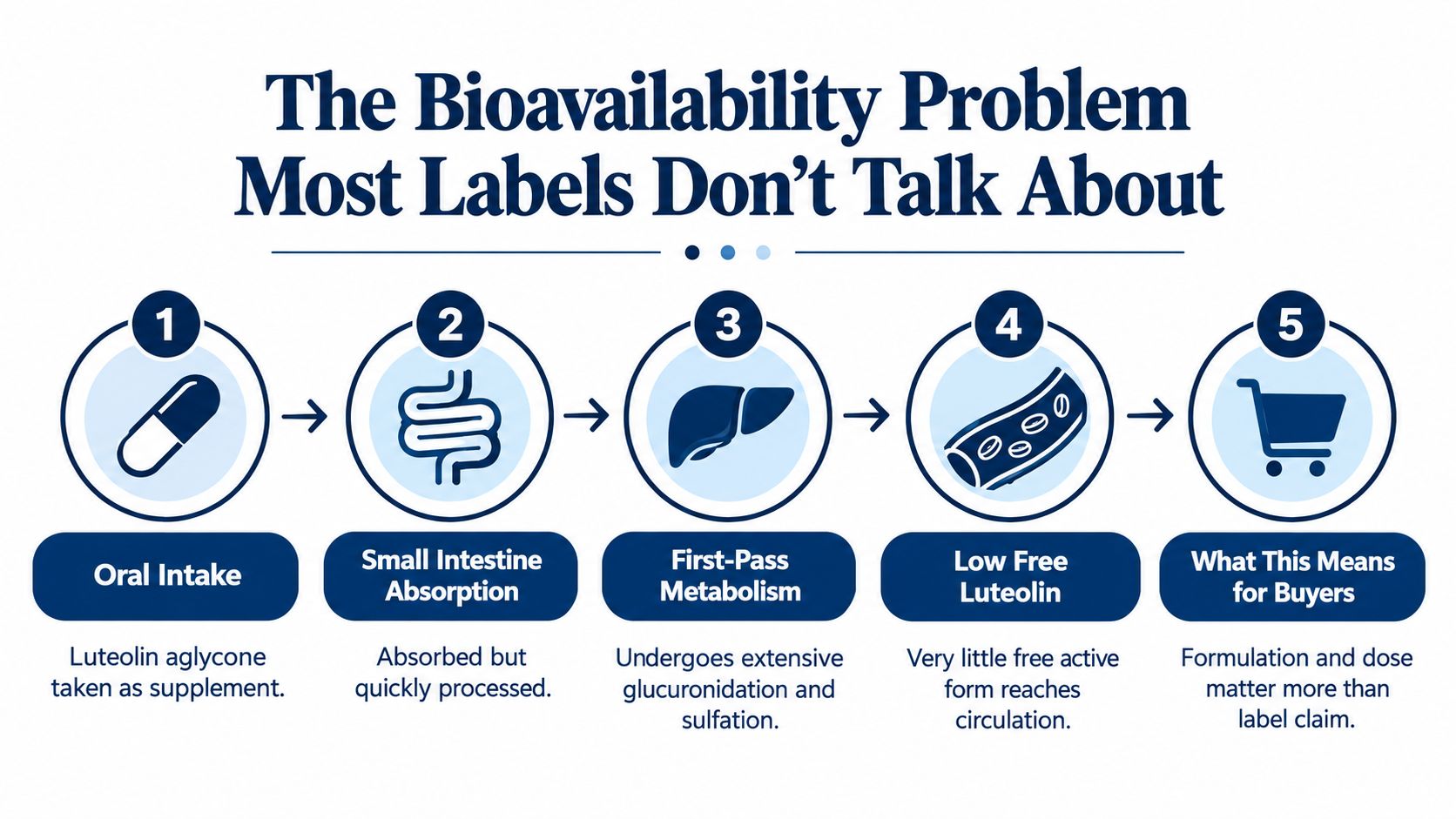
The central limitation for an oral luteolin supplement is low bioavailability. Luteolin can be absorbed in the digestive tract, but the body rapidly processes much of it through glucuronidation and sulfation in the intestinal wall and liver. As a result, blood levels are dominated by conjugated metabolites, while the amount of free luteolin remains low. A pharmacokinetic review in PMC explains why the amount printed on the front of a bottle doesn't translate directly into the amount circulating in its original form.
This creates a common misunderstanding. Taking more luteolin doesn't necessarily produce a proportional rise in free luteolin exposure. Rat and review data have reported absolute oral bioavailability ranging from 3.87% to 5.57% across doses of 10 to 120 mg/kg, while another discussion noted that free luteolin may represent only about 17.5% of total luteolin exposure, depending on how exposure is measured. These figures come from pharmacokinetic evidence, not proof of a human clinical dose.
Free luteolin versus related forms
The aglycone is free luteolin. Glycoside forms attach luteolin to a sugar molecule, and digestion can alter how the body handles them. Food composition, dietary fat, gut microbes, and the delivery system may all influence exposure, but a product claim about enhanced absorption isn't the same as independent human evidence showing better outcomes.
Liposomal, micronized, and phytosome products may be reasonable formulation approaches, yet buyers should ask what has been measured. Did the manufacturer test blood levels in people, or does the label use the phrase “enhanced bioavailability”? Pharmacokinetic improvement also doesn't automatically equal a better health result.
A practical option is taking luteolin with a meal that contains some fat, unless the product label or clinician advises otherwise. Buyers can also compare products such as Life Extension Fast-C Bio-Quercetin Phytosome while remembering that a delivery claim needs product-specific support.
Buying principle: Treat absorption as a design question, not a marketing adjective.
Luteolin Dosage, Timing, and Safety Basics
Published research and supplement protocols commonly discuss standardized luteolin aglycone in the range of 100 to 400 mg daily, but this range shouldn't be mistaken for a universally established therapeutic dose. Different products may use different forms, purity levels, and combinations, and the limited human evidence doesn't identify one ideal schedule for every goal.
Some cognitive and neuroinflammation-focused protocols use divided dosing across the day. Taking the product with a meal containing fat is also commonly suggested because food can affect the handling of poorly soluble plant compounds. Follow the specific product directions rather than combining several flavonoid products without checking their total ingredients.
A practical safety framework
Short-term use appears generally well tolerated in the available reviews, but long-term safety at supplement doses hasn't been established. Reported side effects are usually described as mild and may include gastrointestinal upset, headache, dizziness, or fatigue. The absence of a reported problem in a short study doesn't prove that extended use is risk-free.
Periodic cycling is sometimes suggested by practitioners because long-duration evidence is incomplete, but cycling isn't a proven safety requirement. Anyone considering ongoing use should discuss duration and monitoring with a clinician.
| Topic | Guidance | Evidence or Caveat |
|---|---|---|
| Starting dose | Consider a conservative amount within the product's directions | No universally established dose applies to every person |
| Timing | Take with food, often including some dietary fat | Food may affect uptake, but product-specific evidence varies |
| Split dosing | Some protocols divide intake during the day | Human research remains limited |
| Long-term use | Avoid assuming indefinite use is established as safe | Long-term supplement-dose safety remains uncertain |
| Side effects | Watch for GI upset, headache, dizziness, or fatigue | Reported effects are generally mild, but individual responses differ |
Who should ask a clinician first
Speak with a qualified clinician before using luteolin if you take anticoagulants, antihypertensives, immunosuppressants, or chemotherapy medicines. Professional advice is also important during pregnancy or nursing, and for people managing thyroid conditions or estrogen-sensitive conditions. A clinician can review the full product label, not just the luteolin amount, because combination formulas may add further interaction questions.
Stop the product and seek medical advice if symptoms are persistent, severe, or unusual. Don't use a luteolin supplement to delay diagnosis or treatment for ongoing brain fog, pain, fatigue, or other unexplained symptoms.
How to Choose a Quality Luteolin Supplement
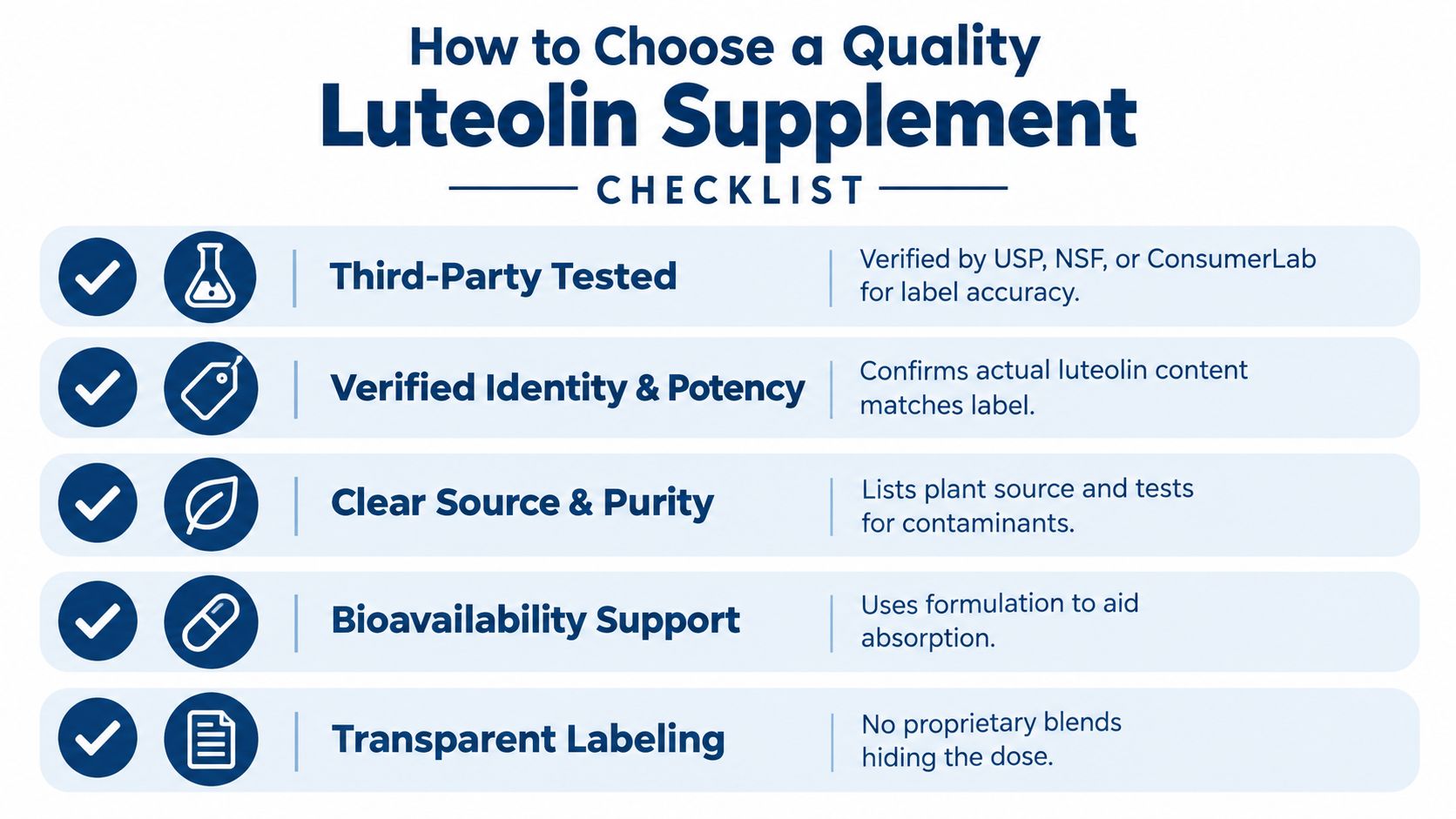
A strong label starts with identity and potency. Look for a product that states how much luteolin it contains per serving and identifies whether the ingredient is an aglycone, glycoside, or standardized extract. A vague “flavonoid blend” prevents you from knowing how much luteolin you're taking.
Independent testing adds another layer of confidence. Certifications or verification from organizations such as USP, NSF, or ConsumerLab can address label accuracy and contaminant screening, although buyers should still check what the specific certification covers. An accessible Certificate of Analysis should identify the lot and show testing for identity, potency, and relevant contaminants.
Compare the formulation, not just the milligrams
A free-aglycone product may offer straightforward labeling. A glycoside complex may use a different chemical form. Liposomal and micronized products may focus on solubility or delivery. None should receive an automatic advantage without relevant human pharmacokinetic or clinical support.
Use this checklist when comparing bottles:
- Verify the ingredient form: Confirm whether the label names free luteolin, a glycoside, or a standardized extract.
- Check the actual dose: Avoid proprietary blends that hide the luteolin amount.
- Inspect the testing trail: Look for lot numbers and a Certificate of Analysis that you can access.
- Review the source: Prefer labels that identify the plant material, extraction approach, and relevant allergen information.
- Match your dietary needs: Vegan capsules, non-GMO statements, and certifications may matter if they fit your priorities.
For readers researching raw-material standards and plant-derived ingredient sourcing, this overview of top botanical extracts suppliers provides useful industry context. Supplier information is helpful, but finished-product testing remains the more direct question for a consumer.
Opaque packaging, lot identification, and clear storage instructions are practical signs of a more transparent product. For people building a broader wellness routine, Amazing Formulas CoQ10 with BioPerine demonstrates why delivery ingredients and formulation details should be evaluated separately from the headline ingredient.
A flavonoid-based product doesn't need to contain luteolin to be relevant to someone's routine. For example, Cocoavia Cardio Health Dark Chocolate Flavor Vegan Powder Energy Boost is described as a vegan cocoa-flavanol powder intended to support cardiovascular function, blood flow, and energy. It shouldn't be treated as a luteolin substitute, but it shows why shoppers need to distinguish between related plant compounds and their stated uses.
Putting It All Together Before You Buy
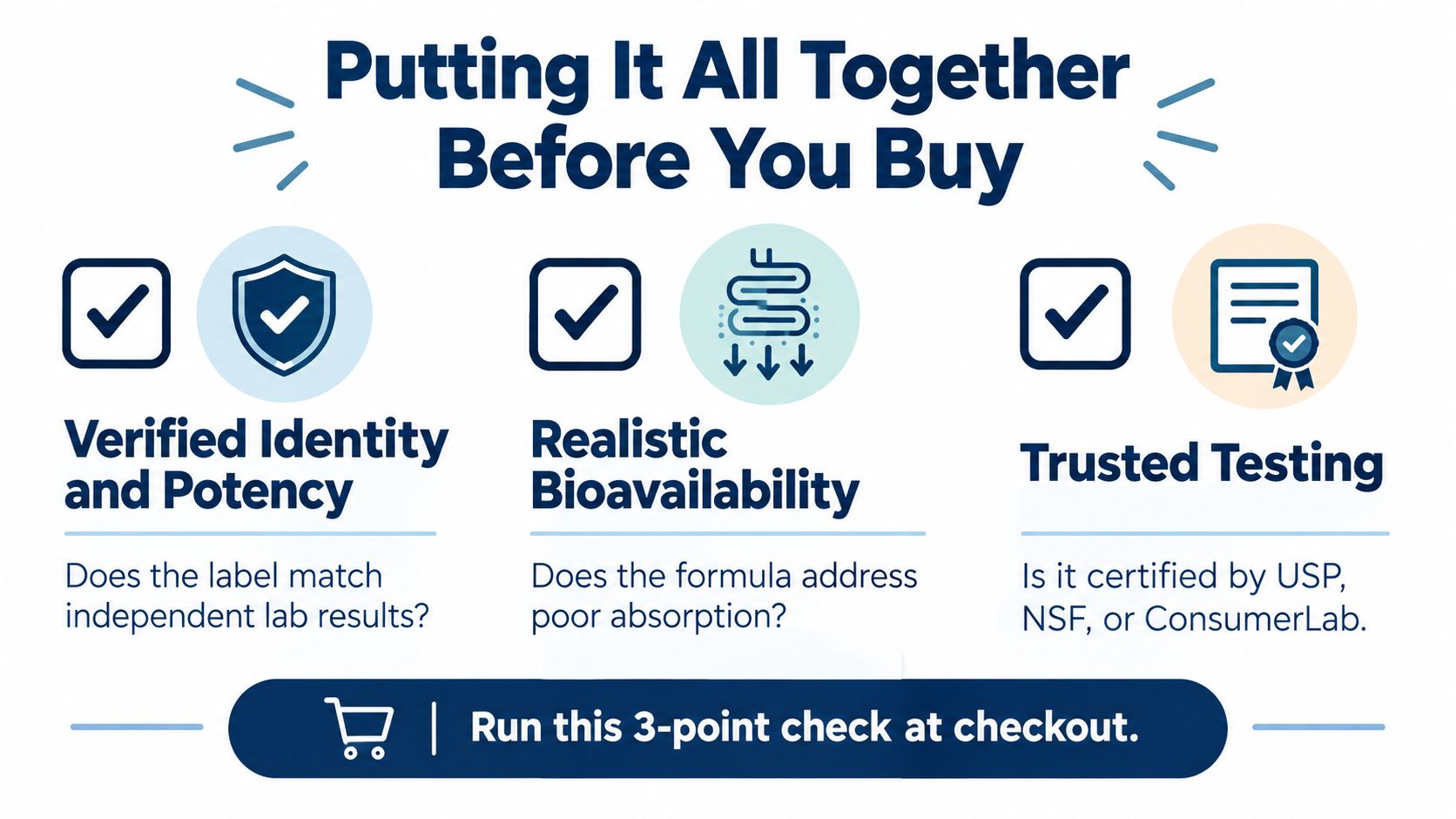
At checkout, reduce the decision to three filters:
- Verified identity and potency: Does the label state the luteolin form and amount clearly? Is there independent testing or a lot-specific Certificate of Analysis?
- A realistic absorption strategy: Does the product acknowledge luteolin's limited oral bioavailability, or does it rely only on a larger milligram number?
- Personal fit: Have you checked medications, health conditions, pregnancy or nursing status, allergens, and capsule preferences such as vegan materials?
Pause and speak with a clinician first if you use anticoagulants, thyroid medication, immunosuppressants, or chemotherapy, or if you're pregnant or nursing. The same applies if you're managing a thyroid or estrogen-sensitive condition. A clinician can help you decide whether luteolin is appropriate and whether the full formula creates interaction concerns.
For an otherwise appropriate adult, a cautious trial might involve 100 mg daily of a standardized extract with a fat-containing meal, followed by careful observation over four to eight weeks. Those amounts and time frames are practical examples, not guarantees or universal instructions. Stop if you develop troubling symptoms, and don't judge success solely by a product's absorption language.
The best buying decision usually comes from transparency and formulation logic, not the biggest number on the front label. Luteolin is scientifically interesting, but low exposure and incomplete long-term safety evidence should keep expectations measured.
Supplemynts Inc offers an online selection of dietary supplements organized by ingredient and wellness purpose, including vegan, brain, joint, and immunity-focused categories. Visit Supplemynts Inc to compare labels, review product details, and choose a luteolin-related option that fits your evidence, safety, and dietary priorities.







Please complete your information below to login.
Sign In
Create New Account