


You're standing in front of a supplement shelf, or scrolling through a product grid, and every tub seems to promise the same outcome. Lean. Clean. High protein. One label highlights calories, another showcases amino acids, and a third relies on a large photograph of a scoop. Comparing them feels less like shopping and more like decoding advertising.
Your goal may be simple: keep calories controlled while cutting, support muscle during training, or fill a protein gap on a busy day. The confusion usually comes from treating the word lean as if it were a precise product standard. It isn't. The meaningful details sit lower on the label, in the serving size, protein amount, ingredients, amino-acid profile, and testing information.
Table of Contents
- Introduction Why Lean Protein Powder Confuses So Many Shoppers
- What Lean Protein Powder Actually Means
- Reading the Label Like an Expert
- The Science Behind Lean Protein Benefits
- Comparing Whey Isolate Pea and Soy Formulas
- How to Use Lean Protein Powder in Daily Life
- Buying Criteria Most Shoppers Overlook
- Conclusion Choosing the Right Lean Protein Powder for You
Introduction Why Lean Protein Powder Confuses So Many Shoppers
A lean protein powder can be useful, but it's only useful when it solves a real dietary problem. It may make it easier to reach a daily protein target without adding much energy, especially when cooking another meal isn't practical. It won't replace vegetables, fiber, healthy fats, or the broader nutrition that comes from varied foods.
The right way to judge a product is to move from label to scoop. First, define what lean means nutritionally. Then read the facts panel like a receipt, separating the protein itself from calories, carbohydrates, fats, sweeteners, and extras. After that, match the formula to your body weight, activity, dietary pattern, digestion, and overall intake.
You'll also see why a powder with the highest protein percentage isn't automatically the best choice. Amino-acid quality, leucine, digestibility, transparency, taste, and regular use all matter. A product that looks impressive on the front but doesn't fit your diet may sit unopened in the cupboard.
By the end, you'll have a practical framework you can use on almost any product page, whether you're comparing whey, soy, pea, or a blended formula.
What Lean Protein Powder Actually Means
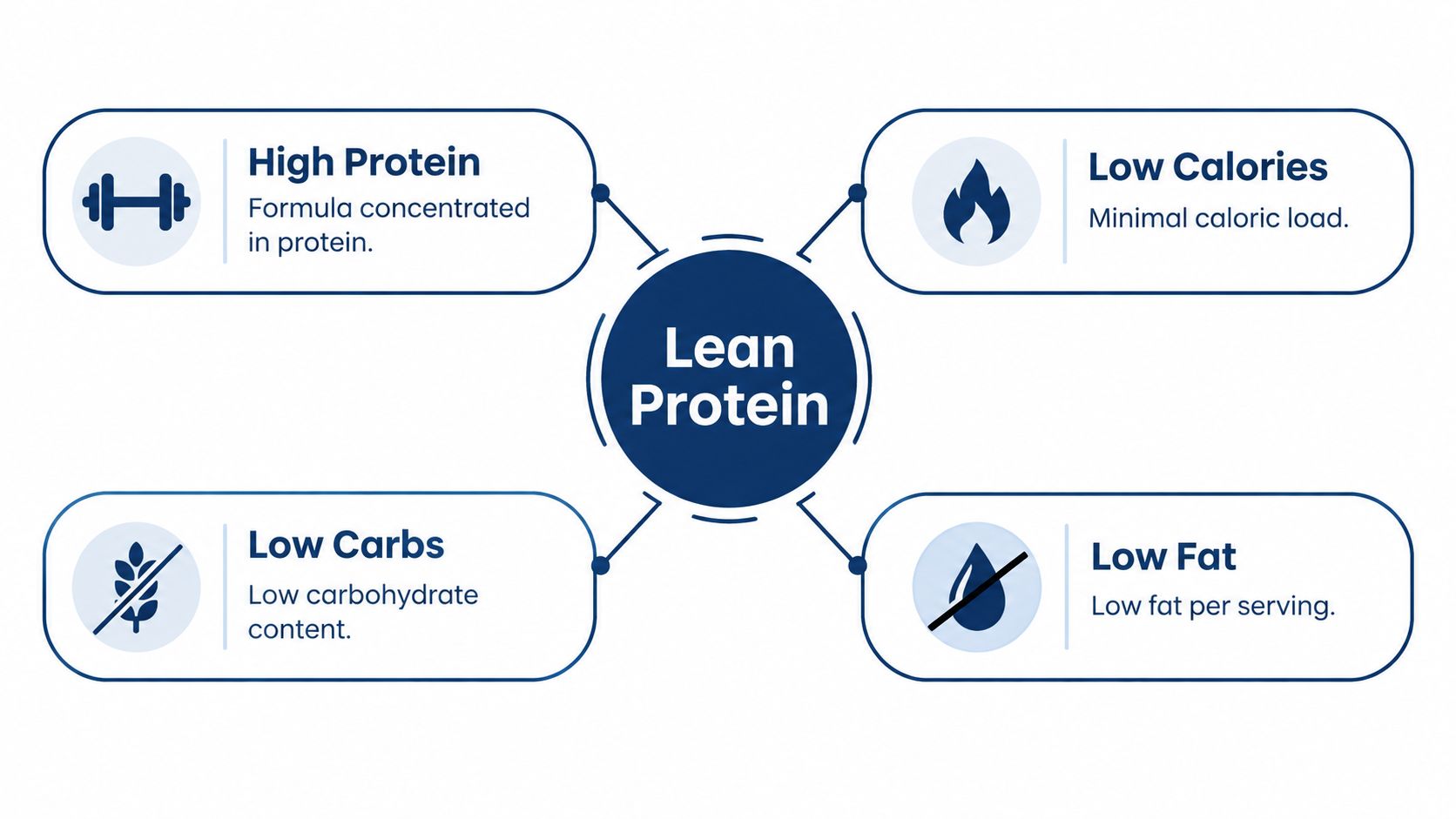
Lean protein powder is best understood as a formula that concentrates protein while keeping the rest of the calorie load relatively restrained. Think of it as the powdered equivalent of a protein-focused food, such as skinless chicken breast, rather than a complete high-calorie meal with protein, carbohydrates, and fats built in.
Three label features usually create that impression:
- High protein: A large share of the serving comes from protein.
- Low calories: The serving doesn't bring a large energy load.
- Low carbohydrates and fat: The formula contains limited amounts of these macronutrients unless they're intentionally included.
That distinction matters because two products can contain similar protein amounts while serving very different purposes. A straightforward protein powder may contain protein with modest calories and little fat or carbohydrate. A mass-gainer style product may combine protein with substantial carbohydrate and fat ingredients to create a more energy-dense serving. Neither is automatically good or bad. They're designed for different jobs.
Lean is a description, not a legal category
The word lean doesn't identify a separately regulated legal class of protein powder. In the United States, protein powders may be marketed within the dietary supplement framework established by the Dietary Supplement Health and Education Act of 1994, commonly called DSHEA. The FDA's explanation of dietary supplements describes supplements as products taken by mouth that contain a dietary ingredient and are identified on the label as dietary supplements.
DSHEA also means the FDA doesn't generally approve dietary supplements for safety or effectiveness before they reach consumers. Manufacturers and distributors remain responsible for evaluating safety, preventing adulteration or misbranding, and using truthful, compliant labeling. Products containing a new dietary ingredient generally require a safety notification to the FDA at least 75 days before interstate marketing, as explained by the FDA source above.
That's why “lean” shouldn't end your evaluation. Treat it as an invitation to inspect the facts panel, not as proof of a particular formula or outcome.
Lean protein powder means concentrated protein with a relatively restrained calorie, carbohydrate, and fat contribution, not a legally defined product category.
Reading the Label Like an Expert
Read a supplement label the way you'd read a receipt. The large product name tells you what the seller wants you to notice, while the smaller lines show what you're buying.
Start with the serving
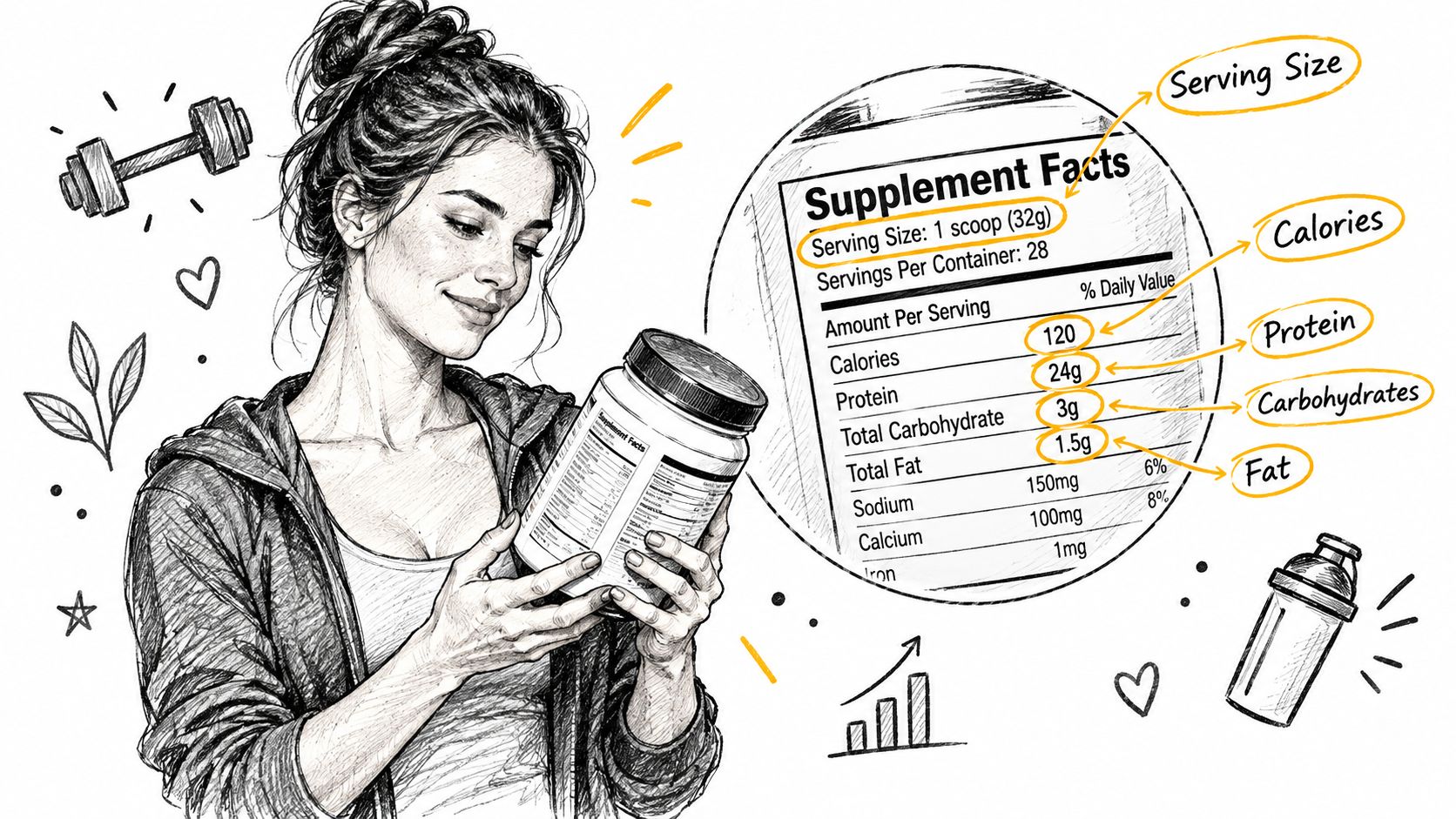
Check serving size before comparing protein grams. One brand's scoop may be smaller or larger than another's, so “per scoop” isn't always an equal comparison. The useful question is how much protein, energy, carbohydrate, and fat you receive in the stated serving.
Next, examine the main lines:
- Protein: This is the amount the serving contributes to your daily total.
- Calories: A low-calorie formula may suit a cutting phase, but calories aren't the only measure of quality.
- Carbohydrates: Look for added sugars and carbohydrate sources if you're limiting them.
- Fat: A small amount may be intentional, while a larger amount can indicate added ingredients.
- Ingredient order: Ingredients appear by weight, so the first ingredients reveal what dominates the formula.
Suppose a hypothetical serving contains 25 grams of protein and 120 calories. Protein provides roughly four calories per gram, so the protein contributes about 100 calories. Dividing those protein calories by total calories gives about 83% of the serving's energy from protein. That calculation is a useful comparison tool, but it doesn't tell you whether the protein is complete, digestible, tolerable, or independently tested.
Look for amino-acid information
A stronger label may disclose an amino-acid profile or identify leucine content. For training and lean-mass applications, the relevant question isn't only “How many grams of protein?” It's also “How much usable essential amino acid does this serving provide?”
The International Society of Sports Nutrition describes a practical per-feeding range of roughly 20–40 grams of high-quality protein, with approximately 700–3,000 milligrams of leucine and a complete essential-amino-acid profile, according to its position stand on protein and exercise. If a product provides no amino-acid information, that isn't automatic proof of poor quality, but it gives you less information for judging a small serving.
A helpful example is a serving with 25 grams of protein, modest calories, and approximately 2–3 grams of leucine. That profile may be more informative than a front label that only says “lean.”
Read the facts panel before the marketing panel. The serving size and ingredient list tell you what the tub actually delivers.
For a product-page example, you can inspect the NOW Sports MCT Powder with Whey Protein, then apply the same questions to any brand.
The Science Behind Lean Protein Benefits
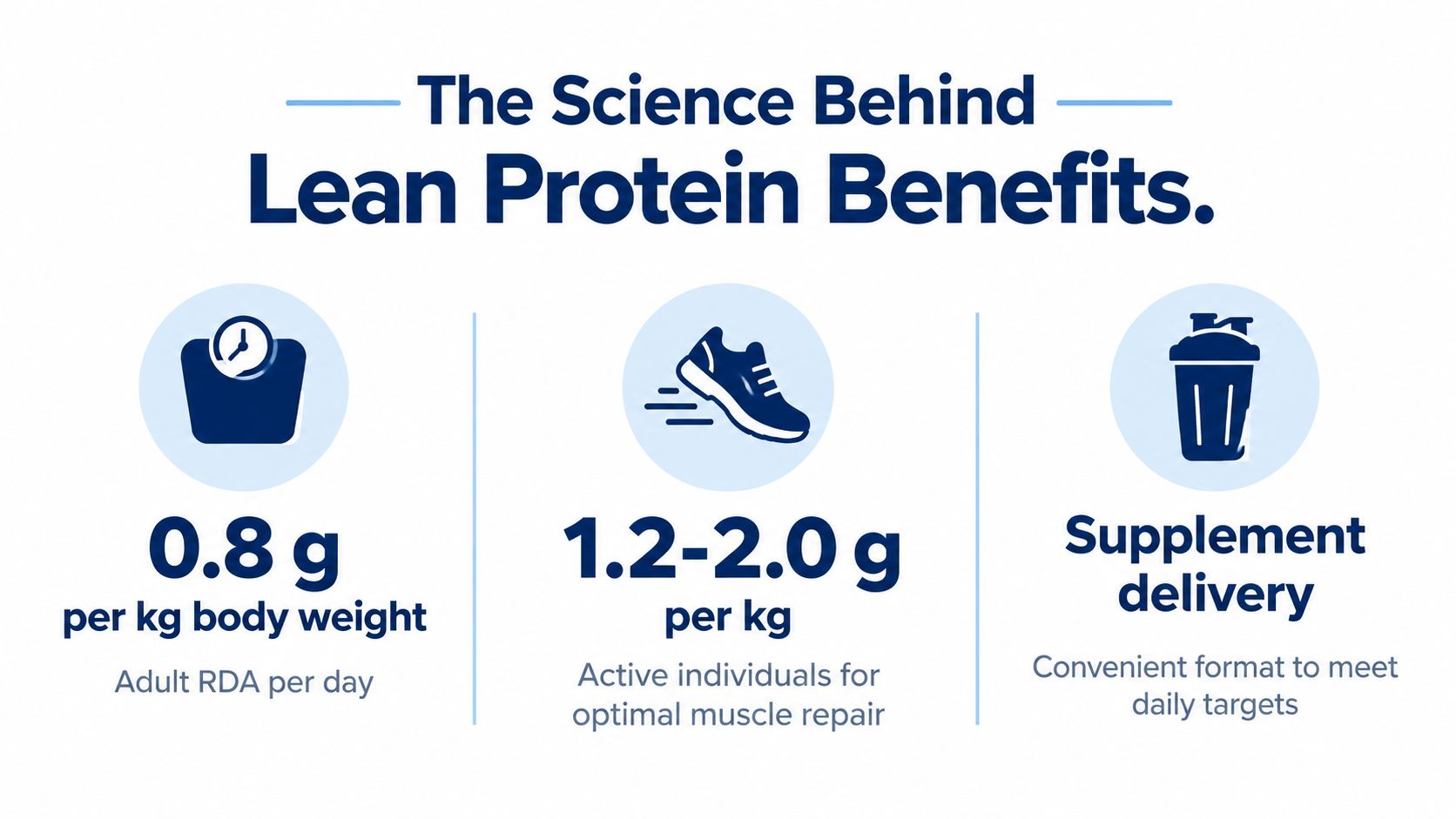
Protein needs begin with context. An adult Recommended Dietary Allowance benchmark is 0.8 grams per kilogram of body weight per day, according to the review discussing protein intake and the adult RDA. That's a population-level adequacy target, not a rule saying every person should get protein from powder.
For a 70-kilogram adult, approximately 154 pounds, the baseline calculation equals about 56 grams per day. For a 90-kilogram adult, approximately 198 pounds, it equals about 72 grams per day. A serving containing 20–30 grams would therefore supply roughly 36–54% of the 56-gram baseline for the 70-kilogram example.
Those figures help you understand scale. They don't tell you that a shake belongs in your routine. If your meals already cover your needs, powder may add expense and repetition without solving anything.
Training changes the question
For exercising individuals, the ISSN position stand places daily protein intake around 1.4–2.0 grams per kilogram of body weight, with needs influenced by training load, protein quality, and energy intake, as described in the ISSN position stand on protein and exercise. A 75-kilogram resistance-trained adult would therefore have a broad daily target of roughly 105–150 grams.
A 25-gram serving covers only part of that range. It can fill a gap after training, support breakfast, or make a low-appetite day easier, but it doesn't complete the day by itself. The same source describes approximately 20–40 grams per feeding as a useful range for many adults, alongside sufficient essential amino acids and leucine.
What powder cannot solve
A shake can make protein delivery convenient while dieting. It can't compensate for inadequate total calories, poor dietary variety, or a lack of resistance training. It also won't automatically preserve muscle just because the container says “lean.”
Older adults and medically vulnerable people may have needs that differ from the general adult baseline. The review of protein transition in older adults reports European clinical guidance of 1.0–1.2 grams per kilogram per day for healthy older adults and 1.2–1.5 grams per kilogram during illness or risk of malnutrition. Anyone managing illness, reduced appetite, or a medically prescribed diet should get individualized advice.
Comparing Whey Isolate Pea and Soy Formulas
Choosing a protein source affects more than whether a powder is dairy-free. It shapes the amino-acid profile, digestibility, texture, allergen considerations, and the amount of usable protein a serving can provide. A larger scoop cannot always compensate for a weaker amino-acid pattern, so compare quality with serving size and your total daily target.
Whey isolate is filtered from milk and generally contains very little of the non-protein material found in milk. Soy isolate is a refined plant protein made from soybeans. Pea concentrate comes from peas and retains more non-protein material than a pea isolate.
DIAAS, or Digestible Indispensable Amino Acid Score, provides one method for comparing protein quality. The cited review reports a DIAAS of 100 for whey isolate, 107 for whey concentrate, 84 for soy isolate, and 62 for pea concentrate. These figures are quality scores, not predictions of muscle gain or a percentage of absorbed protein. They indicate how well a protein supplies digestible essential amino acids against a reference pattern.
| Formula | DIAAS Score | Dietary Fit | Best For |
|---|---|---|---|
| Whey isolate | 100 | Vegetarian, dairy-based | A high-quality option when dairy is tolerated |
| Soy isolate | 84 | Vegan and vegetarian | A complete plant-based protein with a relatively strong quality profile |
| Pea concentrate | 62 | Vegan and vegetarian | Plant-based use, especially in larger servings or blends |
Match the formula to the person
Whey may suit someone who tolerates dairy and wants a compact, high-quality serving. Soy offers a practical vegan or vegetarian option with a stronger amino-acid profile than some other plant proteins. Pea concentrate can work for people avoiding dairy and soy, although its lower cited DIAAS may make a larger serving, a complementary protein, or fortification worth considering.
The label is only half the decision. A formula that causes bloating or discomfort is difficult to use consistently, regardless of its score. People with diagnosed milk-protein allergies should avoid dairy proteins. Those concerned about lactose should inspect the specific product instead of assuming every whey formula affects digestion in the same way.
Runners may prioritize portability, recovery routines, and tolerance differently from strength trainees. The guide to find the right protein for runners provides a broader goal-based comparison.
You can apply the same criteria to Amazing Formulas Grass-Fed Whey Protein and plant-based alternatives. Read the amino-acid information, serving size, ingredients, and allergen details like a receipt, line by line. A whole-food meal may be the better tool when you also need fiber, carbohydrates, or greater fullness. The right formula is the one that fits your diet, supports your daily protein target, and feels comfortable enough to use.
How to Use Lean Protein Powder in Daily Life
Timing should serve your schedule, not control it. A post-workout shake can be convenient when a meal isn't available, breakfast may need reinforcement when you're rushing, and an afternoon serving can cover the largest protein gap in your day.
The practical target for many adults is roughly 20–40 grams per feeding, with adequate leucine and essential amino acids, as described earlier in the ISSN position stand. You don't need to treat the clock as a deadline. Total daily intake and a pattern you can sustain matter more than forcing a shake at a specific minute.
Three easy formats
Basic shake: Mix a serving with water or a milk alternative when you need speed and a predictable calorie contribution.
Breakfast smoothie: Blend protein powder with fruit, yogurt or a milk alternative, and ice. This creates more volume and can be easier to drink than eating a full meal early in the morning.
Savory addition: Stir an unflavored powder into oatmeal or a suitable soup after checking the product's mixing instructions. Heat and texture can vary, so start with a small amount.
A product such as Bulletproof Keto-Friendly Collagen Protein Powder may appear in a shopper's comparison, but don't assume every protein product serves the same purpose. Check its amino-acid profile and intended use before treating it as interchangeable with a complete protein formula.
Avoid the common traps
Doubling a serving isn't automatically better. If your daily intake is already sufficient, the extra powder may displace foods that provide more variety and satiety.
A whole-food meal is often the better tool when you have time and appetite. Beans, eggs, dairy foods, fish, poultry, tofu, nuts, and seeds can contribute protein alongside other nutrients and textures. If your challenge is convenience, a powder has a clear role. If your challenge is an unbalanced diet, it's only a partial solution.
If you're comparing protein with creatine as part of a broader training plan, this guide to which creatine form performs better can help separate different supplement questions instead of combining them into one decision.
Buying Criteria Most Shoppers Overlook
The highest protein percentage doesn't automatically win. A low-calorie formula may be less useful if the serving is too small, the amino-acid profile is incomplete, or the taste and texture make you avoid it.
Think in terms of usable routine value. A slightly less concentrated powder that you digest comfortably and use consistently may serve you better than a technically denser product that stays unopened. Protein grams, calorie load, leucine disclosure, source, tolerability, and testing information belong in the same decision.
Read contaminant claims with care
A 2025 Clean Label Project assessment tested 160 protein products from 70 brands, representing 83% of the market, and reported that 47% exceeded at least one federal or state safety benchmark. It also reported that 21% exceeded California Proposition 65 thresholds by more than two times, according to coverage of the Clean Label Project protein powder assessment.
Those findings don't establish that every flagged product causes harm. A detected contaminant isn't the same as a hazardous dose, and Proposition 65 thresholds are exposure-based warning levels. The assessment tested products, not each consumer's total exposure from food, water, and supplements.
Use a risk-reading framework instead of reacting to a headline:
- Check batch documentation: Look for a certificate of analysis tied to a specific lot.
- Ask what was tested: A vague “clean” claim tells you less than named contaminants and testing methods.
- Consider frequency: Someone using a product occasionally faces a different pattern of exposure from someone consuming it daily.
- Prioritize vulnerable groups: Children, pregnant people, and frequent users may warrant extra caution and professional guidance.
- Ignore adjective-based reassurance: Vegan, natural, and clean labels don't prove lower contaminant exposure.
The FDA's supplement framework also means products generally aren't pre-approved for safety or effectiveness before sale. Buy transparency, not adjectives. A clear label and batch-specific documentation give you more useful information than a front-of-tub promise.
Conclusion Choosing the Right Lean Protein Powder for You
A sensible choice takes only a few questions.
Start with your body weight, activity, age, health status, and current food intake. Estimate whether you need a supplement at all, then use the product label to check protein per serving, calories, carbohydrates, fat, ingredients, and any amino-acid or leucine disclosure.
Use this checklist before checkout:
- What protein gap am I trying to fill?
- Does the serving provide a useful amount of protein for my needs?
- Does the source fit my dietary pattern and digestion?
- Does the formula provide enough quality information, including amino acids when available?
- Can I find meaningful testing or batch documentation?
Choose the powder you'll use consistently, not merely the one with the most aggressive front-label claim. A lean protein powder is a convenient delivery format, not a complete diet and not a substitute for adequate calories, varied foods, or appropriate training. Your next shopping trip can be simpler: turn the tub around, read it like a receipt, and let the facts panel make the decision.
Supplemynts Inc offers an online selection of protein products and other dietary supplements organized by category and health purpose, with product information, customer support, and documented shipping and return policies. Visit Supplemynts Inc to compare protein options and apply this label-to-scoop framework before you buy.



Please complete your information below to login.
Sign In
Create New Account