


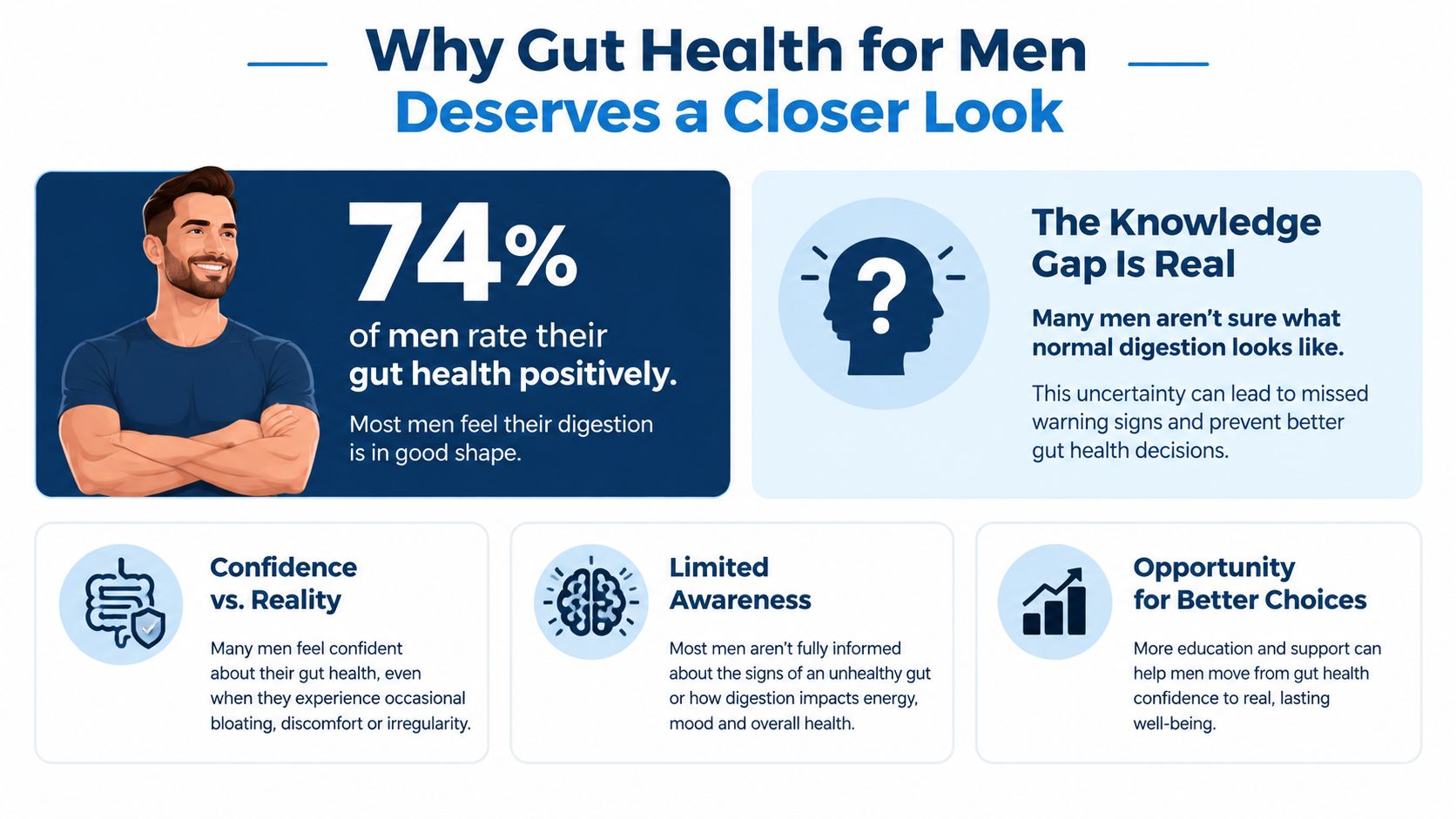
Men often feel more confident about their digestion than their knowledge of it. In a 2023 Ipsos poll, 74% of men in the United States rated their digestive health as good or excellent, compared with 59% of women, yet 68% of men incorrectly believed that adults should have a bowel movement every day. The poll found a similar misconception among women, at 70%.Ipsos digestive-health findings
That confidence-versus-knowledge gap matters. Gut health for men isn't only about avoiding gas after a large meal. It can intersect with colorectal risk, testosterone and reproductive health, energy, mood, and training recovery. The practical goal isn't to chase a perfect stool or buy the most aggressively marketed probiotic. It's to build a digestive system that supports your daily life, then recognize when symptoms deserve medical attention.
Table of Contents
- Why Gut Health for Men Deserves a Closer Look
- How the Male Gut Microbiome Works
- Diet Choices That Change the Male Gut
- Probiotics, Prebiotics, and Targeted Supplements
- Lifestyle Factors Beyond Diet
- Debunking Common Gut Health Myths for Men
- Your 30-Day Gut Health Action Plan
Why Gut Health for Men Deserves a Closer Look
A positive self-rating can hide an incomplete understanding of digestive health. In the Ipsos poll, 21% of men described their digestive health as excellent, compared with 8% of women, while the belief that everyone should have a bowel movement every day remained widespread.Ipsos digestive-health findings Feeling generally well is useful feedback, but it is not a full assessment. Regularity matters, yet daily bowel movements are not a universal requirement.
A more useful standard is your usual pattern. Do you pass stool comfortably? Do meals leave you nourished rather than uncomfortably heavy? Can you train without repeated urgency, cramping, or unexplained fatigue? These signals work like dashboard lights. They do not diagnose a problem, but they can show when your routine deserves attention.
The male-specific questions
Men deserve a focused discussion because gut health can intersect with metabolic function, hormones, reproductive health, colorectal risk, and training recovery. Research has examined sex-linked patterns in these areas, although a research finding does not predict what will happen to every man.
A 2021 study associated gut microbiome changes in male participants with nonalcoholic fatty liver disease, including lower microbial diversity and shifts in particular microbial groups. That association describes a pattern, not proof that microbiome changes alone caused the disease. Separate clinical research in 2025 reported higher odds of colorectal lesions among men than women, with odds ratios of 1.50 for non-advanced lesions and 1.46 for advanced lesions, based on 582 men and 452 women.the 2025 colorectal lesion cohort study
These findings do not mean that every bout of bloating signals illness. They do suggest that men should view digestion as part of a wider health picture, alongside appropriate colorectal screening conversations, metabolic markers, hormone concerns, and recovery from training. Persistent or concerning symptoms deserve clinical evaluation rather than self-treatment with supplements.
Practical rule: Judge progress by comfortable digestion, steadier energy, better recovery, and a routine you can maintain. Lab results and medical screening add information, but daily patterns also help you decide whether your habits are supporting you.
Food choices, training demands, sleep, stress, medication use, and supplements can all shape that pattern. The goal is a digestive system that supports ordinary meals and hard sessions without turning every symptom into a diagnosis or every product into a solution.
How the Male Gut Microbiome Works
Think of your gut microbiome as a neighborhood rather than a single organism. Each microbial species is a resident with different jobs. Some help break down food components you can't digest alone. Others produce compounds that interact with the gut lining and immune system. A diverse neighborhood tends to have more functional options when your diet, stress, medication use, or training routine changes.

The lining is the boundary
Your intestinal lining acts like the neighborhood boundary. It allows nutrients and useful signals to pass while helping keep unwanted material contained. Microbes also ferment dietary fibre, producing short-chain fatty acids, including compounds that support colon cells and influence the local environment.
That process helps explain why a low-fibre diet can feel different from a fibre-rich one. When resident microbes have less fermentable material, they have fewer opportunities to produce these compounds. The result isn't always an immediate symptom, but over time the digestive environment may become less resilient.
Hormones and biological sex can also shape microbial patterns. Research in men has examined relationships between sex-specific physiology, microbial diversity, and disease. In male participants with nonalcoholic fatty liver disease, researchers observed reduced diversity and shifts in microbial taxa compared with controls.Review of male gut-health and probiotic evidence
Why colorectal patterns matter
The male microbiome isn't a separate species of microbiome, and no single bacterial profile defines every man. Still, the colorectal findings give men a reason to take persistent changes seriously rather than automatically blaming age, protein intake, or a stressful week. A pattern of ongoing bleeding, unexplained bowel changes, persistent pain, or unintentional weight change belongs in a clinician's office.
The key idea is simple. Bloating may reflect how you ate, how quickly you ate, or how your microbes ferment a particular food. But gut health also connects to systems that deserve proper screening and diagnosis. Use microbiome science to make better habits, not to replace medical care.
Diet Choices That Change the Male Gut
Consider a man whose usual meals revolve around red meat, fries, white bread, packaged sauces, and soda. He doesn't need to label that diet “bad” to notice that it offers limited variety for his gut microbes. If he replaces some of those foods with vegetables, beans, fish, whole grains, and olive oil, the change gives his microbiome a broader menu.
A two-week crossover study in 20 healthy men compared a fibre-enriched Mediterranean diet with a Western diet. The diets produced markedly different microbial metabolism even though the overall composition of the microbiome changed only modestly. The Mediterranean pattern increased microbial metabolic pathway activity and changed metabolite profiles, including short-chain fatty-acid and bile-acid patterns.Mediterranean diet crossover study
That distinction is useful. Your gut may begin doing different work before a test shows dramatic changes in which organisms are present. In everyday terms, diet quality can change the activity of your microbial neighborhood, not only its resident list.
| Food Category | Gut-Supportive Choice | Gut-Stressing Choice |
|---|---|---|
| Main protein | Fish, beans, lentils, or minimally processed poultry | Frequent processed deli meats |
| Carbohydrate | Oats, potatoes with skins, brown rice, or whole-grain bread | Refined white-flour sides at most meals |
| Fats | Olive oil, nuts, seeds, and avocado | Heavy reliance on deep-fried foods |
| Drinks | Water, unsweetened tea, or milk if tolerated | Sugary soft drinks and frequent alcohol |
| Flavour | Herbs, spices, garlic, and vegetable-based sauces | Highly processed sauces used as a daily staple |
The easiest meal formula
For a man who rarely cooks, use a simple assembly method. Start with a ready-to-eat protein such as tinned fish, plain yogurt, or beans. Add a bagged salad or frozen vegetables, then include a whole-food carbohydrate and a source of unsaturated fat. This approach removes the need for elaborate recipes while still increasing variety.
Increase fibre gradually if your current intake is low. Beans, lentils, oats, fruit, vegetables, and seeds can all contribute. If food alone is difficult, a soluble fibre supplement guide can help you understand the practical differences between fibre types and how to introduce them carefully. A product such as FOS pure powder should still be considered in the context of your total diet and tolerance.
Kitchen rule: Make one meal more plant-diverse before trying to rebuild your entire menu. Consistency beats a dramatic diet you abandon.
Diet is one of the clearest levers you control. It can influence microbial activity on a relatively short timetable, but the right approach is steady variety, not a cleanse or a rigid food list.
Probiotics, Prebiotics, and Targeted Supplements
Prebiotics and probiotics serve different jobs. Prebiotics are fuel, usually fermentable fibres that resident microbes can use. Probiotics are live microorganisms, selected strains added through food or supplements. The kitchen analogy is useful: prebiotics fill the pantry, while probiotics bring in specific workers. Adding workers without suitable food may not create a lasting change.
Food can supply both. Beans, lentils, fruit, vegetables, oats, and whole grains provide fermentable material. Yogurt, kefir, kimchi, sauerkraut, and other fermented foods may contain live cultures, although the organisms and amounts vary between products. Begin with a small serving if fermented foods are unfamiliar or bloating is already a problem.
Why strain selection matters
Probiotic effects are not interchangeable. Lactobacillus rhamnosus and Bifidobacterium longum are named strains often discussed in digestive and immune-support contexts, but a useful label should identify the actual strains rather than list only a broad genus.
The male reproductive-health review helps keep expectations realistic. It linked dysbiosis with lower testosterone and impaired sperm parameters. Probiotic interventions involving Lactobacillus, Bifidobacterium, and Streptococcus strains were associated with improvements in motility, concentration, morphology, semen volume, and total sperm count. The review also stressed that effects are strain-specific, so a generic probiotic cannot be presented as a guaranteed fertility aid. Systematic review of the gut microbiome and male reproductive health

Sorting the supplement vocabulary
A synbiotic combines a probiotic with a prebiotic. A postbiotic contains microbial products or components rather than live organisms. Digestive enzymes are different again. They break down particular food components, so they do not replace fibre variety or support a broader microbial community.
Zinc, magnesium, and omega-3 products may suit a specific dietary gap or clinical need, but adding them automatically makes little sense. Consider your diet, medication, health history, and reason for use. Herbswell supplement insights provides broader context for examining supplement ingredients and research. A product listing such as Garden of Life Dr Formulated Probiotics Men's Supplement still deserves scrutiny of its strain information and intended goal. Gendered packaging alone does not show that a formula suits you.
Use this decision rule:
- Food first: Increase fibre variety and fermented-food intake when symptoms are mild and the diet is limited.
- Supplements for a defined gap: Choose a strain-matched product when you have a clear reason and can monitor your response.
- Clinical advice for persistent or serious symptoms: Speak with a qualified clinician before self-prescribing for ongoing pain, bleeding, major bowel changes, suspected deficiency, fertility concerns, or medication-related symptoms.
Lifestyle Factors Beyond Diet
A man can eat well and still challenge his gut with poor recovery. Exercise, sleep, stress, alcohol, smoking, antibiotics, and frequent use of anti-inflammatory pain medicines all change the environment in which digestion takes place. The answer isn't perfect behaviour. It's reducing the repeated pressures you can control.
A 2026 physiology study reported that gut microbiome diversity correlated with aerobic fitness in men but not women.Physiology study on fitness and gut microbiome diversity That result doesn't prove that running alone creates a healthier microbiome, and it doesn't mean every man needs endurance training. It does support a practical view of movement: regular aerobic work may be part of a gut-supportive routine, especially when paired with adequate food and recovery.
Match training stress to fuel
Training-heavy men often run into trouble when workload rises faster than digestion can adapt. A sudden high-volume endurance block, abrupt carbohydrate restriction, or poorly tolerated intra-workout fuel can bring urgency, cramping, or bloating. Keep a simple log for a week. Record training intensity, meal timing, fluids, bowel comfort, and sleep, then change one variable at a time.
Sleep gives you another low-tech experiment. Keep your waking time consistent and protect a predictable wind-down period. For stress, use a repeatable action such as a walk after dinner, slow breathing, or leaving work messages outside the bedroom. These steps won't diagnose a gut disorder, but they can show whether your symptoms respond to a calmer routine.
Alcohol and smoking deserve an honest review because both can work against digestive comfort and recovery. Medication matters too. Don't stop prescribed treatment, but ask a clinician or pharmacist whether repeated antibiotic or anti-inflammatory use could be contributing to symptoms.
For men seeking private support with sexual, hormonal, or general men's health questions, virtual care for men can be one route to discuss concerns with a healthcare professional. Bring your symptom history and medication list rather than relying on a supplement's promises.
Debunking Common Gut Health Myths for Men
The men's wellness market often reduces a complicated system to a simple label. “Male formula” may sound targeted, but the name does not show whether the strains fit your goal, whether the dose has been studied for that purpose, or whether your diet supports the intervention.
Research on male reproductive health points to strain, dose, and context, rather than one universal men's blend. It describes associations between dysbiosis and male reproductive measures, along with some strain-specific probiotic signals. It does not establish that a generic product raises testosterone or improves conception outcomes. As noted earlier, a product designed for men may be convenient, but convenience is not evidence.
Claims that need a filter
- “More fibre is always better.” Fibre supports fermentation, yet a sudden increase can worsen gas or discomfort. Raise intake gradually and monitor your tolerance.
- “Kombucha or kefir fixes the gut.” Fermented foods can add variety. One food cannot compensate for a narrow diet, poor sleep, or an untreated condition.
- “A colon cleanse removes toxins.” Your digestive system already has processes for handling waste. Cleanses may cause discomfort and distract from appropriate screening or diagnosis.
- “Occasional constipation is harmless.” An isolated change may follow a dietary shift, but persistent constipation, repeated straining, pain, bleeding, or a new bowel pattern deserves professional attention.
- “A probiotic replaces testosterone care.” Gut microbes may interact with androgen metabolism, but a probiotic does not replace training, sleep, medical evaluation, or prescribed treatment when low testosterone is suspected.
Keep, test cautiously, or skip
Keep habits with broad nutritional value, including greater plant variety, regular movement, and a consistent sleep routine. These choices support the wider setting in which digestion, training recovery, and hormone health operate.
Test supplements cautiously when you can name a specific target. Introduce one meaningful change at a time, then track the outcome you care about, such as bowel comfort, regularity, or recovery. Skip aggressive cleanses, miracle testosterone claims, and products that hide their strains behind vague wording.
The useful question is not whether a product is marketed to men. Ask what exact problem it is meant to address, what evidence fits that purpose, and what you will measure after using it.
Your 30-Day Gut Health Action Plan
A useful plan starts small enough to survive a busy month. Don't overhaul every meal, add several supplements, and double your fibre intake on the same day. Make one change, observe your response, and build from there.
Week one builds the plate
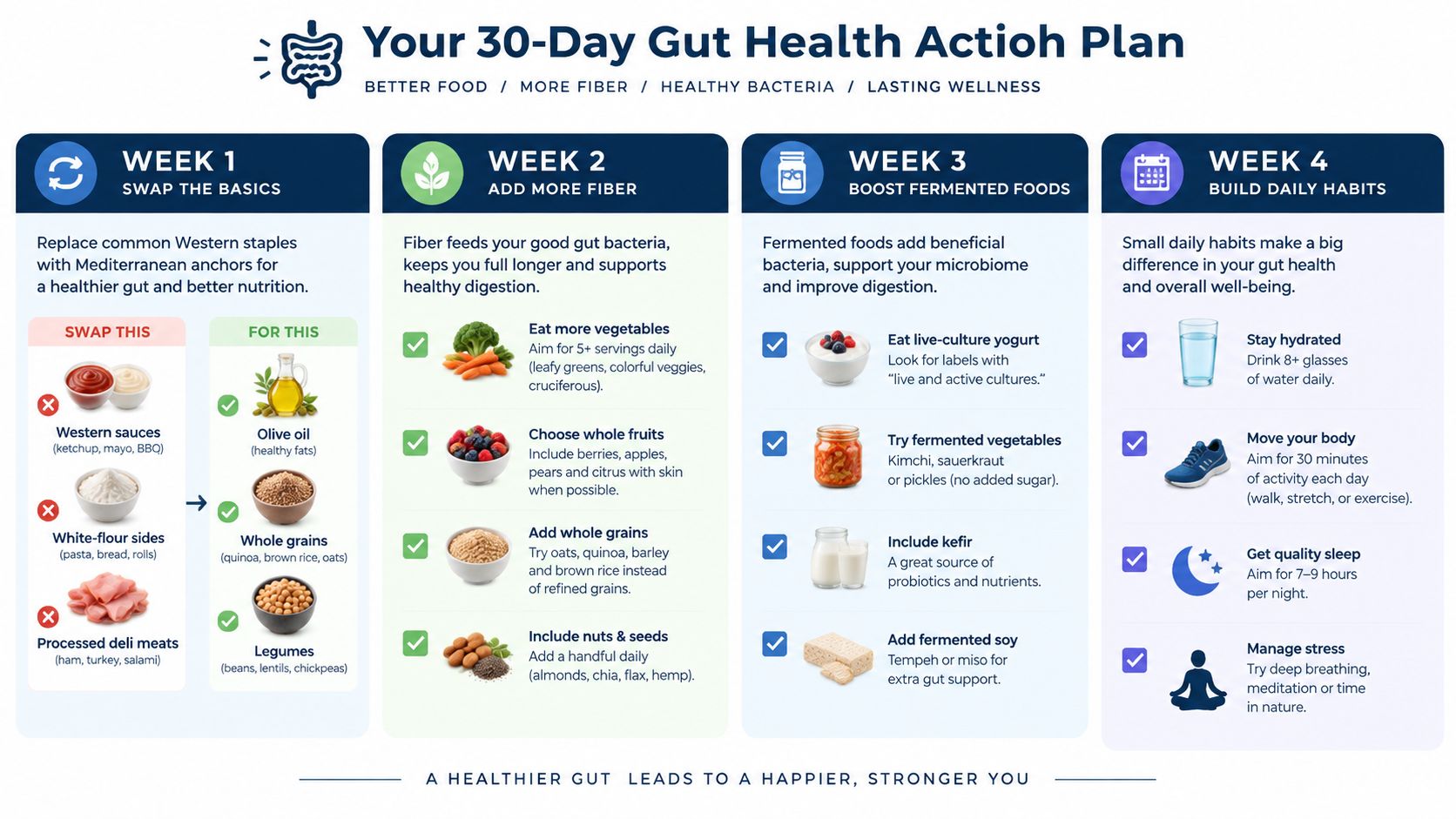
Replace three common Western staples with Mediterranean-style anchors. Use olive oil instead of a heavily processed sauce, choose legumes or whole grains instead of relying on white-flour sides, and swap processed deli meats for fish, beans, or another minimally processed protein. The goal is greater food variety, not a strict identity as a Mediterranean eater.
Add fibre-rich foods gradually. If you already tolerate beans and whole grains, include them in meals rather than treating fibre as a separate chore. If protein convenience matters after training, review options such as Bulletproof Gut Health Collagen Protein Powder by checking its ingredients and role within your overall diet, rather than assuming any powder will solve digestive problems.
Weeks two through four add recovery
During the second week, establish regular aerobic movement at an intensity you can recover from. Keep sleep and waking times steady, then add a serving of fermented food if you tolerate it. In the third week, review your supplements. Remove redundant products, check for clearly named strains, and avoid stacking several products that serve the same purpose.
By week four, assess four things: energy, stool comfort, sleep quality, and training recovery. Don't demand perfection. Look for a clearer pattern and fewer disruptions.
Use this decision guide:
- Mild symptoms: Adjust food, fluids, meal pace, and fibre gradually.
- A defined supplement goal: Consider one strain-matched probiotic and track your response.
- Persistent warning signs: Arrange a clinical evaluation if bleeding, persistent pain, major bowel changes, or unexplained symptoms continue.
The next three actions are straightforward:
- Choose one plant-rich meal for tomorrow.
- Schedule movement and a consistent bedtime.
- Write down symptoms before purchasing another supplement.
Supplemynts Inc offers categorized digestive-health, probiotic, protein, vitamin, mineral, and men's wellness products with ingredient-based navigation for shoppers comparing options. Visit Supplemynts Inc to review products that may fit your gut-health routine, then match any supplement choice to your diet, symptoms, and guidance from a qualified clinician.










Please complete your information below to login.
Sign In
Create New Account