


Water is the foundation of hydration, then immediately sold a powder that supposedly makes water work better. The first part is sound. The second needs context. An electrolyte hydration mix can be useful when your body loses substantial fluid and sodium, but it isn't automatically an upgrade for every bottle you drink.
The useful question isn't, “Which mix has the most minerals?” It's, “What is this formula designed to do, and does my situation require it?” The answer depends on sweat, illness, heat, carbohydrate content, sodium, concentration, and how you consume the drink.
Table of Contents
- Do You Need an Electrolyte Hydration Mix
- How Electrolyte Hydration Mixes Work in Your Body
- From Medical Origins to Modern Formulations
- Reading Labels and Choosing the Right Product
- When Electrolyte Mixes Make a Real Difference
- Making Your Own Electrolyte Hydration Mix at Home
- Building Your Personal Hydration Strategy
Do You Need an Electrolyte Hydration Mix
Plain water is often enough for ordinary daily hydration. If you are sitting at a desk, walking around town, eating regular meals, and losing little fluid through sweat, a flavored electrolyte powder may offer convenience or taste without providing a meaningful hydration advantage.
A 2025 systematic review of rehydration strategies found the strongest rehydration benefits with carbohydrate-electrolyte solutions, particularly formulas containing about 4% to 9% carbohydrate. Plain water remained an acceptable option when available. The distinction matters because electrolyte drinks are often marketed as universal upgrades, although their value is greatest when fluid and sodium losses are substantial.
Start with the situation, not the supplement
Consider what your body has lost before opening a packet:
- Low sweat and routine movement: Water and regular meals will often cover ordinary needs.
- Heavy sweating: An electrolyte formula may help replace sodium and fluid lost during exercise, heat exposure, or prolonged outdoor work.
- Illness-related fluid loss: A properly formulated oral rehydration solution can be more suitable than a casual sports drink, especially with vomiting or diarrhea.
- Lower-sugar preferences: A sugar-free mix may fit your diet, but it does not automatically provide the right electrolyte profile.
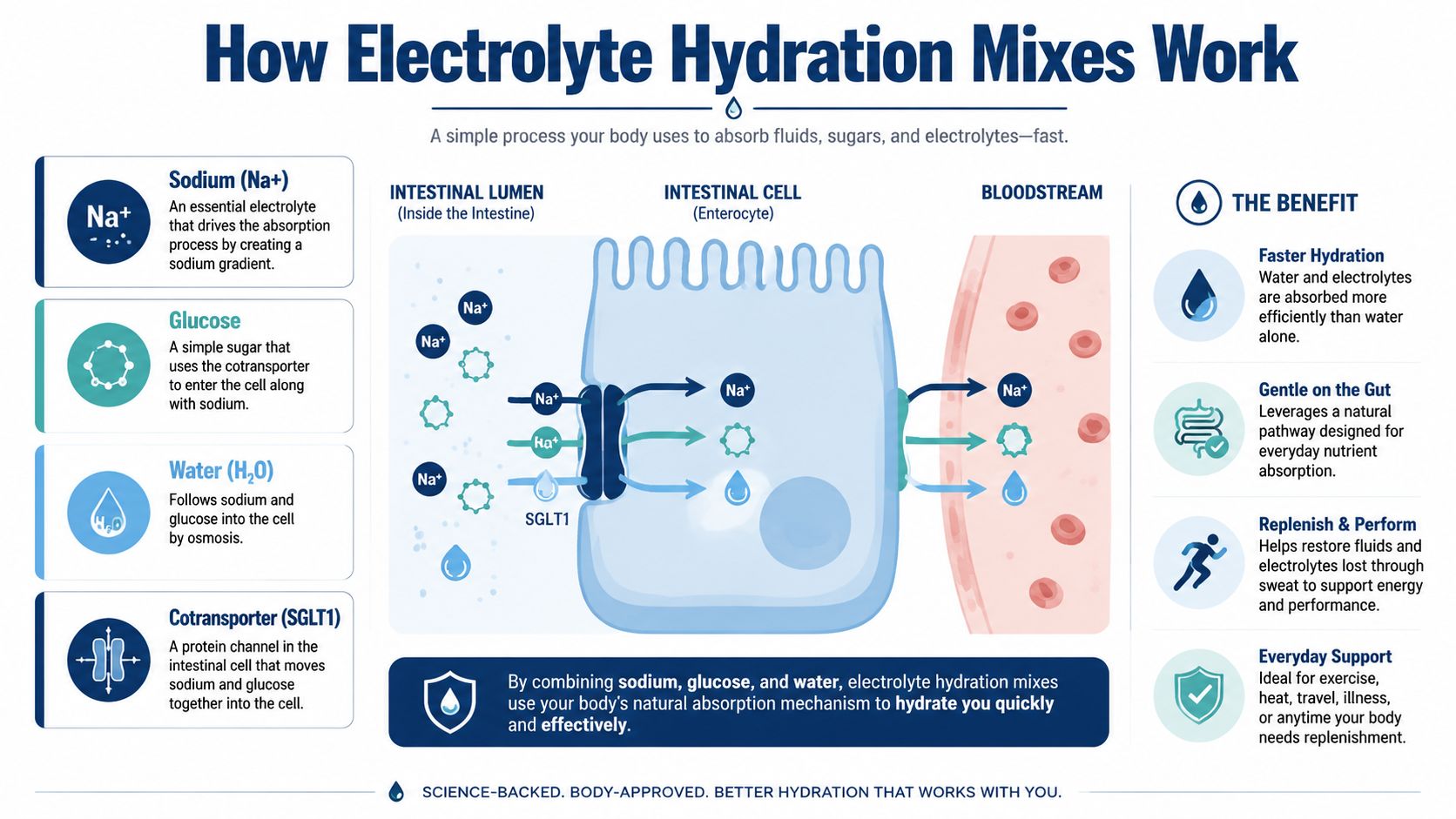
The formula matters because sodium and glucose can work together in the small intestine. Sodium-glucose cotransport helps pull water across the intestinal lining, while an overly concentrated drink can draw water into the intestine instead. The goal is not just to add minerals, but to match the drink's composition to the type of fluid loss.
Earlier evidence found that electrolytes alone did not consistently improve short-term hydration compared with water. Electrolytes paired with carbohydrate, or in some research with dipeptides, had a stronger effect on fluid retention. For a lightly active person, a mineral powder without a useful delivery strategy may be little more than flavored water.
Practical rule: If you have not lost much fluid or sodium, you may not need a specialized hydration product.
An electrolyte mix can still be useful in the right setting. A runner finishing a sweaty session, someone recovering from gastrointestinal fluid loss, and a person drinking water during a normal workday face different hydration demands. Matching the drink to the loss helps prevent unnecessary spending and makes the science more practical.
How Electrolyte Hydration Mixes Work in Your Body
The central idea behind effective rehydration is sodium-glucose cotransport. In the small intestine, glucose and sodium move together through a transport system in the intestinal lining. As sodium enters, water follows by osmosis, helping the body absorb fluid more efficiently than it might from water alone.
A simple analogy is a shuttle service. Sodium is one passenger, glucose is another, and the transporter is the vehicle that carries them across the intestinal wall. Water follows the changing concentration gradient. If the mixture has the right passengers in the right proportions, absorption can work efficiently. If the formula is poorly balanced, the same drink may be less useful or may draw water into the intestine instead.
Why glucose isn't just a sweetener
WHO-linked guidance specifies that carrier glucose should be about 2% to 3% for maximum sodium and water absorption, as described in this technical explanation of oral rehydration physiology. Too much glucose can increase solution concentration and contribute to osmotic diarrhea. Too little may reduce the sodium and water transport benefit.
That doesn't mean every effective sports drink must copy a clinical oral rehydration formula. Different products are designed for different contexts, and a drink used during endurance exercise may have a different carbohydrate purpose from a solution intended for clinical dehydration. It does mean that the ingredient list alone doesn't tell you whether the formula is well designed. Ratios and concentration matter.
Osmolarity changes how a drink behaves
Osmolarity describes the concentration of dissolved particles in a solution. A drink with many dissolved sugars, minerals, and other ingredients can be more concentrated than the fluid inside the intestine. When that happens, water may move into the intestinal space instead of being absorbed quickly.
A hypotonic solution contains fewer dissolved particles than body fluids and can support efficient fluid movement into the body. That is why a product's serving size and mixing instructions matter. Adding one packet to too little water increases concentration, potentially changing how the drink feels and functions.
For readers who want a broader explanation of fluid delivery and clinical hydration methods, IV hydration science explained offers useful background. IV therapy and oral hydration aren't interchangeable, but comparing their delivery routes can clarify why absorption depends on physiology rather than branding.
From Medical Origins to Modern Formulations
Electrolyte hydration products didn't begin as gym accessories. Their modern medical history reaches back to oral rehydration salts, or ORS. The World Health Organization describes a balanced glucose-electrolyte mixture first used in 1969, later approved, recommended, and distributed by UNICEF and WHO for treating clinical dehydration worldwide, according to this history of electrolyte drinks and ORS.
ORS established a durable scientific template: combine glucose with key electrolytes so the intestine can absorb fluid more effectively. The formulation was also designed for stability in hot and humid climates, which helped it serve emergency and public-health settings across diverse regions.
Formula evolution in one view
The classic solution wasn't just salty water. It combined sodium, potassium, bicarbonate, and glucose at carefully measured concentrations. Later work produced a reduced-osmolarity version, lowering the total concentration while preserving the sodium-glucose transport mechanism.
| Formula Type | Sodium (mmol/L) | Glucose (mmol/L) | Osmolarity (mOsm/L) |
|---|---|---|---|
| Classic WHO oral rehydration solution | 90 | 111 | About 311 |
| Reduced-osmolarity WHO/UNICEF formula | 75 | 75 | Around 245 |
These figures come from the clinical comparison of classic and reduced-osmolarity ORS. The classic formula also contained 20 mmol/L potassium and 30 mmol/L bicarbonate. The reduced-osmolarity formula was adopted because lower-osmolarity solutions improve net fluid absorption and are better suited to diarrhea-related dehydration. Health Canada describes an optimal ORS as hypotonic, ideally 225 to 250 mOsm/L, using the same source.
Modern products borrow the principle, not always the purpose
Commercial powders vary widely. Some emphasize sodium for heavy sweaters. Others include potassium, magnesium, flavoring agents, sweeteners, or carbohydrate for exercise fuel. A consumer product may be convenient for training or travel, while a clinical ORS should be selected for a medical hydration need rather than chosen by colorful packaging.
If you're comparing ready-to-mix products, a listing such as DripDrop dehydration relief variety packs can illustrate how commercial products are positioned for consumers. The label still deserves independent attention. A familiar name doesn't remove the need to check sodium, carbohydrate, serving volume, and intended use.
Reading Labels and Choosing the Right Product
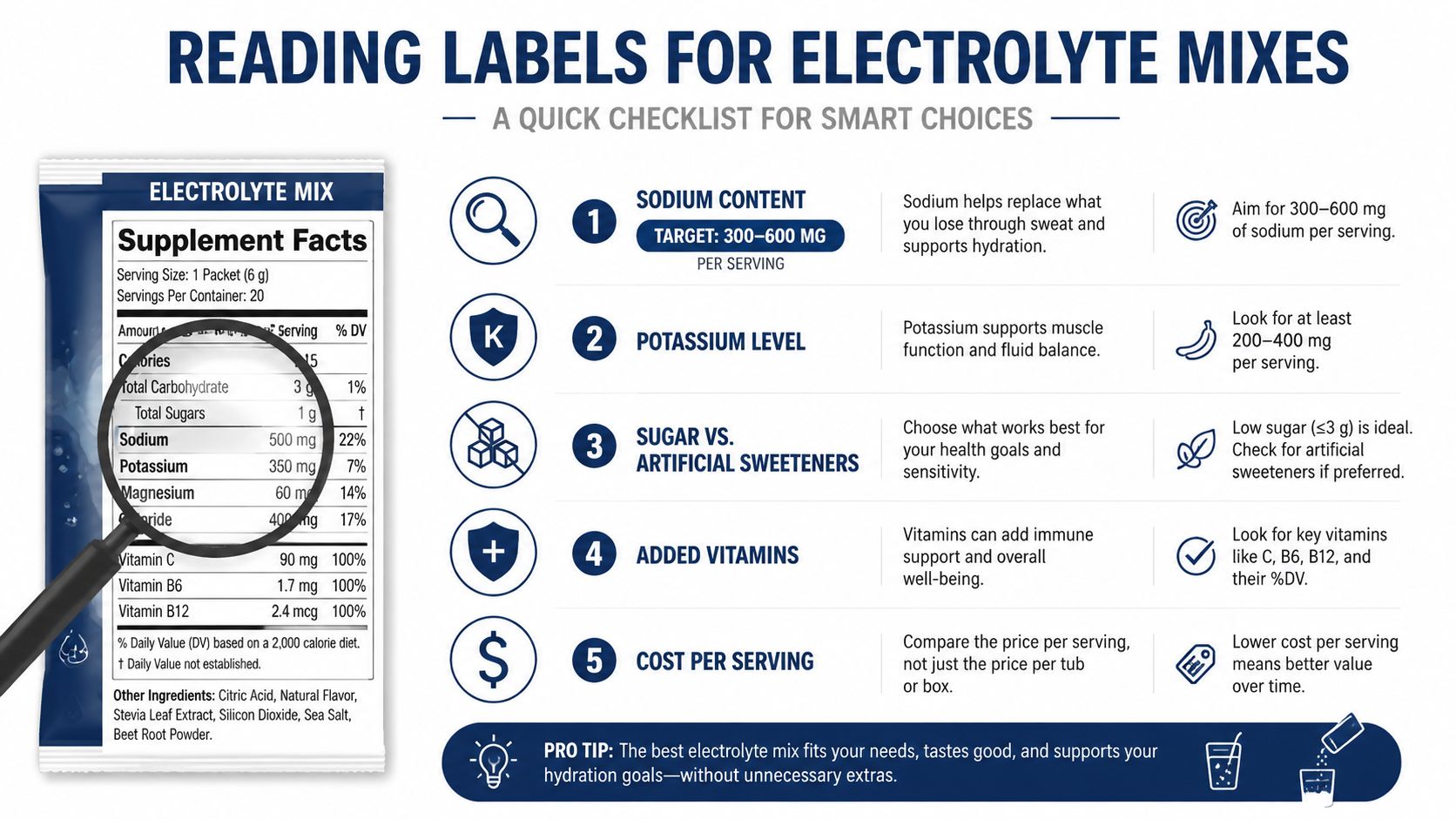
A front label can tell you a flavor, a lifestyle promise, or a sugar claim. It usually won't tell you whether the formula suits your specific hydration problem. For that, turn to the Supplement Facts or Nutrition Facts panel and evaluate the product in a consistent order.
A practical label check
Start with sodium. Sodium is central to fluid balance and is the electrolyte most closely associated with sweat replacement. A product can list several minerals prominently while providing little sodium, so don't assume a long mineral panel means strong rehydration support.
Then inspect carbohydrate. Carbohydrate can support the sodium-glucose transport mechanism, particularly when the drink is intended for meaningful rehydration. A high-sugar formula isn't automatically better, though. Excessive glucose can raise osmolarity and may cause gastrointestinal problems.
Check the serving volume. The same powder can produce a different concentration depending on how much water you use. Follow the stated dilution unless a qualified clinician gives you different instructions.
Look beyond “sugar-free.” Sugar-free products may use stevia, monk fruit, allulose, sucralose, sugar alcohols, or other sweeteners. Taste and digestive tolerance vary, and a sugar-free label says nothing by itself about sodium content or osmolarity.
The sugar-free question has a nuanced answer
A 2026 study reported that a sugar-free electrolyte mix hydrated twice as fast as water after exercise and produced about half the urine output of plain water, as reported in the PubMed record for the study. That result points toward a growing interest in clinically tested sugar-free formulations, but it doesn't prove that every sugar-free powder performs the same way.
Broader review literature still finds that carbohydrate-electrolyte solutions often have the strongest rehydration evidence. Sugar-free options may make sense after exercise when a product supplies useful electrolytes and the goal is to limit sugar. For more serious fluid loss, don't choose solely by calorie count. Compare the full formula, and seek medical guidance when illness or severe dehydration is involved.
For an example of a commercially available hydration product, you can review Liquid I.V. Hydration Multiplier Lemon Lime while applying the same label checklist. The point isn't to reward a brand name. It's to make the label do the explaining.
When Electrolyte Mixes Make a Real Difference
Consider a trail runner finishing a demanding session in hot weather. She hasn't only lost water. Sweat has also carried away electrolytes, and plain water may not address the entire replacement problem. A drink containing sodium, and sometimes carbohydrate, can be a practical choice when the activity produces substantial sweat loss.

The same logic applies to outdoor labor, prolonged heat exposure, and long training sessions. Your need rises with the amount of fluid and sodium you lose, not with the number of fitness influencers recommending a powder.
Situations where the choice changes
- Extended, sweaty exercise: A carbohydrate-electrolyte drink can support fluid replacement and provide carbohydrate during activity. The best formula depends on tolerance, intensity, and the total amount of sweat lost.
- Hot or humid conditions: Heat increases the importance of replacing fluids consistently. Sodium may be useful when sweating is heavy and prolonged.
- Vomiting or diarrhea: A properly formulated ORS has a medical purpose that ordinary flavored water doesn't. Clinical dehydration deserves careful attention, and severe symptoms require medical care.
- Travel: A sealed powder can be convenient when safe drinking water is available but carrying a prepared beverage isn't practical. The powder doesn't make unsafe water safe, so use an appropriate water source.
The medical roots of these products matter here. WHO's ORS framework was created for clinical dehydration, not for turning ordinary sipping into a performance ritual. A resource such as is IV therapy worth it can help readers compare the claims and considerations around IV services, but oral and intravenous hydration serve different situations.
When water remains the sensible choice
If you're reading at your desk, taking a short walk, or doing light activity without noticeable sweating, water will usually be the simplest option. Food also contributes fluid and minerals, so your hydration strategy doesn't have to come entirely from a packet.
Don't use an electrolyte mix to ignore warning signs. Confusion, fainting, persistent vomiting, severe weakness, or symptoms of heat illness call for prompt medical attention rather than experimentation with a new supplement.
Making Your Own Electrolyte Hydration Mix at Home
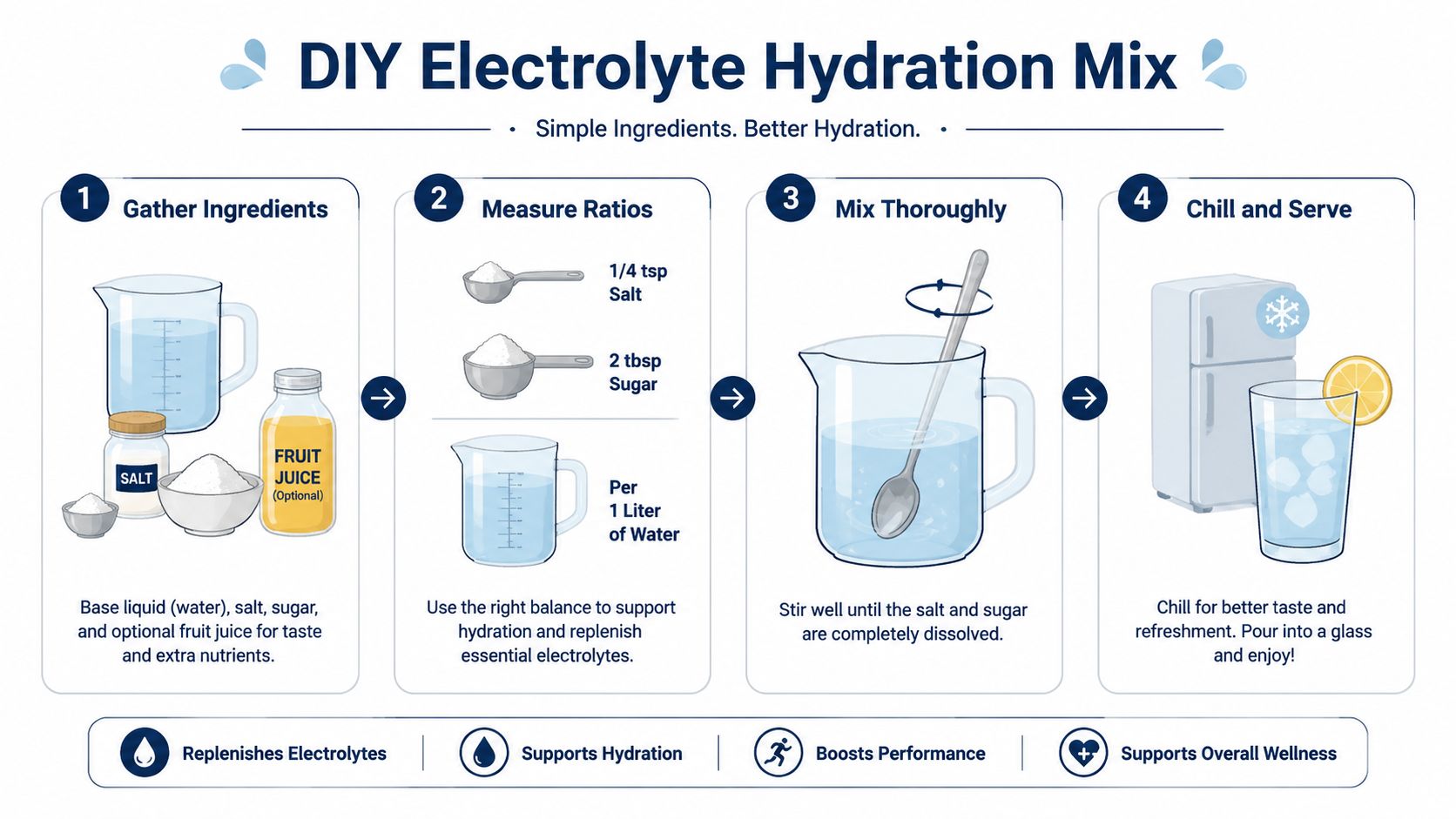
A homemade electrolyte drink can follow the same basic logic as a commercial formula: water provides the fluid, salt supplies sodium, and sugar supplies glucose for the transport mechanism. Precision matters because adding much more sugar or salt can make the drink unpleasant, poorly tolerated, or unsuitable for the situation.
A simple kitchen framework
For a basic household drink, combine:
- Water: Use a clean, safe base liquid.
- Salt: Add a measured amount for sodium.
- Sugar: Add a measured amount of ordinary sugar to provide glucose.
- Optional flavor: A small amount of fruit juice or citrus can improve taste, but it shouldn't replace accurate measurement.
The infographic's example uses one-quarter teaspoon of salt and two tablespoons of sugar per liter of water. Treat that as a recipe framework, not a universal medical prescription. A homemade mixture isn't a substitute for a commercially prepared ORS when someone has significant illness-related dehydration, especially because clinical formulas depend on precise electrolyte composition and osmolarity.
Avoid the common DIY mistakes
Don't add sugar by guesswork. Too much can make the solution highly concentrated and may worsen gastrointestinal symptoms. Don't assume that adding more salt will produce faster rehydration either. The sodium-glucose system works through balance, not intensity.
Use a measuring spoon, dissolve the ingredients completely, and chill the drink if that makes it easier to consume. If you want extra minerals or a different ingredient profile, compare the label of a product such as Eidon Ionic Minerals, but don't assume a mineral blend duplicates an ORS.
People with kidney disease, conditions affecting sodium or potassium balance, or medication-related restrictions should ask a healthcare professional before using concentrated electrolyte drinks, including homemade versions. For severe dehydration, use medical guidance instead of relying on a kitchen recipe.
Building Your Personal Hydration Strategy
An electrolyte hydration mix is not automatically better than water. The right choice depends on what your body is replacing: ordinary daily fluid, sweat-related sodium, exercise carbohydrate, or fluid lost during illness.
Match the drink to the demand
On a normal day, keep water available and let thirst, meals, and routine drinking guide you. During prolonged exercise or hot outdoor activity, check the mix's sodium, carbohydrate, serving volume, and dilution instructions. Vomiting or diarrhea call for a clinically appropriate ORS or professional advice, not a sports powder treated as medical care.
The way you drink can affect the result. A 2025 clinical study reported that one commercial electrolyte beverage improved hydration markers more than water after six hours. It also found that measured, spaced intake performed better than drinking a large amount at once, according to the study record in PubMed. A suitable formula taken steadily may therefore work better than a bolus, just as small, regular deliveries can keep a system supplied more evenly.
Plain water remains enough when fluid loss is modest and meals provide normal electrolytes. A mix becomes more useful when sweating, heat, illness, or limited access to food creates a specific replacement need. Sodium and glucose can support absorption through sodium-glucose cotransport, but concentration still matters. An overly concentrated drink may sit poorly in the gut, so following the dilution guidance is part of using the formula correctly.
Use a label-based routine
Ask four questions before choosing:
- What am I replacing? Water alone, sodium and fluid, or fluid plus exercise carbohydrate?
- Does the formula match that need? Check sodium, carbohydrate, other electrolytes, sweeteners, and serving dilution.
- Will I tolerate it? Flavor, sweetness, concentration, and gastrointestinal comfort affect whether you will drink it.
- Do health factors change the decision? Kidney conditions, medication interactions, pregnancy, and prescribed mineral limits warrant professional review.
The electrolyte drinks market is commercially substantial. An independent industry estimate values it at USD 39.93 billion in 2025 and projects USD 82.12 billion by 2034, with an 8.41% compound annual growth rate, as reported by The Business Research Company. Market demand does not show that every consumer needs supplementation.
Use water when water is enough. Choose a well-formulated mix when the situation creates a clear reason, read the formula rather than trusting its front label, and treat serious symptoms as a healthcare issue.
Supplemynts Inc offers an online selection of vitamins, minerals, herbs, proteins, and powder supplements, including hydration-related products that can be compared by ingredient and purpose. Visit Supplemynts Inc to review available options, product details, support information, shipping policies, and return terms before choosing a formula for your hydration routine.







Please complete your information below to login.
Sign In
Create New Account