


Could one enzyme blend help with every meal, even though its ingredients perform different jobs? A digestive enzymes list may include amylase, lipase, proteases such as pepsin, trypsin, and chymotrypsin, lactase, sucrase-isomaltase, maltase, and plant proteases such as bromelain and papain. Each targets particular food components, so the relevant question is what you are trying to digest and where that process occurs.
The pancreas supplies enzymes that digest carbohydrates, fats, and proteins. Other organs contribute at different stages: salivary and lingual glands begin digestion, the stomach starts protein breakdown, and enzymes on the intestinal surface finish processing some sugars and starch fragments. Knowing these locations helps explain why enzymes are not interchangeable.
For each enzyme, consider three questions: What does it break down? Where does it work? When might supplementation be worth considering, and when is it unlikely to help? Activity measures on product labels can also help compare enzyme preparations, though a listed enzyme alone cannot show whether a supplement will address someone's symptoms. Start with the symptom pattern, then match it to one enzyme. A broad blend is not automatically a better fit.
Table of Contents
- 1. Amylase, salivary and pancreatic, breaks down starches and complex carbohydrates
- 2. Lipase breaks down dietary fats
- 3. Pepsin breaks down dietary proteins in the stomach
- 4. Trypsin and chymotrypsin break down proteins and peptides in the small intestine
- 5. Lactase breaks down lactose, the sugar in milk
- 6. Sucrase-isomaltase breaks down sucrose and starch branch points
- 7. Maltase breaks down maltose into glucose
- 8. Bromelain is a plant protease from pineapple
- 8 Digestive Enzymes: Function Comparison Matrix
- Matching the Enzyme to the Meal, Not the Marketing
1. Amylase, salivary and pancreatic, breaks down starches and complex carbohydrates
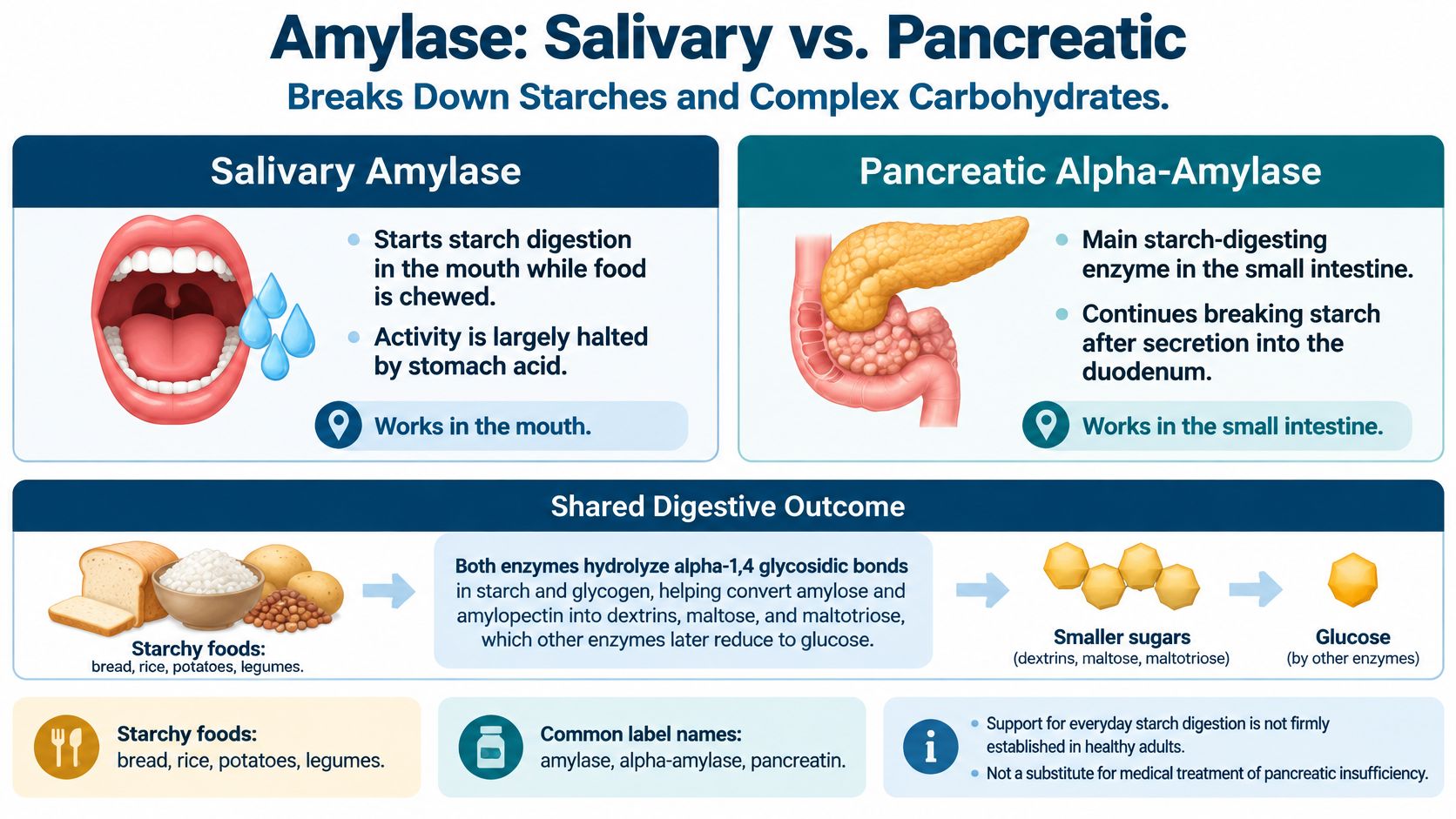
Amylase starts working before a meal reaches the stomach. Salivary amylase in the mouth begins breaking starch into smaller carbohydrate chains as you chew; pancreatic amylase then acts in the small intestine, where much of starch digestion takes place. Other intestinal enzymes complete the process, turning the resulting smaller sugars into molecules the body can absorb.
Starchy foods such as bread, rice, potatoes, and legumes contain carbohydrates that amylase helps process. The enzyme is commonly listed on supplement labels as amylase or alpha-amylase, and it may also appear as part of pancreatin. The name tells you the enzyme's general target, but not by itself whether a product will meaningfully help with an individual's symptoms.
What supplementation can and can't tell you
A supplement containing amylase may be considered as part of a digestive-enzyme product, but benefits for everyday starch digestion in otherwise healthy adults aren't firmly established. Amylase activity also varies with conditions in the digestive tract, so a label listing the enzyme doesn't tell you exactly how it'll behave after you swallow it. Persistent symptoms shouldn't be treated as proof that you lack amylase.
Practical rule: Match the enzyme to a specific, recurring food-related pattern rather than choosing a blend because it lists many ingredients.
A vegan digestive-support product such as Absorbaid Digestive Support Enzymes can be evaluated by checking its ingredient list and activity units, then comparing those details with the need you're trying to address. A product that doesn't contain the enzyme relevant to the suspected issue may not be a useful match.
2. Lipase breaks down dietary fats
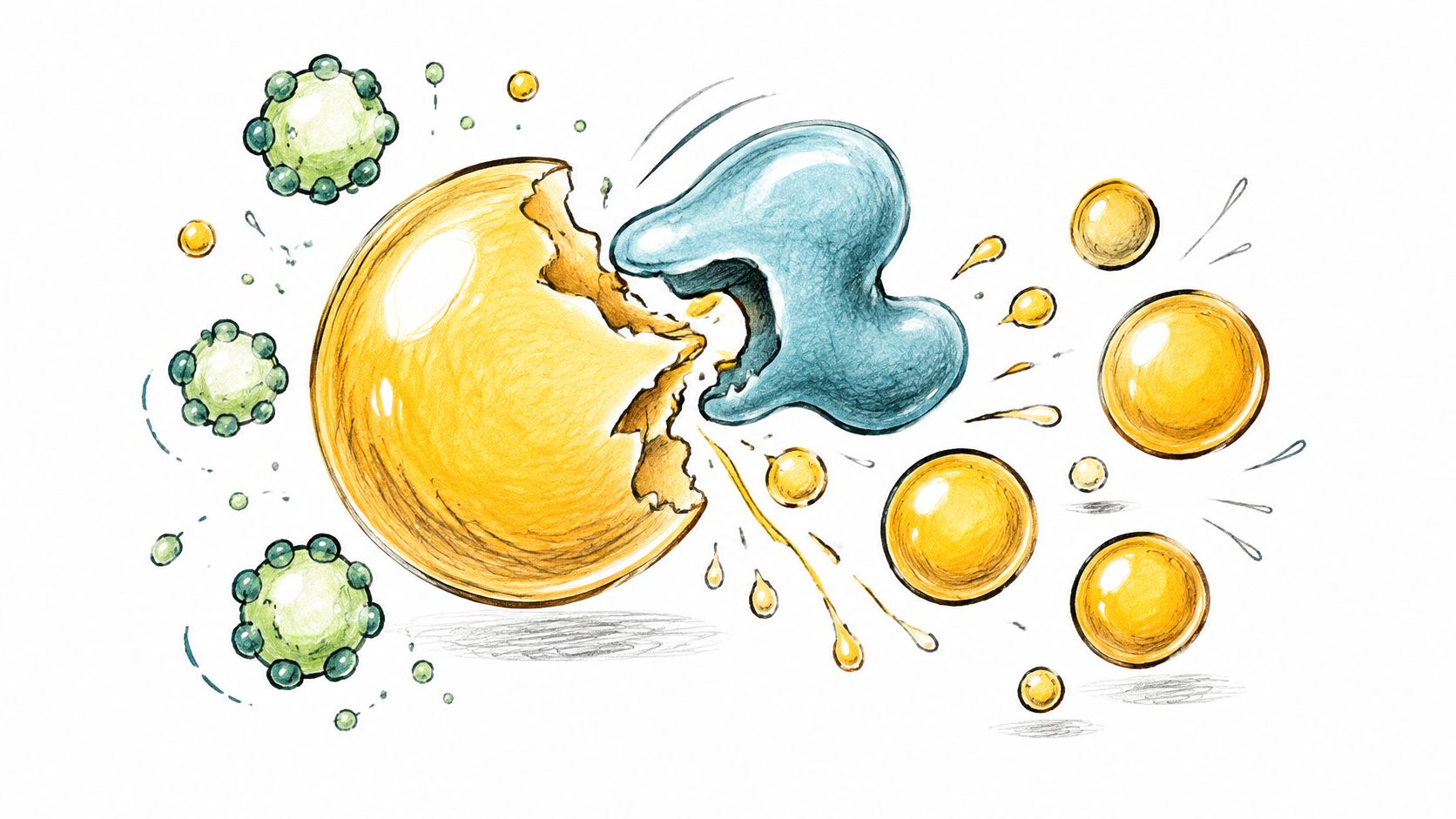
Most fat digestion takes place in the small intestine. There, pancreatic lipase acts on triglycerides, the main form of fat in food. Bile salts spread fat into small droplets, while colipase helps lipase work at their surfaces. Gastric lipase contributes in the stomach, but pancreatic lipase does most of the work.
This process lets the body absorb fatty acids and fat-soluble vitamins. A product label may list lipase alone or combine it with amylase and proteases. Lipases can also come from plants or fungi, though their source alone does not show whether a supplement will ease symptoms.
When fat-related symptoms need evaluation
Heaviness after a rich meal is common and usually resolves on its own, so track whether it recurs with specific fatty foods before considering any lipase product. A reader who feels full and sluggish after a fried dinner but has no greasy stools or weight change is unlikely to benefit from a lipase blend. A symptom diary is the better first step.
Recurrent greasy stools, unintended weight loss, or other signs of poor nutrient absorption warrant medical evaluation. For suspected exocrine pancreatic insufficiency, clinicians may use fecal elastase-1 as an initial noninvasive test. A 13C-mixed-triglyceride breath test can assess pancreatic exocrine function and help monitor treatment.
Pancreatic enzyme replacement therapy is a medical treatment, not routine consumer dosing. Adult starting therapy is typically about 40,000 USP units of lipase with a meal and 20,000 USP units with a snack, with adjustments made under medical supervision (clinical guidance on pancreatic enzyme replacement therapy).
Greasy stools, weight loss, or persistent symptoms deserve a clinician's attention rather than self-treatment with a supplement.
3. Pepsin breaks down dietary proteins in the stomach
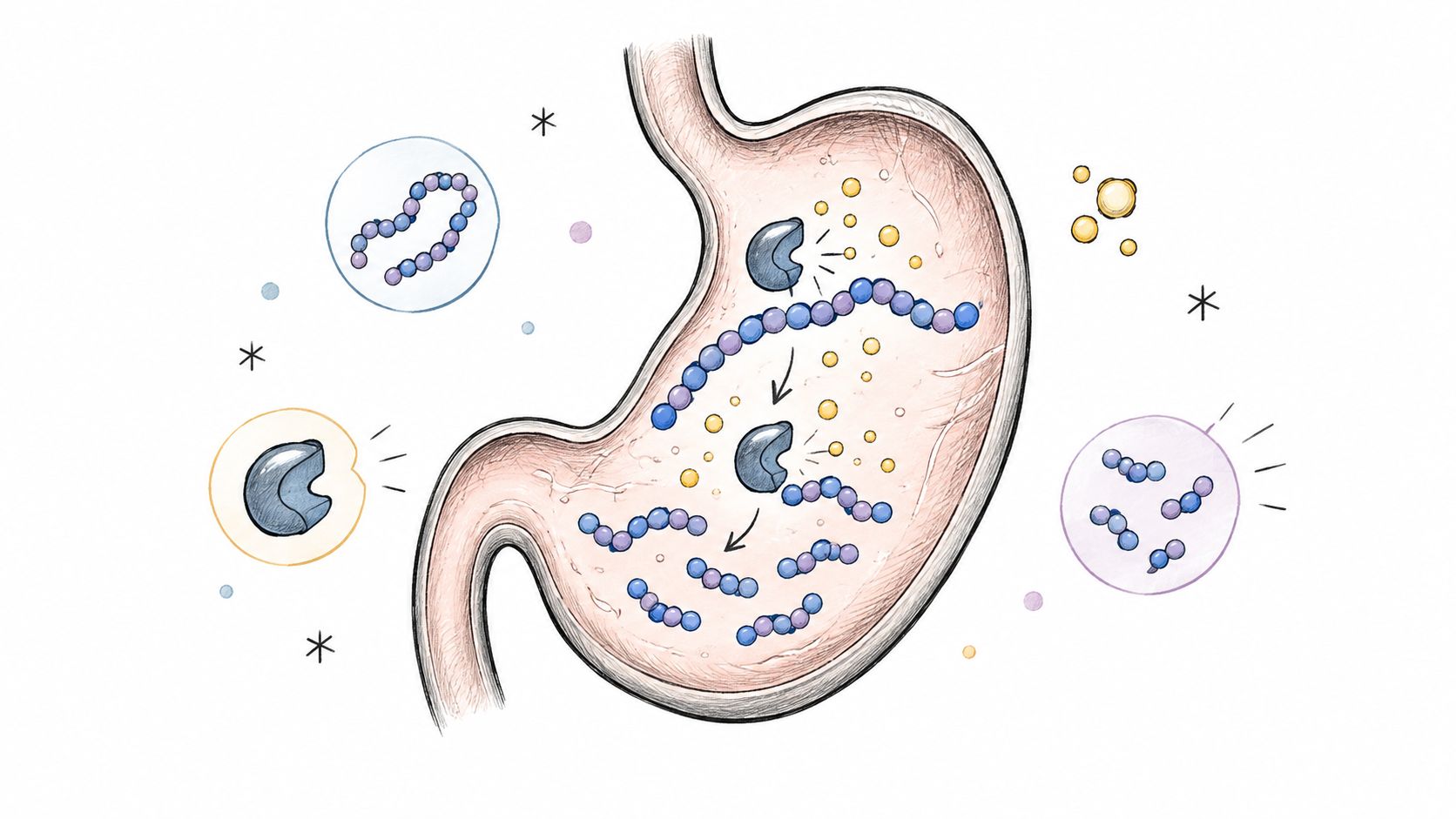
Pepsin begins the stomach's work on dietary protein. The stomach lining releases it first as inactive pepsinogen, which stomach acid activates. Pepsin cuts long protein chains into smaller peptides, preparing them for further digestion in the small intestine.
That location is important when weighing supplement claims. Pepsin relies on an acidic stomach environment, and taking a product that adds acid is not a neutral choice for everyone. People with reflux symptoms, ulcers, or other stomach conditions should discuss acid-related products with a clinician instead of assuming more acid will improve digestion.
A first step, not the whole process
Pepsin doesn't finish protein digestion by itself. It begins breaking proteins into smaller pieces; pancreatic proteases and intestinal enzymes continue the work. A product containing pepsin may be marketed for protein digestion, but that claim doesn't establish that it will help someone who already digests protein normally.
Before considering pepsin or an acid-support product, look at the pattern: does discomfort occur specifically after protein-containing meals, or is it persistent and unrelated to one food type? Symptoms alone can't identify a pepsin shortage, and acid-enhancing products can cause irritation or be inappropriate for some people. A clinician can help distinguish a supplement question from a stomach or digestive condition that needs assessment.
4. Trypsin and chymotrypsin break down proteins and peptides in the small intestine
After pepsin begins protein digestion in the stomach, trypsin and chymotrypsin continue the process in the small intestine. These pancreatic proteases are released as inactive precursors, including trypsinogen and chymotrypsinogen. This helps prevent them from digesting pancreatic tissue; they become active in the intestinal lumen through an enzyme cascade, as described in the NCBI Bookshelf overview of digestive enzymes.
Trypsin also activates other pancreatic enzyme precursors, including chymotrypsinogen. Working together, these enzymes cut protein chains into smaller peptides for further digestion and absorption. Their activity depends on their role in this cascade, so two products that both list proteases can differ sharply in activity. The activity figure on the label is what separates them.
Reading a protease label
Pancreatin-based products may combine proteases with lipase and amylase; other formulas use plant-derived proteases. When comparing Genius Digestion Optimizer Premium Digestive Enzymes or similar products, check enzyme activity, ingredient sources, and serving directions, rather than judging by the length of the ingredient list.
Pancreatic enzyme therapy is prescribed in capsule form with specific lipase, protease, and amylase units, and the dose is adjusted to meal size and response. For the lipase activity figures used to compare products, see the lipase section. Over-the-counter protease blends also do not establish that a person has a deficiency or will relieve discomfort after a protein-rich meal. Use the label to understand what's in the product, not as a diagnosis of what your body lacks.
5. Lactase breaks down lactose, the sugar in milk
Lactase sits on the brush border of the small intestine and breaks lactose, the sugar in milk, into glucose and galactose. If someone has too little lactase to digest the lactose they consume, some of it can reach the colon, where gut bacteria ferment it. That fermentation can lead to gas, bloating, cramping, or diarrhea.
A lactase supplement is most relevant when symptoms follow dairy and lactose intolerance is suspected or diagnosed. It's generally taken with dairy-containing food, according to the product label or a clinician's advice. Some people may need a different amount for a larger serving, but persistent symptoms despite avoiding lactose or using lactase may point to another cause.
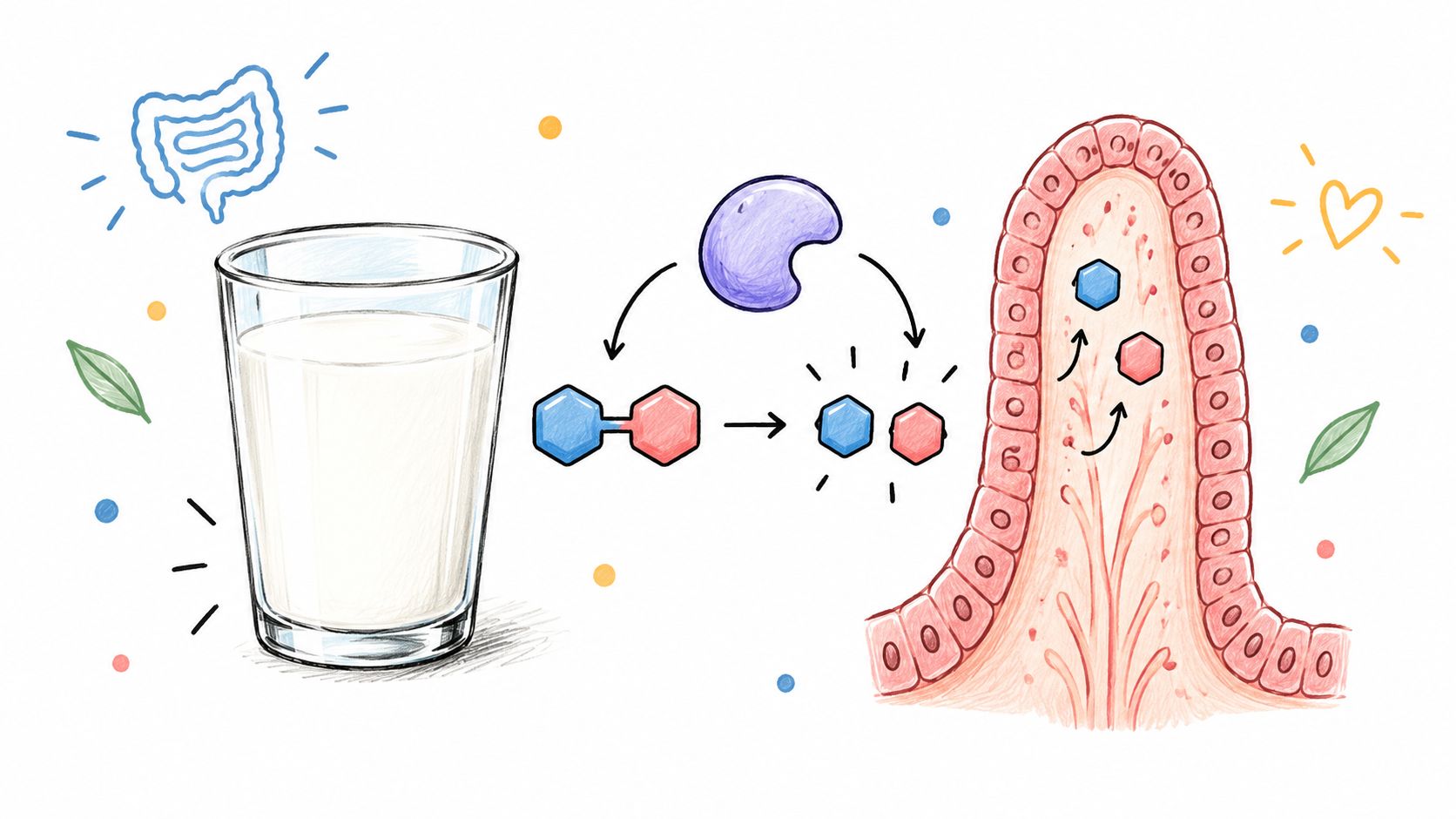
Keep lactose intolerance separate from milk allergy
Lactase addresses lactose digestion. It doesn't treat a milk allergy, which involves an immune response, and it won't address unrelated causes of digestive symptoms. If a person reacts to multiple foods, or has symptoms that aren't limited to dairy, it's worth seeking medical advice rather than assuming lactose is the cause.
When comparing foods or supplements, consider what else is in a product. The ingredients in protein shakes that may contain lactose and additives can complicate the picture, so a reaction to a shake doesn't necessarily identify one ingredient as responsible. A clear pattern around dairy can help guide a conversation, but it doesn't replace testing when symptoms persist.
6. Sucrase-isomaltase breaks down sucrose and starch branch points
Sucrase-isomaltase is a brush-border enzyme complex in the small intestine. Its sucrase activity breaks table sugar, or sucrose, into glucose and fructose. Its isomaltase activity helps digest branch points in starch fragments, allowing the body to process both common sugars and parts of starch digestion.
A deficiency can be congenital or acquired. In either case, symptoms after foods containing sucrose or certain starches may include bloating or diarrhea. But those symptoms overlap with many other digestive conditions, so they don't confirm that the enzyme is deficient.
When the pattern may matter
If symptoms repeatedly follow sucrose-containing foods or starches, discuss the pattern with a healthcare professional before making broad dietary restrictions. Sucrase-isomaltase deficiency is a recognized medical condition, and enzyme replacement may be available for diagnosed cases. That's different from assuming an over-the-counter sucrase product will help anyone who feels bloated after a sweet food.
A careful assessment can help separate a specific enzyme issue from other explanations. Cutting out broad food groups without a diagnosis may unnecessarily narrow someone's diet, while taking an unproven supplement can make symptoms harder to interpret. The useful question isn't whether a product lists sucrase-isomaltase, but whether there's a credible reason to target that enzyme.
7. Maltase breaks down maltose into glucose
Amylase breaks starch into smaller carbohydrate fragments, including maltose. On the brush border of the small intestine, maltase splits maltose into glucose molecules that can be absorbed. Maltase finishes the job amylase starts, so a product listing only maltase does nothing for starch that has not yet been broken down.
The enzymes work in sequence, like steps on an assembly line. Maltase activity is one part of starch digestion, alongside pancreatic amylase and other intestinal enzymes. A label listing maltase alone therefore does not show that a product addresses every possible cause of symptoms after starchy foods.
Why isolated maltase is rarely the starting point
Healthy adults produce enough maltase in the small intestine to finish starch digestion, so a standalone maltase product has no clear role for typical bread or cereal symptoms. A rare congenital deficiency can cause watery diarrhea and bloating in infancy or early childhood. A clinician can assess suspected deficiency and confirm it with a breath or biopsy test.
For recurring problems after bread, cereal, or other starch-rich foods, symptoms alone cannot identify a maltase deficiency. A clinician can help distinguish a specific enzyme condition from another food intolerance or digestive problem. Maltase explains how the body processes maltose after starch digestion begins, while its presence on a supplement label does not establish that taking the product will improve digestion.
8. Bromelain is a plant protease from pineapple
Bromelain is a group of protease enzymes derived from pineapple. Like other proteases, it breaks down proteins, and supplements may list its activity in units such as GDU or MCU. It's often included alongside papain, a plant protease derived from papaya, in products marketed for protein digestion.
Plant-derived ingredients may suit some people who prefer not to use animal-derived enzymes. But plant origin isn't the same as proven digestive benefit. Evidence doesn't establish that bromelain improves protein digestion in healthy people, and a product's activity units don't by themselves show that it'll resolve a particular symptom.
Check the source, activity, and cautions
Bromelain can cause mouth irritation, and people with pineapple or bromelain allergy should avoid it. It may also interact with medicines, including blood-thinning drugs and some antibiotics, so anyone taking medication should check with a clinician or pharmacist before using it. A product such as NOW Bromelain 2400 GDU/g can be assessed by its ingredient source, stated activity, directions, and warnings, rather than by broad claims about recovery or digestion.
The practical distinction: A plant-based protease can be a dietary preference, but it isn't automatically a clinically useful enzyme for every meal.
More generally, bromelain is a specific enzyme, not a replacement for a medical workup when symptoms are persistent. If you're curious about what pineapple enzymes may support, separate proposed uses from evidence for treating a diagnosed digestive problem.
8 Digestive Enzymes: Function Comparison Matrix
The matrix adds a label-reading detail to the enzyme-by-enzyme descriptions: the activity units you may see on supplement packaging. Units indicate measured enzyme activity, not the amount of enzyme by weight, and they are not necessarily comparable across different enzymes or products. Some labels do not state an activity unit.
| Enzyme | Activity units that may appear on labels | What the unit helps you check |
|---|---|---|
| Amylase | DU (dextrinizing units) or SKB units | Whether the label reports activity for starch breakdown; the unit alone does not establish that a supplement is needed. |
| Lipase | FIP or USP units | The stated lipase activity. Compare products using the same unit, rather than comparing milligrams alone. |
| Pepsin | Pepsin units, sometimes labeled as USP units | The activity stated for the pepsin ingredient. Labels may use different conventions, so check the unit named on the product. |
| Trypsin and chymotrypsin | Activity units vary by enzyme and product | Whether each enzyme's activity is listed separately. A combined ingredient weight does not tell you the activity of each enzyme. |
| Lactase | ALU (acid lactase units) | The stated lactase activity, which can help with product comparisons when the same unit is used. |
| Sucrase-isomaltase | No common supplement-label activity unit | The label may identify an enzyme or ingredient without giving a standardized activity measure. Ask a clinician about diagnosed deficiency and treatment options. |
| Maltase | No common supplement-label activity unit | A product may not provide a directly comparable activity figure. Check the ingredient details rather than inferring activity from milligrams. |
| Bromelain | GDU (gelatin digesting units) or MCU (milk-clotting units) | The stated activity and the unit used. GDU and MCU measure activity differently, so their figures cannot be compared directly. |
Treat these units like different measuring scales: a larger figure on one scale does not automatically mean greater activity than a figure on another. Check which enzyme the unit refers to, whether it is reported per serving or per gram, and whether the label gives directions and cautions. A unit can clarify what a product reports, but it cannot establish that the product will help a particular symptom.
Matching the Enzyme to the Meal, Not the Marketing
How can you tell whether an enzyme product fits the food or symptom you have in mind? Start with where that enzyme acts and what it digests. Salivary and pancreatic amylase work at different stages to break down starches and complex carbohydrates. Lipase acts on dietary fats. Pepsin works in the stomach, while trypsin and chymotrypsin act in the small intestine, breaking proteins into smaller peptides. Lactase targets lactose specifically, not every symptom associated with dairy.
Symptoms can suggest what to ask about, but they cannot confirm an enzyme deficiency. For instance, dairy-related discomfort may make lactase worth discussing, while symptoms after fatty meals do not by themselves show that lipase is needed. A long ingredient list is not a measure of how well a product fits a particular need.
Check the specific enzyme names, stated activity units, source ingredients, directions, and cautions on the label. Activity units describe enzyme activity more directly than milligrams, though units may not be comparable between products. For example, compare two lactase products by the activity units per serving, not by capsule count: equal numbers of capsules can provide different activity. If you prefer vegetarian or vegan sources, check whether the enzymes and other ingredients match those preferences.
Heat and humidity can reduce activity in some enzyme capsules. Follow the product's storage directions and check its expiry date before use. Over-the-counter enzymes should not replace prescribed pancreatic enzyme therapy. As noted earlier, suspected exocrine pancreatic insufficiency calls for clinical evaluation and appropriate testing and dosing guidance.
Persistent symptoms that are not clearly tied to a particular food deserve medical evaluation rather than repeated trials of enzyme blends. Greasy stools, weight loss, signs of malabsorption, or recurring gastrointestinal symptoms are reasons to speak with a clinician. Over-the-counter enzyme products are not FDA-approved for safety or effectiveness, and their enzyme concentrations and dosages are not guaranteed. Pancreatic enzyme replacement therapy is the FDA-regulated enzyme treatment for diagnosed pancreatic insufficiency. For more on digestive enzymes and supplements, see Johns Hopkins Medicine. Choose a supplement only when its ingredients match a clearly understood need, and seek help when the cause of symptoms is uncertain.
Supplemynts Inc offers digestive-health and other supplement categories, as well as ingredient-based browsing. If you are comparing enzyme products, you can explore the Supplemynts Inc catalog and discuss suitable options with a healthcare professional.







Please complete your information below to login.
Sign In
Create New Account