


You've just finished a workout on a warm day. You want protein, but the thought of a thick, creamy shake feels unappealing. A cold drink that tastes more like fruit-flavored water sounds much better. That's the space clear protein water is designed to fill.
It combines a water-like texture with protein, usually from carefully processed whey. The result isn't a universal replacement for meals or shakes, but it can be useful when you want a lighter way to add protein to your day.
Table of Contents
- What Clear Protein Water Is
- How the Clear Look Is Made
- Clear Protein Water vs Traditional Shakes
- Benefits and Honest Limitations
- How to Read a Clear Protein Water Label
- Smart Ways to Use It in Your Day
- Safety, Side Effects, and Who Should Be Cautious
What Clear Protein Water Is
A clear protein water can sit in your bag like a sports drink, then provide protein when a thick shake would feel too heavy. It is a flavored beverage built around a transparent protein system, usually whey protein isolate or hydrolyzed whey. Products come ready to drink or as powders mixed with water, with a thin, crisp texture closer to fruit juice than a conventional shake.
The category's defining feature is the format, not a special type of protein. Commercial products commonly offer 15 to 20 grams of protein per serving, with roughly 60 to 80 calories. Some ready-to-drink versions contain 0 grams of sugar. Formulas differ, so compare the nutrition label rather than assuming every bottle has the same profile.
Why it feels different
Traditional shakes keep protein suspended in a creamy liquid. Fat, lactose, thickeners, and other ingredients can add body and make the drink look opaque. Clear protein water uses more highly filtered protein in an acidic liquid base, reducing the particles that scatter light and create a dense mouthfeel. The next section explains how filtration and acidity work together.
That texture changes the best use case. A shake may feel substantial enough to stand in for part of a meal, while clear protein water fits a light post-workout drink, a sip between meetings, or a warm-weather walk. It can also be a practical choice on gut-sensitive days for someone who dislikes milk-like flavors, although tolerance still depends on the ingredients and the individual.
The market is younger and has fewer participating brands than established protein-shake categories, according to industry coverage of clear protein water. One market report valued the global category at USD 1.3942 billion in 2025 and projected USD 3.5 billion by 2035. That estimate describes a developing product category, not proof that the drink suits every routine.
Simple definition: Clear protein water is a hydration-style drink with added protein, designed for lighter drinking moments rather than as a transparent replacement for every traditional shake.
How the Clear Look Is Made
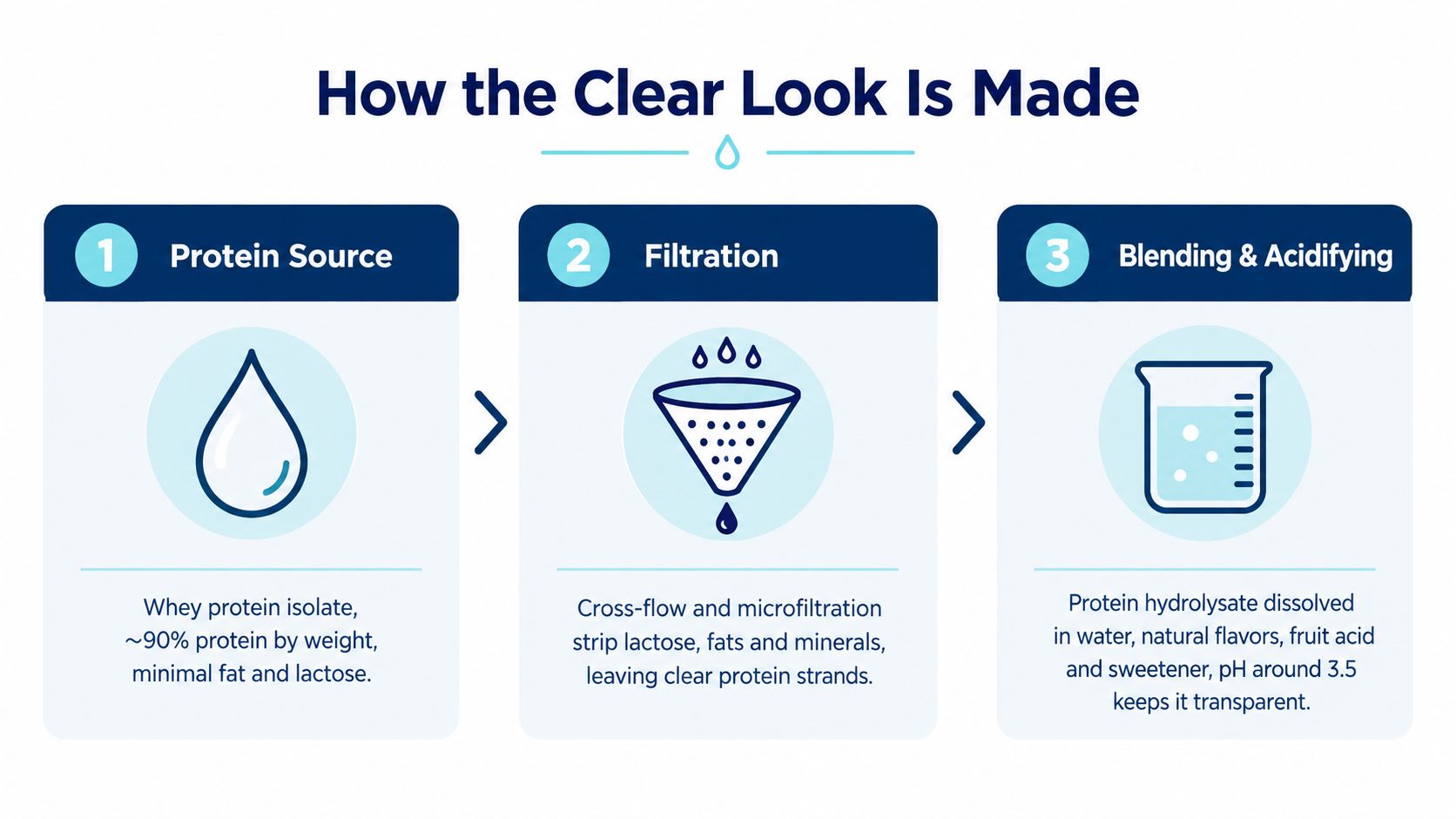
The clear appearance begins with the raw material. Whey protein isolate is filtered more extensively than whey concentrate, removing much of the fat and lactose that contribute to a cloudy, creamy drink. Some formulas use hydrolyzed whey, in which protein molecules are broken into smaller peptides to improve solubility and mixing.
Think of the process like filtering coffee. Unfiltered coffee contains grounds and suspended particles that make the liquid cloudy. A filter catches those solids while allowing the liquid to pass through. Protein processing uses more specialized filtration to reduce fat, lactose, minerals, and other components that can make whey look opaque.
Why acidity matters
Filtration alone doesn't guarantee transparency. Whey proteins need to stay dissolved in the water. If they clump together, the beverage becomes hazy, so manufacturers control acidity as carefully as they control the protein source.
Technical notes describe practical formulation targets around pH 2.0 to 3.5, a range in which whey proteins are more soluble because it sits away from their isoelectric point. One documented process dissolves the protein in most of the water, adjusts the mixture to about pH 3.2 with acids such as citric or gluconic acid, then heat-treats it at 70°C for 15 seconds before hot-filling. These process details come from technical notes on clear whey beverage formulation.
That acidity explains the bright fruit flavors found in many products. Citrus-style flavoring, sweeteners, and sometimes electrolytes help balance the sharp taste and create a beverage that feels closer to flavored water than dairy.
Clarity doesn't mean the protein has disappeared or automatically become lower quality. It means the formula contains fewer visible suspended components. With whey-based products, the protein can still provide all essential amino acids, but the final drink delivers them in a thinner, more acidic vehicle.
Clear Protein Water vs Traditional Shakes
The useful question isn't which format is “healthier” in every situation. It's which one fits the moment, your appetite, and the rest of your nutrition plan.
The ranges below are practical category comparisons rather than guarantees for every product. Clear protein water commonly sits at the lighter end, while traditional shakes can be denser and more filling.
| Feature | Clear Protein Water | Traditional Shake |
|---|---|---|
| Protein | Commonly 15 to 20 grams per serving in commercial examples | Often designed as a more substantial protein serving |
| Calories | Commercial examples commonly provide about 60 to 80 calories | Frequently higher because of thicker formulas and added ingredients |
| Sugar | Some ready-to-drink options contain 0 grams | Depends on the powder, milk, fruit, or sweeteners used |
| Lactose | Usually low when made with whey isolate, though not necessarily absent | Can be moderate or higher when concentrate or dairy ingredients are used |
| Texture | Thin, clear, juice-like, and easy to sip | Thick, creamy, and more filling |
| Best fit | Hydration, warm weather, busy periods, lighter recovery | Larger protein servings, stronger hunger, or more complete snack design |
For a more conventional whey option, compare the label and serving design of a grass-fed whey isolate protein supplement. A powder lets you adjust the liquid and may work better when you want a thicker, more substantial drink.
Choose according to the job
Clear protein water works well when a shake would feel too heavy, such as after a light workout, during a hot afternoon, or between meetings. Its water base and crisp texture can make it easier to drink gradually.
A traditional shake has the advantage when you need more protein in one sitting or want greater fullness. It also gives you more room to add ingredients such as oats, fruit, nut butter, or yogurt. Neither format wins automatically. The better choice depends on whether your priority is refreshment or density.
Benefits and Honest Limitations
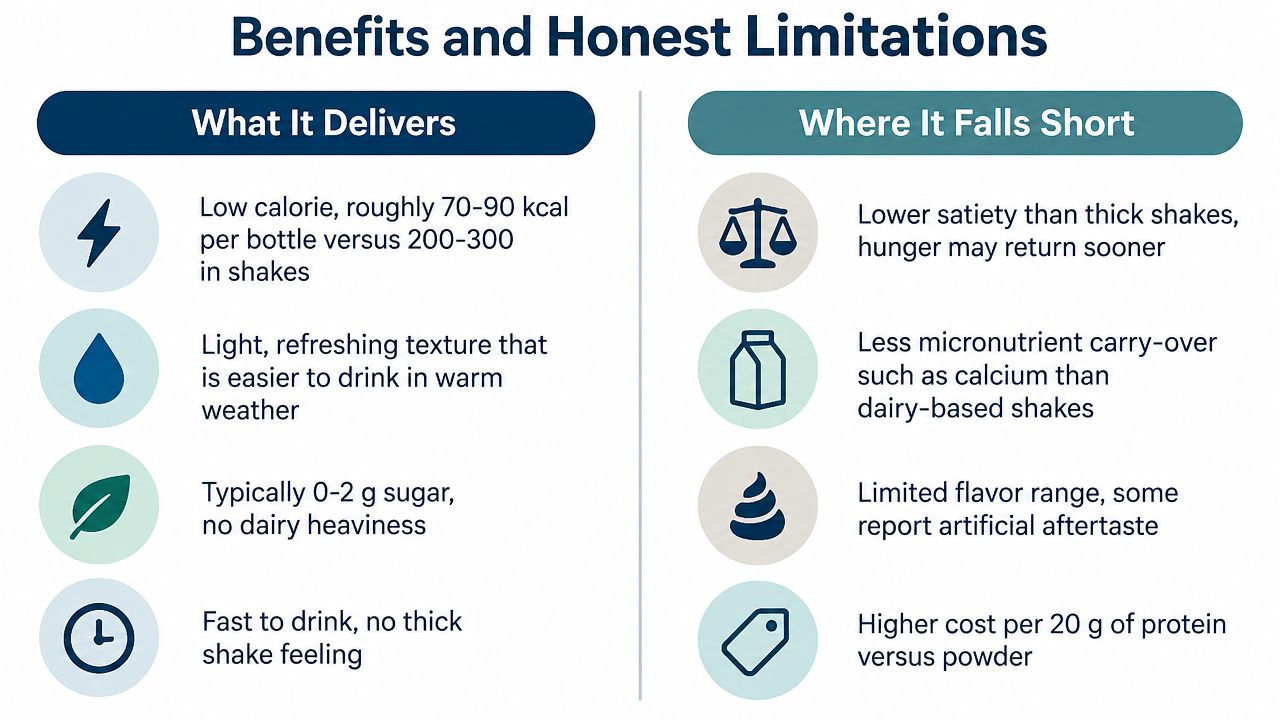
Clear protein water solves a specific problem: adding protein without adding the thick, milky experience that some people avoid. A typical product can provide meaningful protein with a comparatively small calorie and sugar load, particularly when the label shows an isolate-based formula and little or no sugar.
The water-like texture also changes the drinking experience. People who dislike creamy shakes may find a fruit-flavored drink easier to finish, especially in warm weather or immediately after movement. That can make consistency easier, although personal tolerance still varies.
Where the trade-offs appear
The same lightness that makes the drink refreshing also limits its role. A bottle can contribute protein, but it generally won't provide the fiber, fats, micronutrients, or fullness of a meal. If you're hungry, clear protein water may disappear quickly without resolving that hunger.
It can also be less useful for people who need a dense post-training serving. Many products emphasize convenience and low calories while offering limited guidance about amino-acid completeness, satiety, or when the drink is insufficient, an issue reflected in this clear protein water product overview.
Other trade-offs include:
- Lower density: The drink may support protein intake without feeling like food.
- Fewer additions: Clear formulas often leave less room for ingredients such as creatine, added leucine, or broader meal-supporting nutrients.
- Flavor fatigue: Acid, sweeteners, and protein bitterness can create an artificial aftertaste for some people.
- Higher cost per protein serving: Ready-to-drink convenience and specialized processing can raise the price compared with basic powder.
- Variable gut response: “Clear” describes appearance, not a guarantee that every stomach will tolerate the acids, sweeteners, or whey.
Industry analysis reports that sugar-free claims grew nearly 195% in the past 12 months, carbonated water use grew 73% since last year, and anti-bloat claims grew 34% in the category, according to protein-water retail trend analysis. Those trends show what shoppers are asking for, not proof that every formula prevents bloating or improves digestion.
How to Read a Clear Protein Water Label
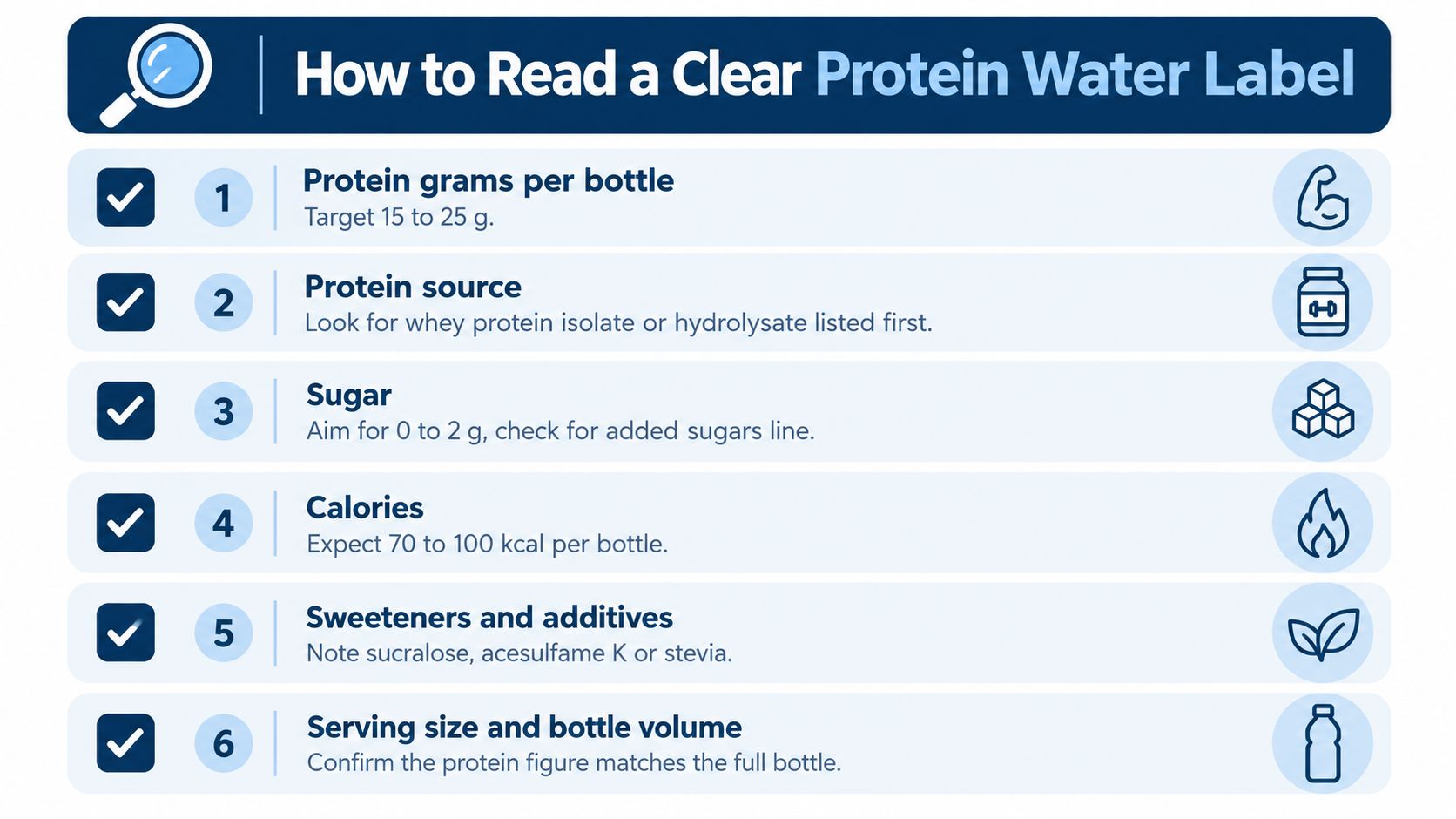
A bottle can look light and simple while its serving information creates confusion. Check the entire container first. Some labels define one serving as only part of the bottle, so the protein amount may be smaller than expected if you drink it all at once.
Six label checks
- Protein per bottle: Find the protein listed for the full container, then compare it with the amount you plan to drink. Commercial clear formats commonly provide 15 to 20 grams per serving.
- Protein source: Whey isolate or hydrolyzed whey often supports a clear texture and contains less lactose than whey concentrate. Plant-based formulas deserve a closer look at their blend because one source may not provide the same amino-acid pattern as another.
- Sugar and carbohydrates: Read total sugar, added sugar, fruit juice, and total carbohydrates. A fruit-flavored drink may contain little or no meaningful fruit.
- Calories: Compare calories with protein. A low-calorie bottle can suit a light supplement, but it will usually provide less energy and fullness than a shake or meal.
- Sweeteners and additives: Look for sucralose, acesulfame potassium, stevia, or sugar alcohols. Your own response to these ingredients matters more than a broad “clean” label.
- Testing and serving size: Check the serving definition and look for marks such as NSF Certified for Sport or Informed Choice if sport-related testing matters to you.
Ingredients appear in descending order by weight. In a clear drink, the first entries may include water, protein, acid, flavoring, and sweetener. River of Life's supplement fact guide offers a practical way to read serving sizes and ingredient lists across supplement categories.
The protein source also affects what the drink contributes. Whey-derived protein is complete, supplying all essential amino acids. Plant blends can work well too, but check whether the formula combines complementary sources instead of assuming every protein drink has the same profile.
Use the label to match the format to the moment. A light clear drink may suit a gap between meals, while a fuller shake may make more sense when you need greater energy or lasting fullness.
For a powder-based comparison, review the nutrition panel and ingredient order of this grass-fed whey protein supplement before choosing between a clear drink and a traditional shake.
Smart Ways to Use It in Your Day
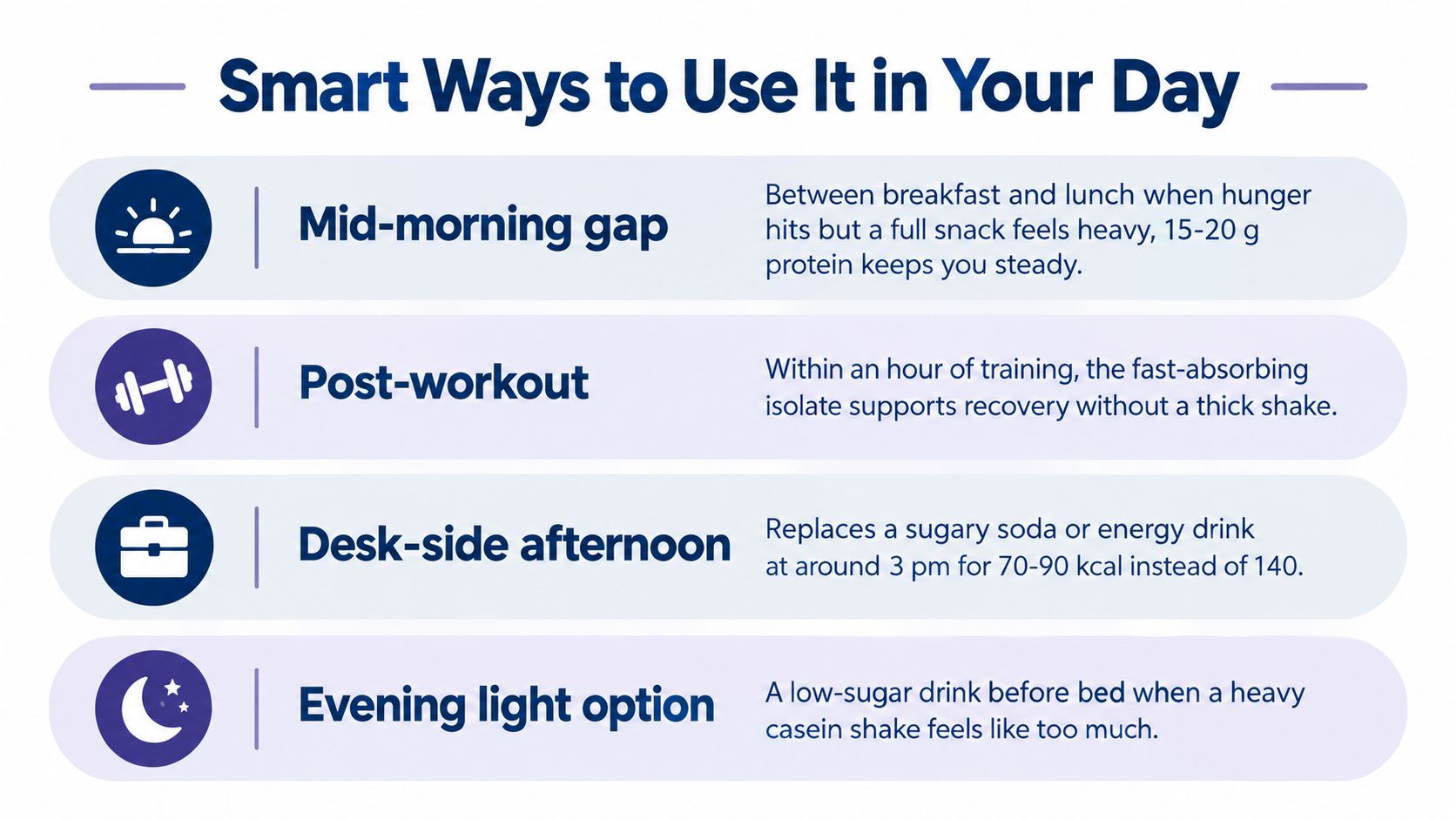
Clear protein water earns its place when you need a lighter option, not when you want it to perform every nutrition job. Match it to the moment.
Between meetings
A bottle can work during a mid-morning gap when breakfast was several hours ago but a full shake feels excessive. If it doesn't keep you satisfied, pair it with a piece of fruit or a small handful of nuts. The drink contributes protein, while the food adds energy and chewing.
After light movement
After a walk, gentle cycling session, or yoga class, clear protein water may be enough if your next meal is close and you're not particularly hungry. A banana can add carbohydrate when you want something more substantial without turning the drink into a heavy shake.
For demanding strength training, treat it as a supplement rather than an automatic recovery solution. A traditional shake or a complete meal may be more appropriate when you need a larger protein serving, calories, and lasting fullness.
Travel and hot weather
The crisp texture can be appealing during travel or a warm day when thick dairy drinks are difficult to tolerate. Check whether the product includes meaningful electrolytes rather than assuming every protein water does. Hydration needs, sodium intake, and the rest of your diet still determine whether it's suitable.
Sensitive periods
During a short period of poor appetite or when thinner liquids feel easier, a clear formula may be more comfortable than a thick shake. That doesn't make it universally gentle. Acidity, sweeteners, carbonation, and whey can all affect different people, so start with a modest amount and pay attention to your response.
A realistic weekly rhythm might include clear protein water on busy or warm days, a traditional shake when you need greater density, and whole-food meals as the foundation. It shouldn't replace food automatically, particularly during long endurance efforts or when you're pursuing a high daily protein target.
For people comparing protein-focused supplements, a product such as NOW Sports branched-chain amino acids represents a different format and purpose, so it shouldn't be treated as interchangeable with a complete protein drink.
Safety, Side Effects, and Who Should Be Cautious
Anyone can evaluate clear protein water as they would any other supplement, by checking the ingredients, serving size, and fit with their diet. The word “clear” doesn't remove the need to consider the protein source or the additives.
People sensitive to dairy should distinguish whey isolate from concentrate blends. Isolate generally contains less lactose, but it may not be completely lactose-free. Someone with strong lactose intolerance or a whey allergy may need a plant-based or egg-white option, and anyone with an allergy should follow medical advice rather than testing a product casually.
Situations that need professional guidance
People with kidney disease, liver conditions, or a medically prescribed protein restriction should speak with a qualified clinician before increasing supplemental protein. The same applies to pregnant people, children, and anyone taking medication who's unsure whether a product's ingredients fit their care plan.
Sugar alcohols and some artificial sweeteners can cause gastrointestinal discomfort in sensitive users. Carbonated versions may create additional issues for people who react poorly to carbonation, while acidic drinks can be uncomfortable for some individuals. If symptoms appear, stop using the product and review the label with a healthcare professional.
A single bottle also shouldn't be confused with a complete nutrition plan. Someone pursuing a very high protein intake may need more protein, calories, and meal structure than clear protein water can provide. Likewise, stacking several bottles with electrolyte products can increase total intake of minerals such as sodium or potassium, so review the combined labels instead of judging each drink in isolation.
Practical rule: Use clear protein water to fill a specific gap. Don't use it to override medical restrictions, replace balanced meals, or assume that a light texture guarantees easy digestion.
Supplemynts Inc offers vitamins, minerals, proteins, digestive-health products, vegan options, and other dietary supplements organized by category and health purpose. If you're comparing clear protein water with powders or related protein products, visit Supplemynts Inc to browse the available selection and review product details before choosing.







Please complete your information below to login.
Sign In
Create New Account