


You're standing in the supplement aisle or scrolling an online store, looking at two mineral products that seem almost identical. One says magnesium oxide. The other says magnesium bisglycinate chelate. The elemental dose looks similar. The price doesn't. One is basic. One sounds advanced.
That's where many get stuck.
A chelated mineral supplement is often marketed as the smarter, more absorbable, gentler option. Sometimes that's true. Sometimes it matters a lot. Sometimes it matters far less than the label suggests. The useful question isn't “Is chelation better?” It's better for whom, for which mineral, and in what real-world situation?
Table of Contents
- What a Chelated Mineral Supplement Actually Is
- How Chelation Changes Absorption and Bioavailability
- Chelated vs Non-Chelated Minerals Compared
- Common Chelated Minerals and What Research Shows
- Who Is Most Likely to Benefit From Chelation
- How to Read Labels and Choose a Quality Product
- Safety, Dosing, and Timing Considerations
- Putting It All Together When You Shop
What a Chelated Mineral Supplement Actually Is
A chelated mineral supplement starts with a simple idea. The mineral isn't left alone. It's bound to another molecule, often an amino acid or another organic compound, before you swallow it.
That's what “chelated” means on a label. It usually means the mineral has already been paired with a partner such as glycine, citrate, malate, picolinate, or gluconate. Your body isn't doing the chelating after the fact. The manufacturer already made that pairing.
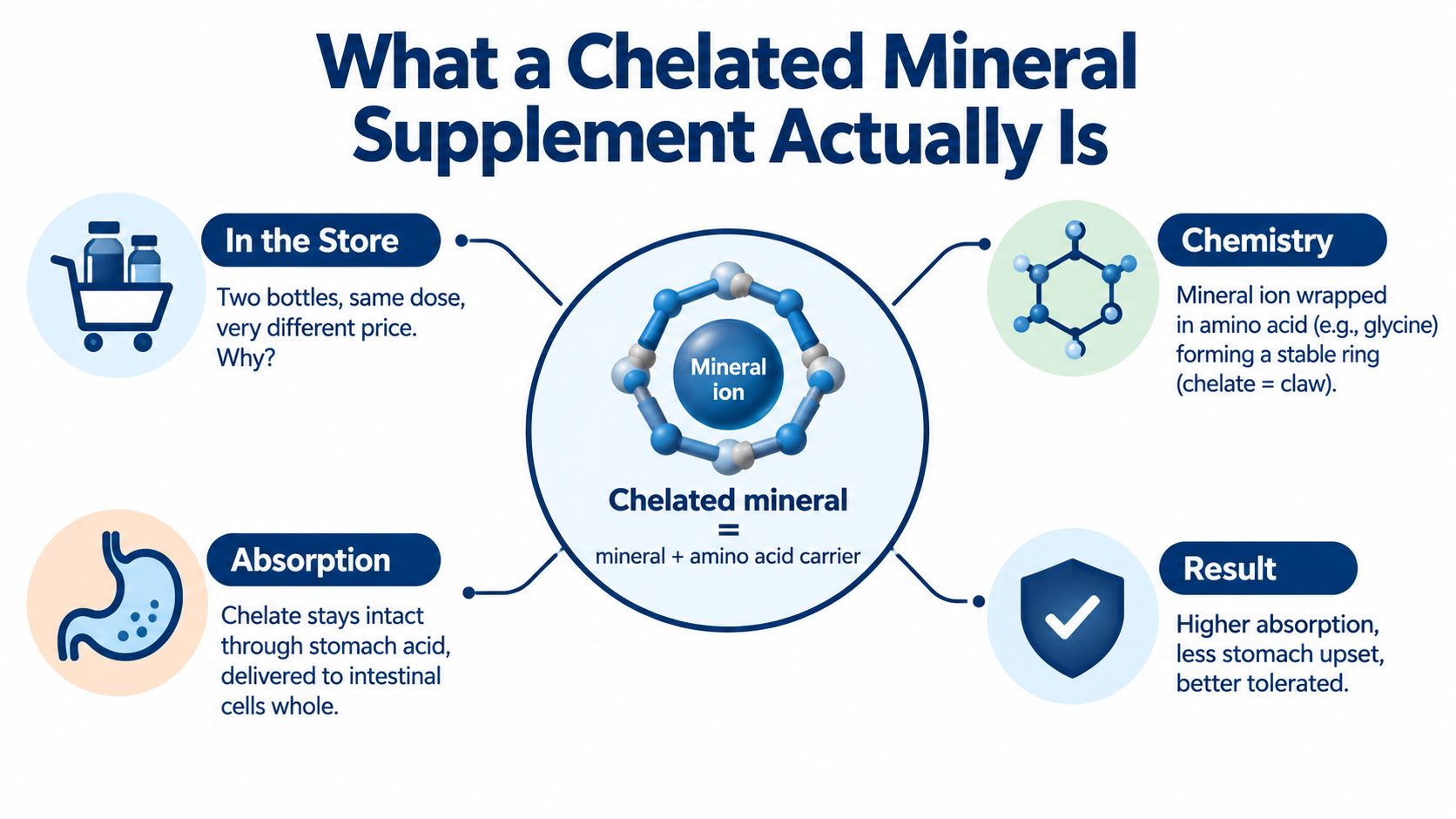
Why manufacturers bind minerals in the first place
Minerals are chemically active. That's part of why they're useful in the body, but it's also why they can be difficult to deliver well through the gut.
If a mineral is floating around as a free ion during digestion, several things can happen:
- It can react with food compounds such as phytates, oxalates, or tannins.
- It can become less soluble as the digestive environment changes.
- It can irritate the stomach or intestines in some people.
- It can compete with other minerals for transport.
Chelation is a way of packaging the mineral so it has a better chance of staying stable on the trip.
A plain-language analogy
Think of the mineral as a small but fussy passenger. Left alone, it gets into conflicts during travel, misses connections, or never reaches the destination. A chelating partner acts more like a travel companion that keeps the mineral organized and protected until it reaches the part of the intestine where absorption happens.
That doesn't automatically mean every chelated form works the same way. It just explains the structure.
Chelation is a delivery design, not a magic stamp of superiority.
Names that confuse shoppers
Labels often make this harder than it needs to be. A few examples:
- Magnesium bisglycinate means magnesium bound to glycine.
- Iron bisglycinate means iron bound to glycine.
- Zinc picolinate means zinc paired with picolinic acid.
- Magnesium citrate means magnesium paired with citric acid.
The second word matters. It tells you what the mineral is attached to.
A lot of confusion comes from assuming “chelated” is one ingredient. It isn't. It's a category of mineral forms. Some are amino-acid chelates. Some are organic-acid forms. Some have stronger evidence than others. That's why the label name matters more than the buzzword alone.
How Chelation Changes Absorption and Bioavailability
Bioavailability means how much of what you swallow reaches circulation in a usable form. A mineral can look impressive on the label and still perform modestly in the body.
One way to think about it is a key and a lock. A mineral may be the right “key” nutritionally, but if it arrives damaged, tied up with food compounds, or unable to stay dissolved long enough, it won't do much work.
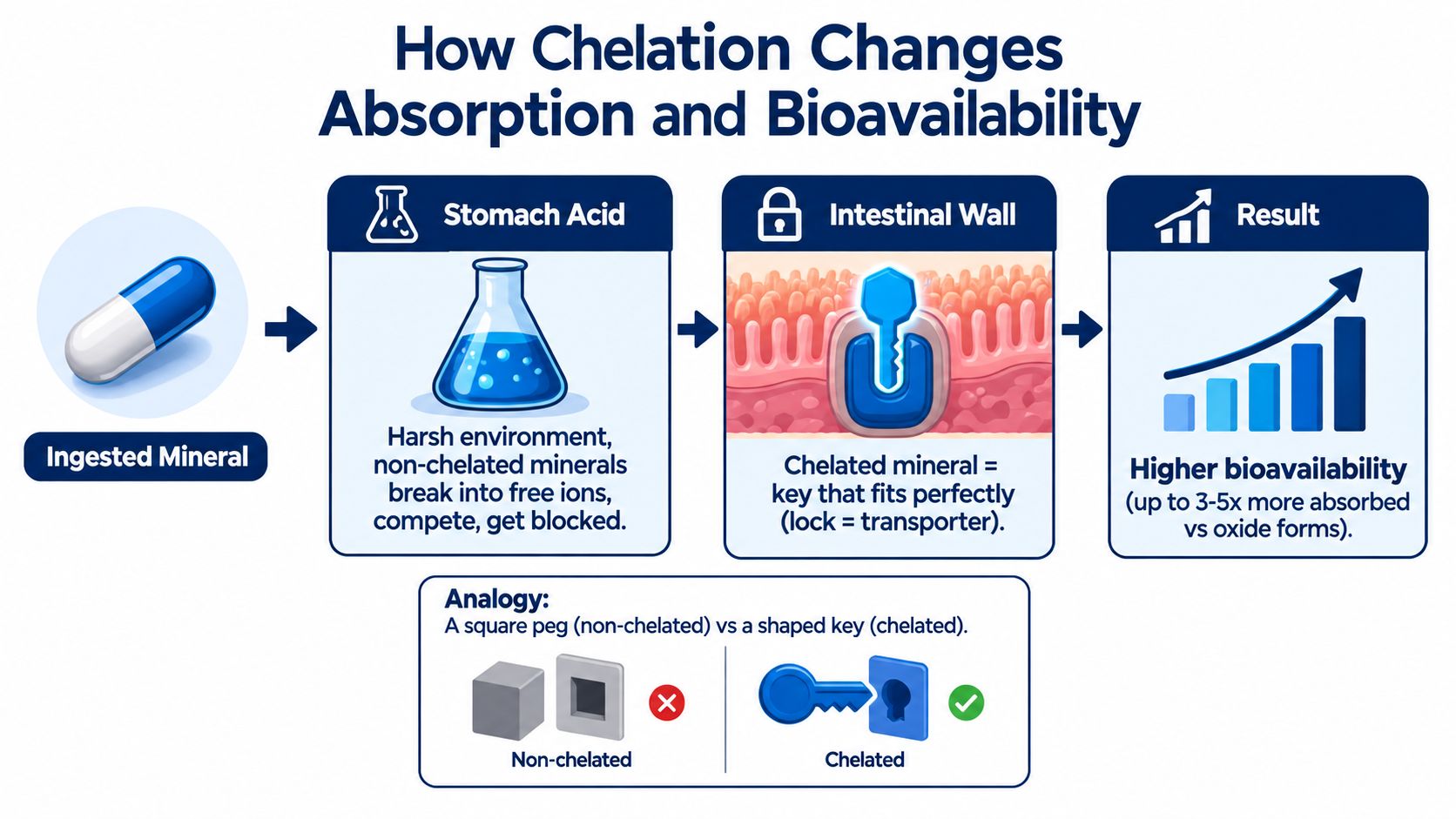
What gets in the way
Non-chelated mineral salts can run into several bottlenecks during digestion:
- Food binders: phytates in grains and legumes, oxalates in some plants, tannins in tea and coffee
- pH changes: a mineral may dissolve in one part of the gut and then precipitate later
- Transport competition: minerals can compete with each other for uptake
- GI irritation: unabsorbed mineral left in the gut can cause symptoms
Chelation can reduce some of those problems because the mineral may remain more stable and, in some cases, may use amino acid or peptide transport pathways rather than acting only like a free mineral ion.
Here's a strong example. In an in vitro digestion model, zinc bisglycinate was 10 times more bioaccessible in stomach conditions after 20 minutes and 5 times more bioaccessible in intestinal conditions after 140 minutes than zinc oxide. The same work also reported an absorption rate 10 times greater than zinc oxide in that model, which helps explain why chelated forms became a major strategy in supplements and fortified foods (Innophos white paper).
A video can help make the transport idea easier to visualize:
Better absorption isn't the same as a better outcome
This is the part marketing often skips.
A supplement can show better short-term absorption and still produce only a small practical difference for someone who already absorbs minerals well, eats a varied diet, and isn't deficient. On the other hand, that same absorption advantage can matter a lot for someone with digestive limitations, a restrictive diet, or a form that causes stomach trouble.
Practical rule: Treat absorption data as a clue, not a final verdict. The body cares about outcomes over time, not chemistry alone.
Chelated vs Non-Chelated Minerals Compared
The cleanest way to compare them is by criteria, not hype. Some chelated forms are excellent choices. Some standard salts are perfectly reasonable. The right pick depends on what problem you're solving.
Four lenses that matter
| Criteria | Chelated Forms (e.g., bisglycinate, citrate) | Non-Chelated Forms (e.g., oxide, sulfate) |
|---|---|---|
| Absorption evidence | Often show stronger absorption than oxide-based forms, depending on the mineral and chelate type | Can be less well absorbed, especially oxide forms, though performance varies by mineral |
| Tolerability | Often chosen when gentler digestion matters | More likely to bother some users, especially with iron or magnesium |
| Cost per dose | Usually more expensive per elemental milligram | Usually cheaper and more widely available |
| Strength of clinical data | Often supported by short-term biomarker or absorption studies | Also widely used, but “standard” doesn't always mean inferior in every context |
Where chelated forms tend to shine
If your biggest concern is tolerance, chelated forms often make more sense. People who stop taking iron because of nausea or magnesium because of loose stools don't benefit from a cheaper product sitting untouched in the cabinet.
If your concern is getting the most from a lower dose, a well-chosen chelate can also be sensible. That's especially relevant when a mineral is hard to absorb or frequently interferes with food.
Where non-chelated forms still make sense
Budget matters. So does access.
A non-chelated mineral can still be a practical choice when:
- You tolerate it well
- You're using it short term
- The form isn't one of the weaker performers
- The main issue is adding some intake, not overcoming absorption barriers
The evidence gap shoppers rarely hear about
A lot of comparisons focus on what happens in the bloodstream soon after dosing. That's useful, but incomplete. Recent independent evidence noted that chelated forms are often reported to improve solubility and reduce interactions with dietary inhibitors, yet a 2026 controlled study found organic versus synthetic multivitamin and mineral supplements were broadly comparable in short-term availability, with no evidence of time-dependent differences. The same source also notes that chelated products can command a 3- to 5-times retail premium while practical differences may be modest in some contexts (independent review and 2026 study discussion).
That doesn't mean chelates are overhyped across the board. It means the advantage is conditional. The more obstacles your body or diet creates, the more chelation tends to matter.
Common Chelated Minerals and What Research Shows
Different minerals have different stories. “Chelated” isn't one result. It's a family of formulations.
Magnesium
Magnesium is where many shoppers first notice the form question. Oxide is common, inexpensive, and familiar. Glycinate, bisglycinate, and citrate usually cost more.
In a randomized, double-blind, placebo-controlled trial in 46 healthy adults, participants took 300 mg/day elemental magnesium for 60 days. Organic forms, including an amino-acid chelate, produced greater absorption than magnesium oxide. Magnesium citrate showed the greatest mean serum magnesium concentration and significantly higher absorption at 60 days (P = 0.033) and after acute dosing (P = 0.026) (PubMed clinical trial).
That finding is useful for two reasons. First, it shows that form matters. Second, it shows that not every premium form wins equally. A chelated or organic form may beat oxide, but one chelated form may still perform differently from another.
Zinc
Zinc labels often push immune claims, but the more grounded conversation is about formulation.
The strongest concrete point from the evidence provided here is the digestion model showing zinc bisglycinate outperforming zinc oxide on bioaccessibility and absorption conditions. That doesn't prove every person will feel a noticeable difference, but it does support why zinc bisglycinate has become a common premium choice when manufacturers want a better-absorbing form.
For shoppers comparing product families, a mixed-mineral option such as American Health chelated calcium magnesium zinc is a good example of why labels need closer reading. The word “chelated” on the front is only the beginning. You still need the ingredient panel to see which specific forms are present.
Iron
Iron is often where tolerability matters most. People may need it, but many don't tolerate older forms well enough to stay consistent.
A market summary reports that chelated iron bisglycinate can deliver 2 to 4 times the absorption of ferrous sulfate with fewer GI side effects, while also noting that evidence is highly form-specific rather than universal (Fact.MR market report). That's not a blank check to assume every iron chelate is best for every person. It does support why iron bisglycinate has earned a reputation as a gentler option.
If a supplement is easier to keep taking, that can matter as much as lab absorption.
What this means in practice
For magnesium, zinc, and iron, the same rule keeps showing up: the specific form matters more than the generic “chelated” claim. A careful shopper looks for the exact compound name, then asks whether that form matches the reason they're supplementing in the first place.
Who Is Most Likely to Benefit From Chelation
The people most likely to notice a real difference are the ones whose bodies or diets create more absorption friction.
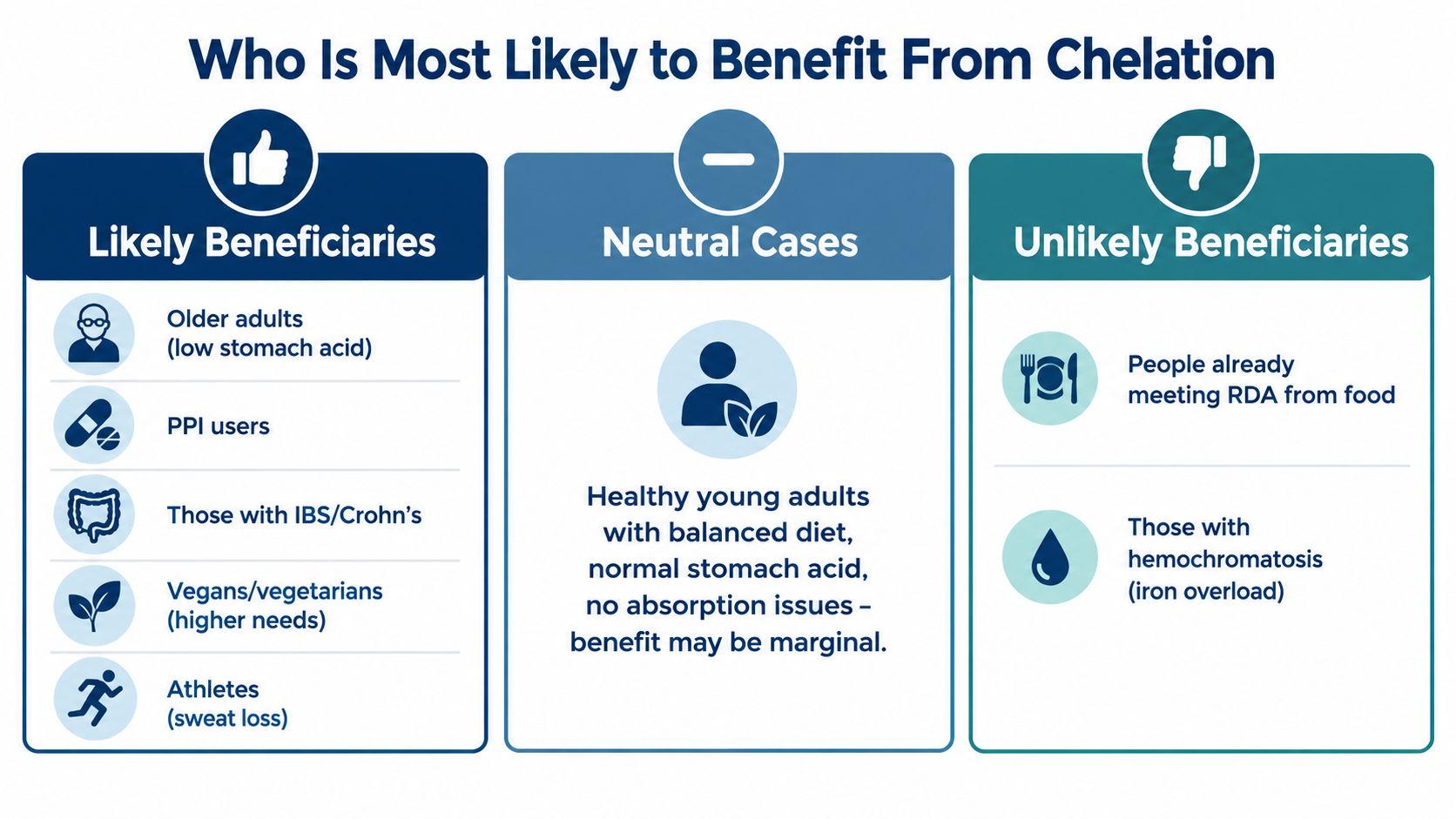
Likely beneficiaries
A chelated mineral supplement is more likely to earn its higher price when someone has documented deficiency, malabsorption, or a diet that regularly blocks mineral uptake.
This group often includes:
- People with compromised GI function
- Those with reduced stomach acid
- People who eat high-phytate diets, such as diets heavy in legumes, whole grains, and some seeds
- Those who struggle with standard salts because of side effects
One controlled human study helps explain why. In 12 patients with ileal resections, magnesium diglycinate and magnesium oxide had similar total group absorption, but the chelate performed much better in the most impaired absorbers: 23.5% vs 11.8% (p<0.05), with earlier peak isotope enrichment by 3.2±1.3 hours and a larger area under the curve. The authors concluded that part of the chelate may be absorbed intact through a dipeptide transport pathway (PubMed study in patients with impaired absorption).
That's a practical clue. If your gut isn't working normally, a chelate may solve a problem a basic salt can't.
Neutral cases
Healthy adults with no diagnosed deficiency, no major digestive issues, and a mixed diet may not feel much difference at all.
They might still prefer chelated forms for comfort or convenience. But in this group, the premium can sometimes buy peace of mind more than a meaningfully better outcome.
Unlikely beneficiaries
Some people need a different solution entirely.
- If the problem is poor consistency, a fancier form won't help much unless you take it.
- If the deficiency is driven by chronic disease, the main issue may need medical treatment.
- If intake is already adequate, extra absorption isn't necessarily useful.
The benefit of chelation rises when mineral delivery is the bottleneck. If the bottleneck is somewhere else, the chemistry won't rescue the plan.
How to Read Labels and Choose a Quality Product
Good label reading saves money and prevents a lot of confusion. Most mistakes happen because shoppers stop at the front of the bottle.
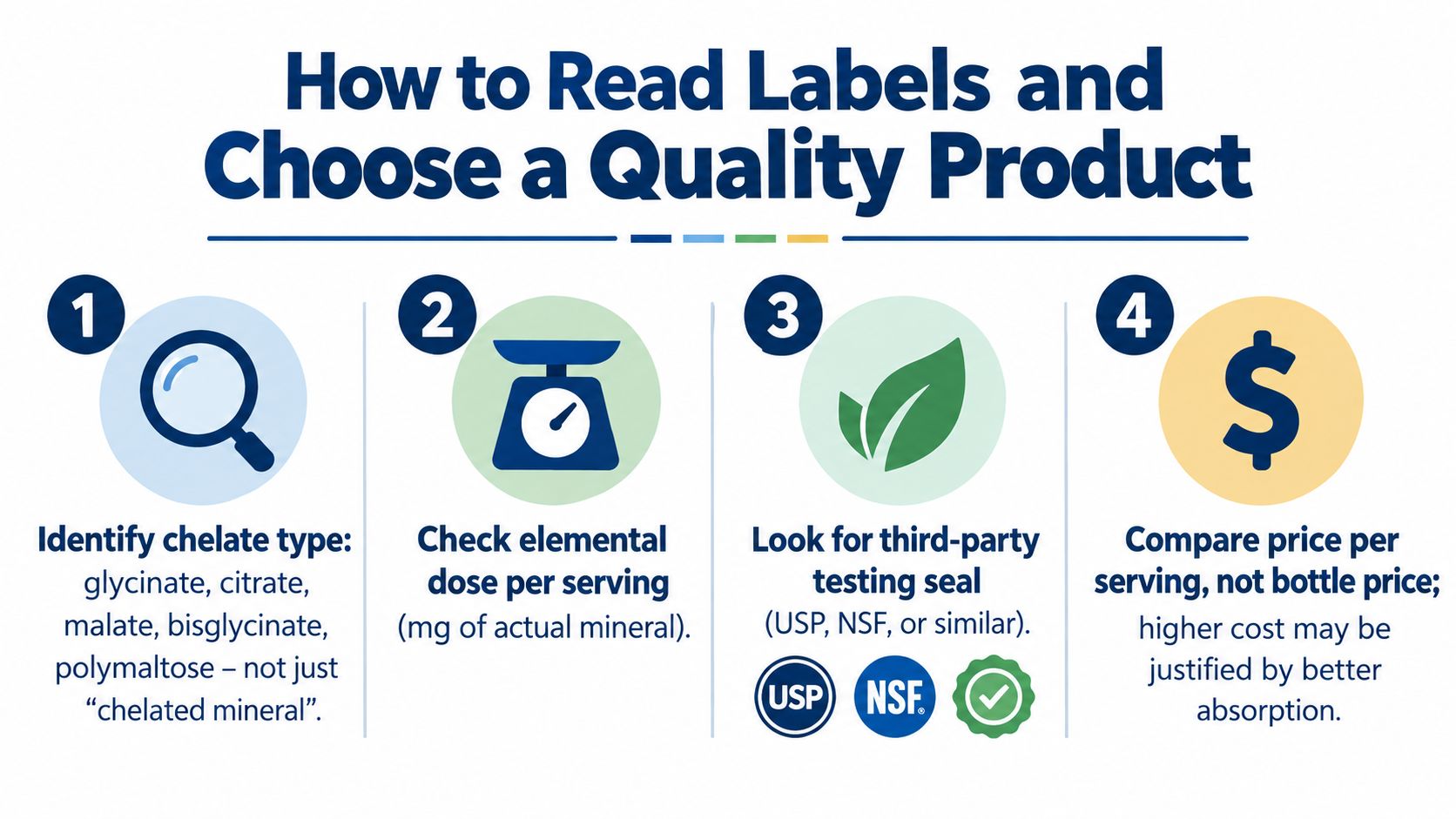
Step 1 looks at the actual form
Ignore broad phrases like “advanced mineral complex” or “chelated mineral blend” until you find the supplement facts panel.
Look for names such as:
- bisglycinate
- glycinate
- citrate
- malate
- picolinate
- polymaltose
If the label is vague, that's a warning sign. “Chelated” without the form name doesn't tell you enough.
Step 2 checks elemental dose
Many people get misled. The weight of the compound is not the same as the weight of the mineral itself.
A capsule may contain a large amount of magnesium glycinate compound but a much smaller amount of elemental magnesium. The elemental amount is the number that matters for dosing.
Step 3 looks for quality signals
Third-party verification marks can help confirm identity and contaminant testing. They don't prove the product is perfect, but they add a layer of confidence.
If you're comparing practitioner-focused options, resources that organize therapeutic supplements for patients can also help you see how medically guided products are positioned differently from general retail supplements.
Step 4 filters out marketing noise
Be cautious with claims like:
- 100% bioavailable
- proprietary mineral matrix
- whole-food chelated
- maximum absorption technology
Those phrases often sound more precise than they are.
A product page such as Healthy Origins chelated multi mineral is a useful example of why details matter. A multi-mineral formula may be convenient, but convenience only helps if the forms, elemental amounts, and intended use all make sense together.
A good supplement label answers your questions. A weak one tries to distract you from asking them.
Safety, Dosing, and Timing Considerations
Chelated doesn't mean harmless, and it doesn't give you a free pass on dose. Safety still depends on the elemental mineral amount, your health status, and what else you take.
Timing changes how minerals behave
Some minerals are easier on the stomach with food. Others are often taken away from competing foods or supplements when absorption is the priority.
A few useful patterns:
- Iron can compete with calcium
- Tea and coffee can interfere with iron absorption
- Zinc and copper can affect each other's balance
- Magnesium can interact with certain antibiotics and bisphosphonates
- Iron can interfere with thyroid medication
That means “best time to take it” isn't a universal rule. It depends on the mineral and your medication list.
Chelated forms can still compete
A common misconception is that chelation makes interactions disappear. It doesn't.
Chelated forms may reduce some problems with solubility or food binding, but they can still participate in real absorption competition. If you're taking multiple minerals in one sitting, or combining supplements with prescription drugs, spacing often matters.
Who shouldn't guess
Some people should get individualized advice before self-prescribing:
- People with kidney disease
- Anyone taking prescription medications
- Pregnant users
- Those with a history of iron overload or other mineral handling disorders
For someone shopping magnesium specifically, a product listing like Healthy Origins magnesium bisglycinate chelate shows the kind of form name worth noticing. But the safer question is still, “How much elemental magnesium am I getting, and is that appropriate for me?”
A simple timing approach
Use this routine when you're unsure:
- Check the exact mineral form
- Confirm the elemental dose
- Review competing supplements and medications
- Use food strategically if the mineral upsets your stomach
- Separate from known blockers when absorption matters most
If you're taking minerals to correct a deficiency, consistency and correct timing usually matter more than chasing the most impressive label language.
Putting It All Together When You Shop
A useful shelf-side decision takes less than a minute.
Start with the question: Do you have a meaningful need? That could be a diagnosed deficiency, a restrictive diet, a history of poor tolerance, or a digestive issue that makes standard forms less reliable. If the answer is no, the fanciest chelate may not do much for you beyond raising the receipt total.
Then match the form to the mineral. Iron bisglycinate makes sense when iron is hard on your stomach or adherence has been the problem. Magnesium glycinate or bisglycinate can be a smart pick when oxide hasn't agreed with you. Zinc bisglycinate may be worth considering when you want a form built around improved uptake rather than just the cheapest zinc on the shelf.
After that, do three quick checks:
- Read the full ingredient name, not just the front label
- Check elemental mineral per serving
- Look for quality verification and sane marketing
Finally, weigh the price against likely benefit. If you're healthy, eating well, and using a modest supplement as nutritional insurance, a standard form may be enough. If you've got malabsorption, frequent GI side effects, or a diet full of inhibitors, chelation is much more likely to be worth paying for.
The best chelated mineral supplement isn't the one with the most chemistry on the front of the bottle. It's the one that fits your body, your reason for supplementing, and your odds of taking it consistently.
Supplemynts Inc offers a broad online selection of vitamins, minerals, herbs, and wellness products, which makes it easier to compare mineral forms and find products that match your goals instead of guessing from buzzwords alone. If you want to browse different chelated and non-chelated options side by side, visit Supplemynts Inc and use that comparison mindset before you buy.







Please complete your information below to login.
Sign In
Create New Account