


You've probably seen the promise while scrolling through a wellness post: a few drops of black walnut wormwood tincture, perhaps combined with clove, supposedly removes hidden parasites and resets digestion. The appeal is understandable. The claim is also much stronger than the human evidence behind it.
This formula has a real history in herbal practice, and its ingredients contain biologically active compounds. It also carries meaningful risks, particularly when a concentrated product has an unknown thujone content or is used for too long. The most responsible way to evaluate it is to separate traditional use, laboratory rationale, marketing language, and proven treatment.
Table of Contents
- Navigating the Claims About Herbal Cleanses
- The History and Traditional Uses of This Tincture
- Whats Inside Breaking Down the Key Ingredients
- Understanding the Safety and Toxicity Concerns
- How to Choose and Use a Tincture Responsibly
- Frequently Asked Questions About This Tincture
Navigating the Claims About Herbal Cleanses
A label promising digestive support describes general wellness. A label promising to eradicate intestinal parasites makes a treatment claim, which requires evidence from people with diagnosed infections. Read those statements differently before deciding whether a tincture is appropriate.
Black walnut hull, wormwood, and clove became a familiar trio in the herbal parasite-cleanse market. Retailers and social media posts often present each plant as targeting a separate stage of a parasite's lifecycle. That mechanism may sound coherent, yet laboratory plausibility does not demonstrate parasite clearance, symptom improvement, or safety in humans.
Apply the same standard to comparable products. A digestive or cleanse formula such as Dandelion Root 520 mg may be sold for general wellness, but it should not be treated as therapy for a diagnosed condition.
Start with the question behind the claim
Ask these questions before buying:
- What problem is being treated? Bloating, irregular digestion, and a confirmed parasitic infection call for different responses.
- What result would demonstrate success? Feeling better does not establish that a parasite has been removed.
- Is the formula standardized? Listing herb weight does not reveal the amount of thujone or other active compounds.
- What alternatives exist? Testing and condition-specific medical care may be safer and more appropriate than an unsupervised cleanse.
The plants can have traditional value while the finished tincture remains unproven as treatment. That distinction matters because concentrated extracts may vary in composition, and marketing can turn a traditional preparation into a claim of reliable antiparasitic action.
Current reviews characterize this combination as low-evidence and high-uncertainty. No credible human clinical protocol endorses it for parasitic disease, so confirm the problem, assess the product's composition, and prioritize appropriate testing and care over a promised cleanse.
The History and Traditional Uses of This Tincture
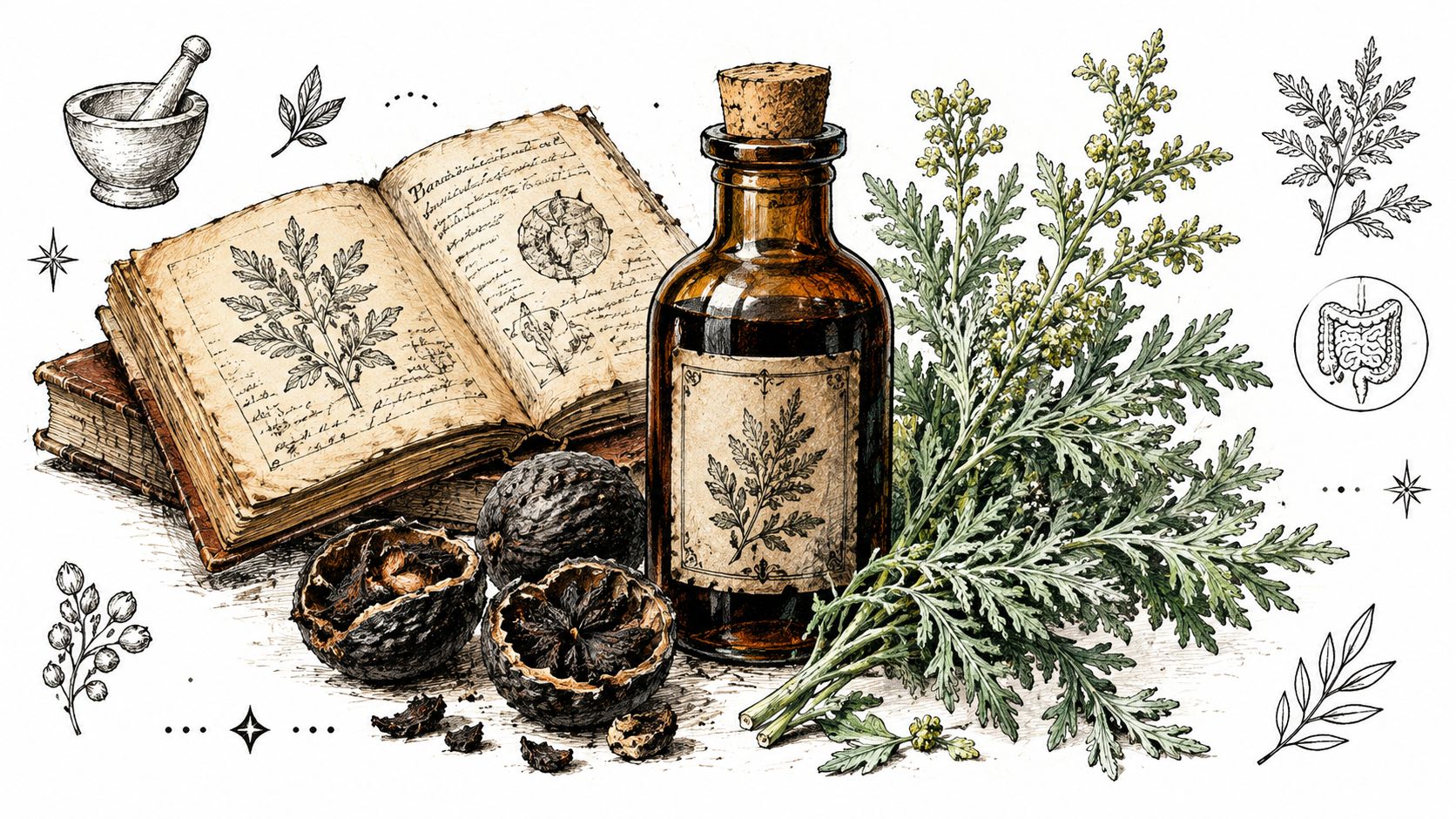
Wormwood's story began long before modern parasite-cleanse branding. The herb has been used for centuries as a bitter tonic and was described in ancient medical traditions. Bitters were traditionally valued for their strong taste and their place in digestive preparations, not because ancient practitioners had conducted modern parasite-eradication trials.
Black walnut hull also belongs to a long tradition of botanical use. Herbal preparations made from the green outer hull appeared in folk practices for skin and digestive concerns, while the dark plant material also became known for dyeing. A traditional use can tell us how people worked with a plant, but it doesn't establish that a modern alcohol extract is safe or effective for every purpose now assigned to it.
How the modern trio became popular
The specific black walnut, wormwood, and clove combination is more recent than the individual herbs. A 1993 popularization wave is often traced to Hulda Regehr Clark's The Cure for All Diseases, which helped standardize the three-herb combination in alternative medicine marketing (historical and pharmacological overview).
That distinction matters. The formula wasn't an ancient, universal prescription used consistently across every herbal tradition. Instead, older plant practices were combined and then promoted through a late twentieth-century alternative-health framework as a broad antiparasitic protocol.
Clove added another layer to the narrative. Its intense aromatic character and traditional use in oral and digestive preparations made it a natural companion in a formula built around pungent and bitter botanicals. Marketing then turned the combination into a simple story: black walnut, wormwood, and clove were presented as a coordinated system rather than three plants with different chemistry and safety considerations.
Tradition is context, not proof
Traditional use can guide questions for research and help practitioners understand how a plant has been prepared historically. It can't answer essential clinical questions such as which parasite is affected, what dose reaches the target tissue, how long treatment should last, or whether stool testing confirms clearance.
Historical perspective: A remedy can be traditional, popular, and biologically active without being a validated treatment for a diagnosed infection.
That is the right way to respect the history without allowing the history to carry more weight than the evidence supports.
Whats Inside Breaking Down the Key Ingredients
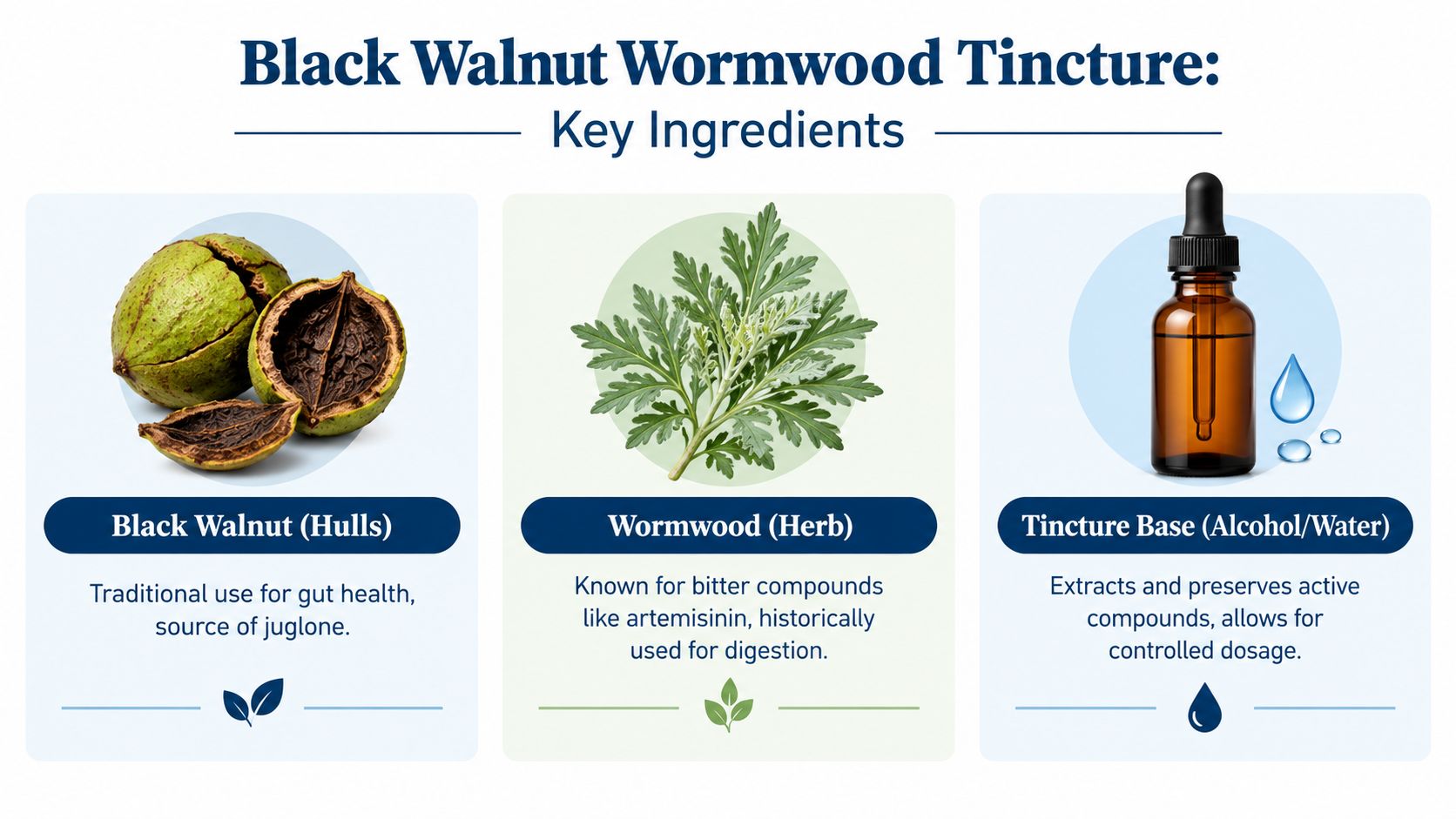
A black walnut wormwood tincture isn't a single chemical. It's an extract containing compounds from several plants, and the final risk profile depends on species, plant part, extraction method, storage, and standardization.
The three ingredients are often discussed together, but they shouldn't be treated as chemically interchangeable.
Black walnut hull
The relevant material is the outer hull, not the edible walnut kernel. Black walnut hull preparations contain juglone and tannins. These compounds are associated with antimicrobial and irritating activity, which helps explain why traditional preparations were used in topical and digestive contexts.
Juglone is particularly important because it isn't merely a desirable “parasite-killing” ingredient. The same biological reactivity that makes it interesting in laboratory discussions can create concerns for human tissues, especially when exposure is concentrated or prolonged. A tincture label that lists only the mass of black walnut hull doesn't reveal how much juglone reaches the user.
Wormwood
Wormwood contributes bitter constituents and contains thujone, a monoterpene ketone that drives much of the safety discussion. Herbalists may describe wormwood as a bitter digestive herb, but a bitter taste doesn't make an extract therapeutically appropriate for an intestinal infection.
The amount of thujone can vary between raw materials and preparations. That variability is why a manufacturer's thujone specification matters more than the mere presence of “wormwood” on an ingredient panel.
Clove
Clove contributes aromatic compounds, especially eugenol, and is traditionally valued for its pungency and warming character. Laboratory observations involving eugenol or clove extracts may help explain why the herb appears in parasite-cleanse formulas, but they don't prove that a swallowed tincture clears human parasites.
The tincture base matters too. Alcohol and water extract and preserve different constituents, so two products with the same three plant names can have materially different compositions. Controlled extraction, clear plant-part identification, and batch testing are more informative than a dramatic “full strength” claim.
Understanding the Safety and Toxicity Concerns
Natural origin doesn't remove toxicology from the decision. The most important question is not whether the herbs are “strong,” but whether the finished product provides enough information to estimate exposure and whether the person taking it has relevant medical risks.
Thujone and neurological risk
Wormwood's primary risk driver is thujone. Its neurotoxicity is dose-dependent, and long-duration exposure has been associated with convulsions, sleeplessness, hallucinations, and other absinthism-like effects. A review of Artemisia absinthium reports a no-effect level, or NOEL, in the range of 5 to 12.5 mg/kg of body weight per day for wormwood-derived exposure (wormwood safety and efficacy review).
That benchmark shouldn't be converted casually into a home dosing plan. Tinctures differ in concentration, and many labels don't state the thujone content. A person with a seizure disorder, a history of unexplained convulsions, or medicines affecting the nervous system has a particularly poor margin for self-experimentation.
Stop taking the product and seek prompt medical advice if you develop unusual agitation, confusion, severe insomnia, hallucinations, tremor, or seizure-like symptoms. Don't dismiss neurological symptoms as a normal “detox” response.
The following video can provide additional visual context about herbal safety, but it shouldn't replace a pharmacist or clinician's review of your specific product and medicines.
Juglone, tannins, and liver concerns
Black walnut adds a separate risk pathway. Juglone and tannins are biologically active and potentially irritating, and higher or prolonged exposure may place stress on the liver. Independent safety summaries describe low and variable oral juglone absorption, liver-injury patterns in chronic high-dose animal exposure, and human reports of increased ALT and AST with concentrated black walnut hull tinctures, particularly in people with fatty liver disease or concurrent acetaminophen exposure (black walnut and wormwood safety guide).
The practical implication is simple: more concentrated isn't necessarily better. Stronger alcohol extraction, longer use, and stacking several hepatically active products can make the overall exposure harder to predict. People with liver disease, a history of abnormal liver tests, or multiple medicines should get professional advice before considering the formula.
Pregnancy and breastfeeding also require avoidance unless a qualified clinician specifically directs use. Children shouldn't be given an adult parasite-cleanse protocol. Anyone with a walnut allergy should avoid black walnut preparations, and people taking prescription medicines should ask a pharmacist to check the entire ingredient list. An interaction resource such as find the best drug interaction app can help organize questions, but it isn't a substitute for individualized medical review.
How to Choose and Use a Tincture Responsibly
A cautious selection process can reduce avoidable exposure to a poorly identified or highly concentrated extract. It cannot turn a traditional parasite-cleanse product into a validated human antiparasitic treatment. That distinction should guide every purchase and dosing decision.
Speak with a physician, qualified herbal clinician, or pharmacist before use, particularly with liver disease, a seizure history, pregnancy, breastfeeding, or prescription medicines.
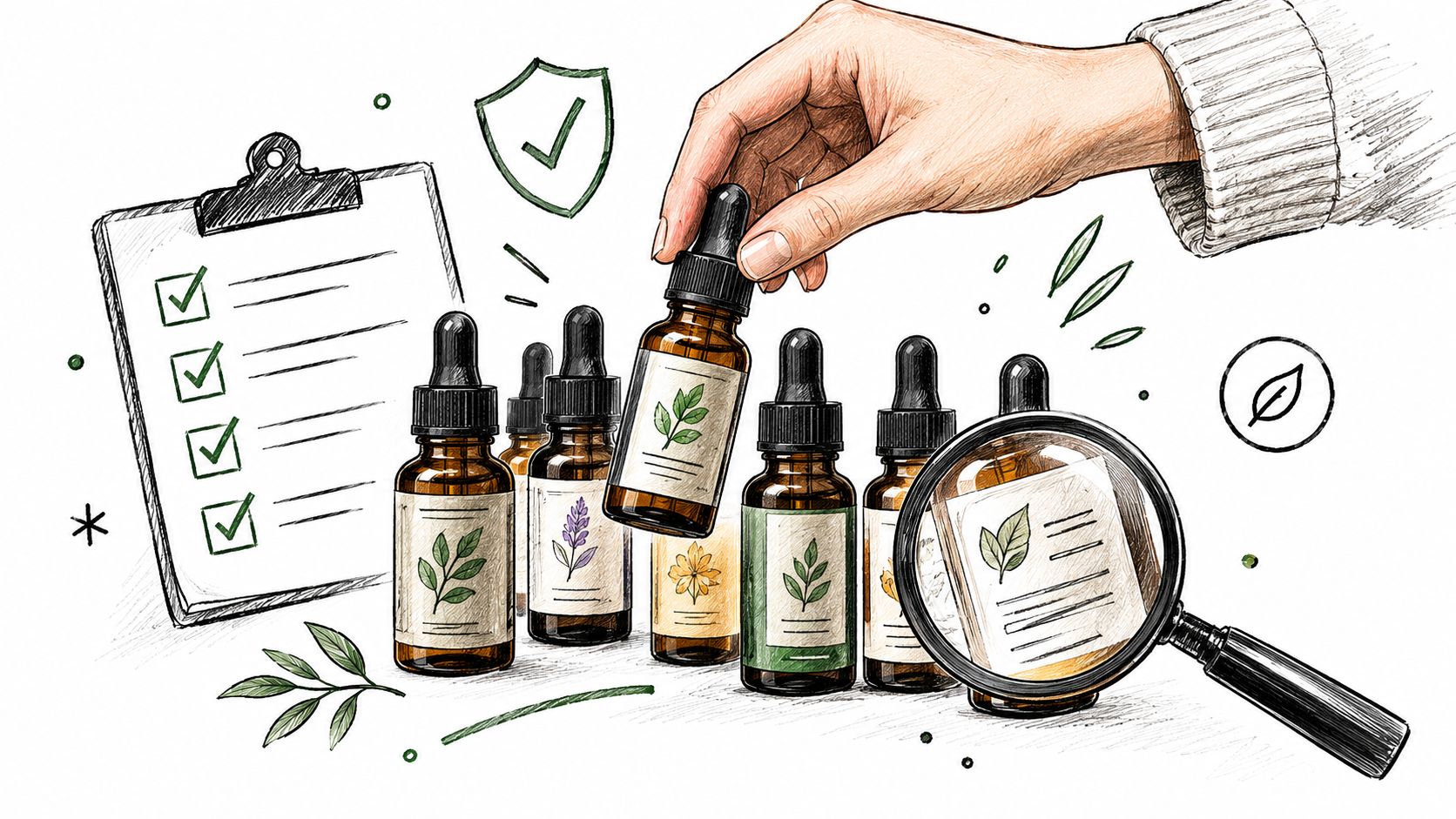
Read the label like a formulator
Check for:
- Exact plant identity: The label should identify each botanical and state whether the black walnut comes from hull, leaf, bark, or another part.
- Extraction information: Alcohol percentage, solvent details, and extract ratio clarify what the bottle contains.
- Thujone information: Without disclosure or control of thujone content, a central safety question remains unanswered.
- Batch and quality documentation: Prefer manufacturers that provide testing, lot identification, and credible Good Manufacturing Practices information.
- Conservative claims: Be wary of promises of universal parasite removal, detoxification, or guaranteed results.
The bottle should state a serving size and clear warnings. “Take as needed” is inadequate for a formula containing a potentially neurotoxic constituent.
Use less complexity, not more
Do not combine this tincture with concentrated wormwood products, essential oils, aggressive detox formulas, or liver-active supplements without professional guidance. A bentonite-based detox product, such as Buried Treasure Bentonite Detoxing Formula with Peppermint Oil, adds another formula to review rather than making a parasite cleanse more reliable.
If you already use a liver-focused product such as NOW Liver Caps with Milk Thistle and Eleuthero, disclose it during a medication and supplement review. “Liver support” does not cancel out the risks of another product.
If a clinician approves use, follow the product directions instead of copying a social-media protocol. Keep the course conservative, monitor for adverse symptoms, and stop if neurological changes, persistent gastrointestinal distress, jaundice, dark urine, unusual bleeding, or other concerning signs develop.
Practical rule: If you cannot determine the extract's composition, you cannot reliably determine its dose.
Store the bottle securely where children cannot access it. Amber glass may help protect light-sensitive preparations. For packaging terminology, see find dropper bottle info from Aroma Warehouse. Packaging quality does not demonstrate herbal potency or clinical effectiveness.
Frequently Asked Questions About This Tincture
Does black walnut wormwood tincture treat human parasites?
There is no randomized controlled trial testing the black walnut, wormwood, and clove combination in humans, and human evidence for parasite eradication is largely absent, as described in this review of human efficacy and safety. No credible human guidelines or clinical protocols endorse these products for treating parasitic disease.
Traditional use may explain the product's popularity, but it does not establish which parasites the formula treats, what dose works, or whether it clears infection and prevents recurrence. Marketing claims should be read accordingly.
Can it help bloating or digestive discomfort?
Bitter or aromatic herbs may feel supportive for digestion to some users, yet symptom relief does not identify the cause of bloating. Food intolerance, constipation, infection, medication effects, and other conditions can produce similar symptoms. Persistent or severe discomfort warrants evaluation rather than repeated cleansing cycles.
What might a bad reaction feel like?
Warning signs include severe nausea, worsening abdominal irritation, unusual insomnia, confusion, agitation, hallucinations, tremor, or convulsions. Yellowing of the skin or eyes, dark urine, marked fatigue, or other abrupt changes may indicate liver injury and require medical attention.
Do not call these symptoms “die-off” and continue dosing. Stop the product and contact a healthcare professional if the reaction worsens.
Is a homemade tincture safer?
Homemade preparations do not reliably control plant identity, extraction strength, alcohol concentration, contamination, or thujone content. Without laboratory standardization, a drop count cannot reliably indicate neurological exposure. A homemade product may therefore be harder, not easier, to assess safely.
What should someone do if they suspect a parasite?
Begin with a clinician who can decide whether testing is appropriate. If infection is confirmed, use treatment selected for that organism instead of replacing it with a broad cleanse lacking an established human protocol.
Supplemynts Inc offers categorized dietary supplements and wellness products, including herbs, digestive-health products, probiotics, vitamins, minerals, and proteins. Visit Supplemynts Inc to compare product information while keeping in mind what supplements can and cannot prove.




Please complete your information below to login.
Sign In
Create New Account