


The most popular advice about a bitter melon capsule is also the least reliable: take it for blood sugar and expect a natural version of diabetes medication. Human research doesn't support that shortcut. Some controlled studies have reported changes in glucose, HbA1c, insulin, or LDL cholesterol, but other placebo-controlled evidence has found little or no meaningful glycemic effect. The practical question isn't whether bitter melon is “natural.” It's whether the specific product, dose, person, and goal justify a carefully monitored trial.
Table of Contents
- Understanding Bitter Melon Capsules and What to Expect
- How Bitter Melon Works in the Body
- Clinical Evidence on Blood Sugar and Metabolic Markers
- Why Some Studies Show Modest or Negative Results
- Safety, Interactions, and Who Should Avoid Bitter Melon Capsules
- How to Choose a Quality Bitter Melon Capsule Product
- Deciding Whether a Bitter Melon Capsule Is Right for You
Understanding Bitter Melon Capsules and What to Expect
A bitter melon capsule is a supplement made from powdered bitter melon, a concentrated extract, or a preparation containing compounds such as charantin or bitter melon peptides. It isn't equivalent to eating the fresh fruit, drinking juice, or preparing tea. Those formats differ in concentration, composition, and consistency, so a label that just says “bitter melon” doesn't tell you how closely the product resembles a clinical preparation.
Capsules matter because they make the amount easier to repeat. Researchers can assign a defined preparation over a defined period, while fresh fruit and homemade drinks vary from serving to serving. The clinical history reflects that shift toward repeatable formats. A 2009 review of bitter melon research described capsule-based human studies, including a randomized trial involving 50 people with type 2 diabetes, a double-blind placebo-controlled trial involving 40 participants, and a commercial regimen of two capsules three times daily for three months.
That history shows sustained scientific interest, not proof of dependable results. A later randomized placebo-controlled trial enrolled 76 people with prediabetes for 12 weeks, and a planned 2026 clinical study is evaluating bitter melon peptide capsules taken three times daily for 12 weeks in adults with prediabetes, as reported in the same clinical timeline and review. These studies make the ingredient worth evaluating, but they don't justify replacing prescribed treatment.
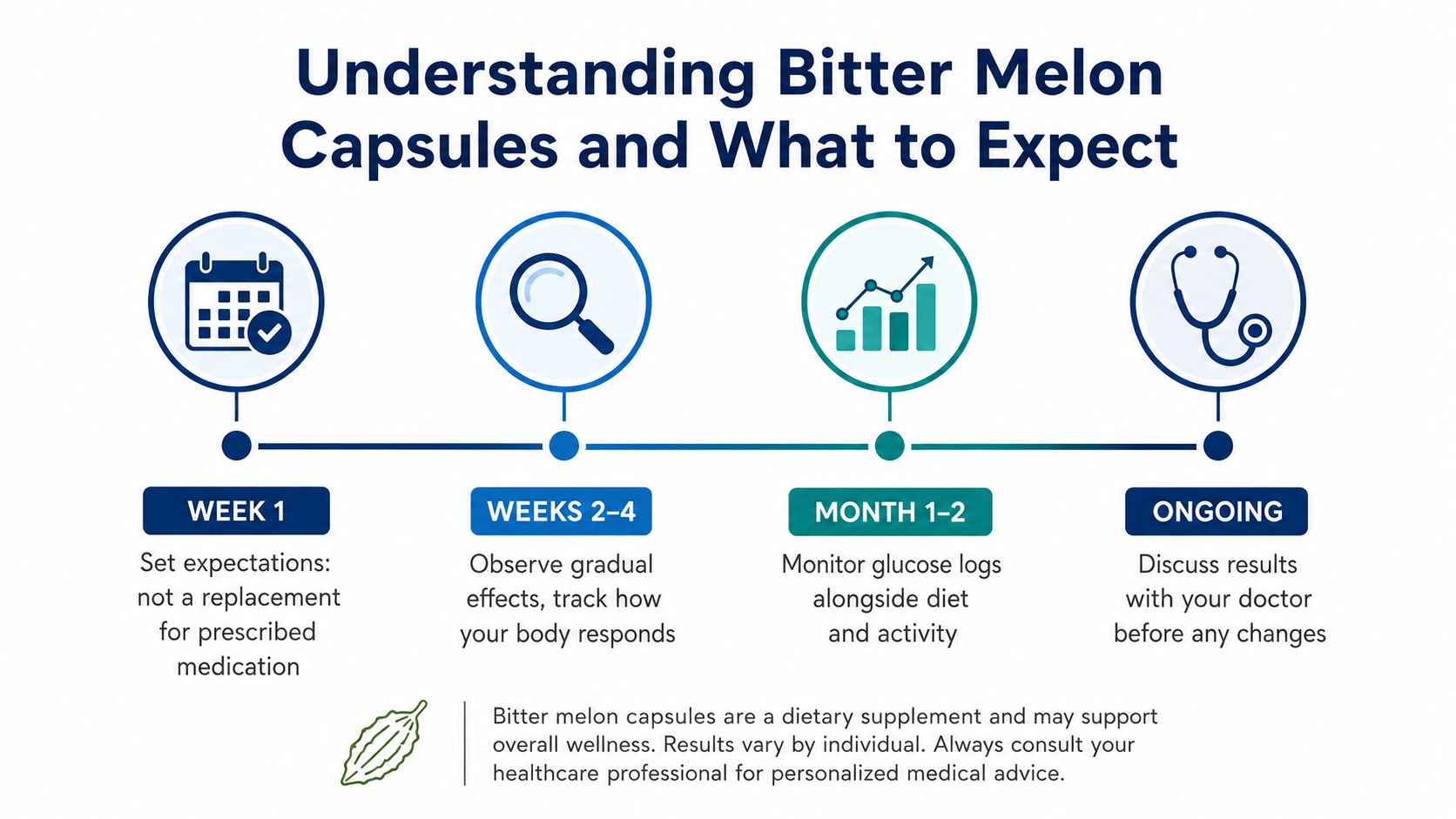
Practical rule: Treat a capsule as a controlled supplement experiment, not as an automatic blood sugar solution. Track your response and involve a clinician if you use glucose-lowering medication.
How Bitter Melon Works in the Body
Bitter melon contains several bioactive compounds, but the label rarely tells you how much of each one reaches the capsule. Charantin is commonly discussed in relation to glucose metabolism. Polypeptide-p has been studied for insulin-like activity, while vicine is relevant to safety because it can matter for people with particular metabolic vulnerabilities.
The proposed effects are biologically plausible. Bitter melon compounds may influence how cells take up glucose, how the body responds to insulin, and how the liver handles lipids. Those mechanisms can explain why manufacturers position bitter melon products for metabolic support, but a plausible mechanism doesn't guarantee a clinically important result in a finished supplement.
Why formulation changes the comparison
A capsule made from dried fruit powder isn't the same intervention as a standardized extract. A peptide preparation may have a different compound profile again. Even when two bottles use the same plant name, their extraction methods, active-compound ratios, serving sizes, and testing standards may differ.
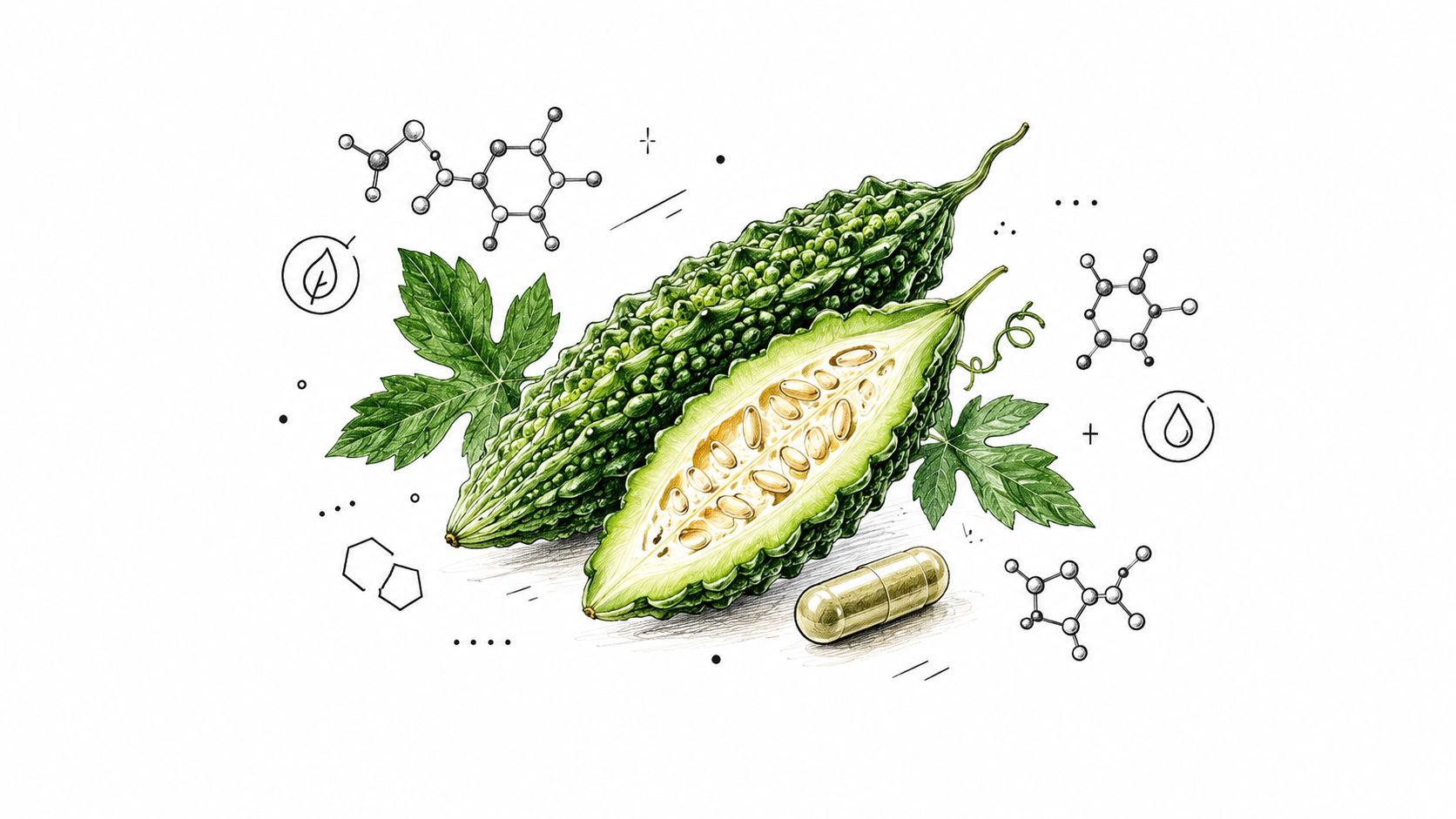
This is why comparing products by capsule count alone is weak. The useful comparison is between declared extract type, active-compound information, dose transparency, and evidence for that preparation. If a product doesn't identify whether it contains powder, extract, peptide, or a standardized compound, you can't confidently compare it with a clinical trial.
Clinical Evidence on Blood Sugar and Metabolic Markers
Clinical results do not support the simple promise printed on many labels. Human studies report changes in selected markers, while broader reviews describe bitter melon's glucose effects as modest, inconsistent, or dependent on the preparation tested.
A Japanese randomized, double-blind, placebo-controlled trial gave 43 adults 100 mg of bitter melon extract three times daily for 30 days. LDL cholesterol was significantly lower in the intervention group, with a reported p-value of 0.02, according to the clinical review of bitter melon studies. That finding may matter for lipid metabolism, but it does not demonstrate dependable blood sugar control.
Another human study examined bitter melon peptide capsules in 142 people with diabetes. Participants received 600 mg per day for three months, and HbA1c changed from 7.8 ± 1.4% to 7.5 ± 1.4% by the end of month two, as described in the review cited above. The result is measurable, yet it cannot establish that capsules using a different extract, dose, or manufacturing process will perform similarly.
| Study population | Dosage and duration | Primary outcome |
|---|---|---|
| 43 adults in a Japanese controlled trial | 100 mg extract three times daily for 30 days | LDL cholesterol was significantly lower in the intervention group, p = 0.02 |
| 142 people with diabetes | Bitter melon peptide capsules, 600 mg per day for three months | HbA1c improved from 7.8 ± 1.4% to 7.5 ± 1.4% by the end of month two |
| Prediabetes participants in controlled studies | 2.4 g per day for four weeks, and 3.6 g per day for 12 weeks | Fasting plasma glucose and fasting plasma insulin fell significantly in the bitter melon groups |
| Adults with glucose intolerance or diabetes in placebo-controlled research | Preparations and durations varied | Overall glycemic effects were inconsistent |
The practical conclusion is limited but useful. Bitter melon capsules may affect selected metabolic markers in certain populations and formulations. The evidence does not support treating every capsule as an interchangeable blood sugar intervention. Shoppers comparing this category with another metabolic supplement, such as a berberine clinical-strength product, should match the evidence to the exact ingredient, preparation, dose, and outcome studied rather than rely on broad “blood sugar support” claims.
Why Some Studies Show Modest or Negative Results
A positive trial and a neutral trial can both be credible when they test different preparations or populations. Bitter melon research varies in extract composition, capsule formulation, participant health, treatment duration, and outcome measurement. Those differences make it risky to turn one encouraging result into a universal product claim.
The strongest caution comes from independent medical summaries. LiverTox reports that placebo-controlled trials in diabetes or glucose intolerance found little or no effect on fasting plasma glucose or HbA1c, and a diabetes-supplement review found that 3 g per day for three months didn't lower HbA1c or fasting plasma glucose versus placebo, as described in the LiverTox evidence summary.
The variables behind the mismatch
A powder capsule may provide a different amount of active material than a concentrated extract. A peptide product may not be comparable with a preparation standardized to charantin. Short studies can also detect changes in a lab marker without showing whether the change persists or matters to a person's broader health.
The dose range itself doesn't resolve the uncertainty. A clinical review of dietary supplements for diabetes found that bitter melon at 1 to 6 g daily for four to 12 weeks didn't significantly improve fasting plasma glucose or HbA1c versus placebo. The same review described 3 g daily for three months without meaningful HbA1c or fasting glucose benefit.
The right conclusion isn't “bitter melon never works.” It's “a product claim must identify the preparation and accept that the overall evidence remains mixed.”
For shoppers, this changes the buying test. A higher number on the front of a bottle isn't automatically better, and a positive mechanistic claim isn't a clinical outcome. Products with vague extracts and no active-compound disclosure deserve more skepticism than products that clearly state what they contain and how that information was verified.
Safety, Interactions, and Who Should Avoid Bitter Melon Capsules
A plant origin doesn't make a glucose-active supplement harmless. The most important risks involve additive blood sugar lowering, medication interactions, pregnancy, and specific medical conditions, not just mild digestive discomfort.
Bitter melon may add to the effects of insulin and other diabetes medicines, increasing the risk of hypoglycemia. Memorial Sloan Kettering also notes possible increased exposure to certain P-glycoprotein substrate drugs and advises avoiding bitter melon in people with G6PD deficiency because of favism risk. Its bitter melon safety reference also identifies pregnancy as a concern because bitter melon may be unsafe and potentially abortifacient.
Screen yourself before buying
- Insulin or diabetes medication: Ask a clinician or pharmacist before use. Don't adjust prescribed treatment based on a supplement label.
- Pregnancy: Avoid bitter melon capsules. Safety concerns outweigh the uncertain benefit.
- G6PD deficiency: Avoid use unless a qualified clinician specifically advises otherwise.
- Prescription medicines: Review the full medication list, especially drugs where altered exposure could matter.
- Digestive sensitivity: Abdominal discomfort and diarrhea are the most commonly reported adverse effects in the clinical supplement literature.
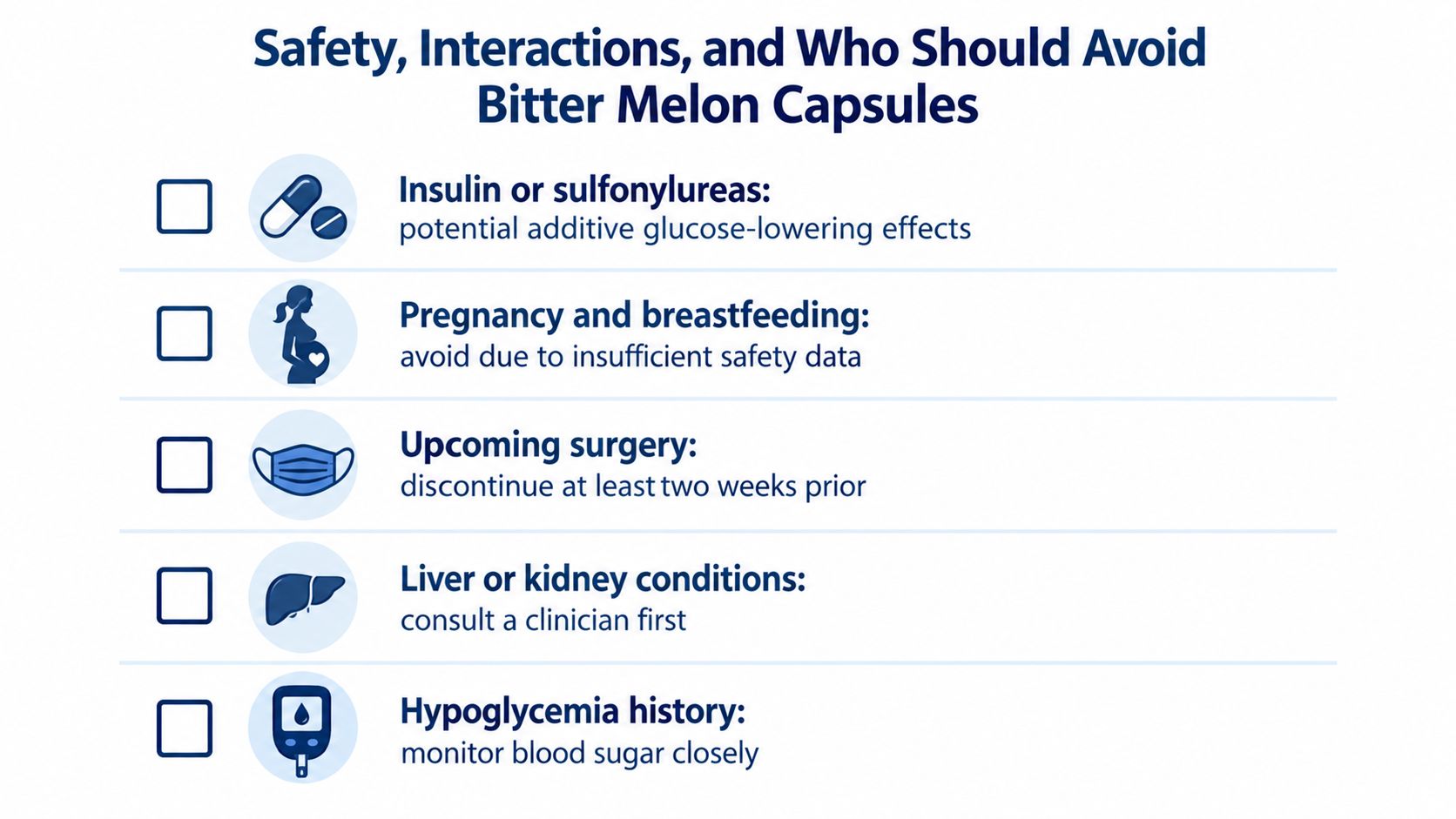
Stop and seek medical advice if you develop symptoms consistent with low blood sugar, such as sweating, shaking, weakness, or confusion, particularly if you're taking insulin or another glucose-lowering drug. Persistent abdominal pain, severe diarrhea, or a new reaction also warrants more than just lowering the dose.
For people already managing glucose disorders, the safest route is a medication review before the first capsule. A product marketed as “beyond berberine,” such as this blood sugar support formula, still requires the same interaction-first approach if it contains ingredients that may affect glucose.
How to Choose a Quality Bitter Melon Capsule Product
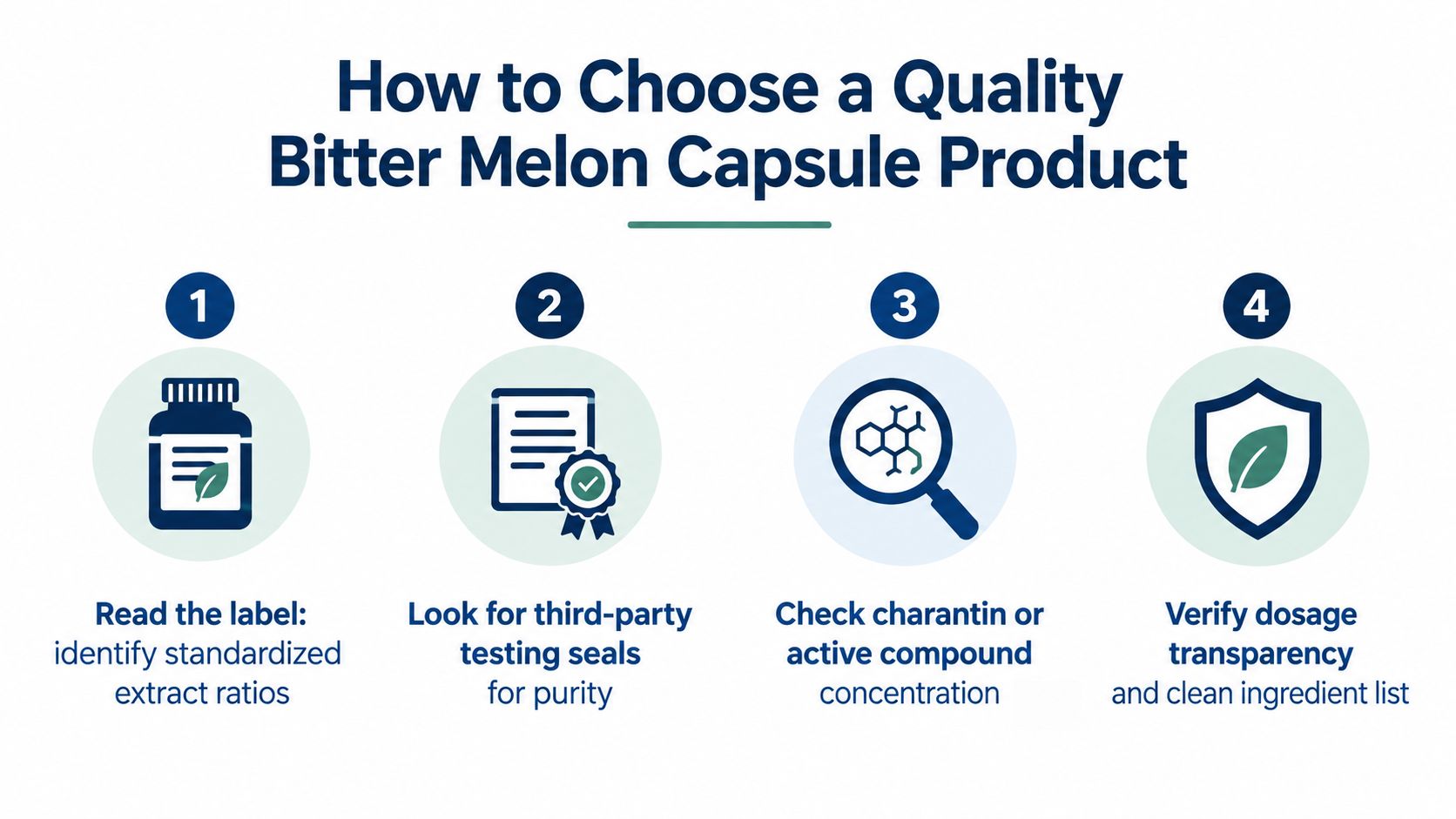
Quality begins with information, not a dramatic claim. A credible label should identify whether the capsule contains whole-fruit powder, extract, peptide material, or a blend. It should also state the amount per serving, serving size, other active ingredients, and any relevant standardization.
Four label checks that matter
- Identify the preparation. “Bitter melon” alone is incomplete. Look for the plant part and whether the material is powder or extract.
- Find active-compound details. If the product highlights charantin or another compound, check whether it gives a concentration or standardization basis.
- Look for independent testing. Third-party testing can support identity, purity, and contamination controls, but a seal doesn't prove that the product lowers glucose.
- Read the entire ingredient list. Watch for undisclosed blends, unnecessary stimulants, duplicate glucose-active ingredients, and serving instructions that obscure the actual daily amount.
A reputable retailer should make it easy to locate the label, contact details, shipping terms, returns policy, and manufacturer information. Those details don't prove efficacy, but they reduce purchasing uncertainty and make it easier to report a problem or return an unsuitable product.
The video below can help shoppers understand why supplement-label literacy matters before they compare products.
A product such as Amazing Herbs Black Seed and Bitter Melon should still be judged by its complete Supplement Facts panel, not by the presence of a familiar botanical name. If the label doesn't let you determine what you're taking, it doesn't support a fair comparison with human research.
Deciding Whether a Bitter Melon Capsule Is Right for You
Consider two shoppers. One wants to replace prescribed diabetes medication with a capsule. That isn't an evidence-based use case, and the interaction risk makes self-directed substitution particularly unsafe. The other wants to test a clearly labeled product for general metabolic support, has no contraindication, keeps diet and activity reasonably stable, and records relevant health measures. The second approach is more disciplined, but it still may show no meaningful benefit.
A fair trial requires consistency. Choose one formulation, follow its label, avoid stacking several glucose-active supplements at once, and track the measure that matches your goal. If you use diabetes medication, have a clinician review the plan before starting, and never change prescribed treatment because a home reading appears improved.
Decision filter: Buy only if you can explain what the capsule contains, why it fits your goal, how you'll monitor your response, and what would make you stop.
For many people, the best answer may be to skip the capsule and focus on established care, food choices, physical activity, sleep, and medication when prescribed. For others, a transparent product may be reasonable as an adjunct, provided expectations stay modest and safety checks come first.
Supplemynts Inc offers a curated range of herbs, vitamins, minerals, and wellness products with ingredient-based shopping, supplier selection, customer support, and a 60-day return policy. Visit Supplemynts Inc to compare clearly labeled bitter melon and related supplement options before you buy.





Please complete your information below to login.
Sign In
Create New Account