


You're standing in front of a shelf packed with men's multivitamins, testosterone boosters, prostate formulas, magnesium powders, and sexual-wellness capsules. One label promises energy, another promises hormonal support, and a third implies better performance. The problem isn't a lack of choice. It's that most products blur together nutritional gap-filling and treatment of a performance problem.
The best vitamins for men's health depend on what you're trying to solve. A restricted diet, limited sunlight, or medication may justify a targeted nutrient. Persistent erectile dysfunction, unexplained fatigue, or low libido may justify a medical evaluation instead. The practical rule is simple: test before you supplement when a deficiency is plausible, then match the nutrient to the goal rather than to the marketing language.
Table of Contents
- Why Men's Supplement Choices Are Confusing
- The Core Nutrients Men Actually Need
- Multivitamins Versus Targeted Single Nutrients
- Sexual Wellness and Performance Supplements
- How to Read Labels and Choose Quality Products
- Safety Interactions and When to Test First
- Shopping Checklist and Final Recommendation
Why Men's Supplement Choices Are Confusing
A men's supplement shelf can turn ordinary nutrients into promises about energy, hormones, sleep, and sexual performance. Product images and proprietary blends often say more about marketing than about who needs the formula, what dose was studied, or which outcome is realistic. “Men's health” describes a category, not a diagnosis.
The key decision is whether you are closing a nutritional gap or addressing a performance problem. A restricted diet, limited sunlight, medication use, or an absorption issue can support targeted supplementation. Persistent erectile dysfunction, low libido, unexplained fatigue, poor sleep, or suspected low testosterone calls for assessment rather than an automatic trip to the vitamin aisle.
Those goals require different evidence. A nutrient may support normal physiology without improving symptoms in a man whose levels are already adequate. Vitamin D shows why the distinction matters. Low status deserves attention, yet routine supplementation does not automatically improve sexual function when deficiency is absent. The NIH Office of Dietary Supplements vitamin D fact sheet separates the nutrient's biological role from demonstrated clinical outcomes.
Start with the problem, not the product
Define the objective before buying. “Better health” cannot guide a sensible choice. “I eat no animal products,” “I get little sunlight,” or “I take a medication associated with B12 problems” identifies a plausible nutritional gap. “I want stronger erections” identifies a symptom that may need medical evaluation.
A supplement earns its place when diet, history, or testing gives you a specific reason to use it. A proprietary blend with undisclosed amounts deserves skepticism, especially when its label implies pharmaceutical-style effects.
Practical rule: A nutrient is not a treatment simply because the body uses it in the same system affected by your symptom.
Separate evidence from packaging
Judge performance claims by human trials, not by biochemical storytelling. Zinc supports reproductive biology, but high-dose zinc is not a universal fertility or testosterone solution. Magnesium supports nerve and muscle function, but a magnesium product does not automatically solve sleep problems or raise testosterone.
Use this decision rule: test when testing can clarify the choice, select targeted nutrients for specific reasons, and treat a daily multivitamin as nutritional insurance rather than a performance drug. If erectile dysfunction persists, stop escalating supplements. Sexual symptoms can signal vascular or metabolic problems that deserve clinical attention.
The Core Nutrients Men Actually Need
Men do not need every nutrient in equal measure. Five deserve the most practical attention: vitamin D, vitamin B12, zinc, magnesium, and omega-3 fatty acids. Their uses differ. Vitamin D and B12 are primarily deficiency questions. Zinc matters to reproductive biology but should be used selectively. Magnesium depends mainly on diet, symptoms, and medication context. EPA and DHA are fatty acids, not vitamins, with the clearest rationale when fish intake is low or triglycerides require attention.
Vitamin D is a strong foundational candidate for men with limited sunlight exposure, darker skin, indoor work, older age, or few dietary sources. Low status is common across adult groups, and a 2025 systematic review found vitamin D deficiency in 43.7% of men worldwide, compared with 56.8% in women. Those figures come from the 2025 systematic review, not from a reason to take a large dose blindly. Testing is sensible when risk factors are present. Vitamin D3 is generally the practical choice over D2, and taking it with a meal containing fat supports absorption. Use a test-guided replacement plan rather than treating vitamin D as a general performance enhancer.
B12 deserves priority for men who follow vegan or mostly plant-based diets, have absorption problems, or use medications such as metformin or proton pump inhibitors. Deficiency can impair blood formation and neurological function. B12 does not provide extra energy to men who already have adequate status, so high-dose products are a poor shortcut for unexplained fatigue. Methylcobalamin is a popular form, but reliable labeling, an appropriate oral dose, and evaluation of persistent symptoms matter more than the form's marketing.
Zinc has a direct connection to male reproductive physiology. Reviews describe its roles in steroidogenesis and spermatogenesis and report associations between zinc status and testosterone, particularly when deficiency is present (peer-reviewed review on zinc and male reproduction). Men with restricted diets, malabsorption, or high sweat losses have a stronger reason to assess intake than men eating varied diets. Large doses taken indefinitely are a bad strategy. Targeted repletion makes more sense than routine megadosing, especially because supplementation should address a nutritional gap, not substitute for evaluation of infertility or sexual symptoms.
Magnesium supports muscle and nerve function, and low intake often accompanies poor dietary quality. Glycinate and citrate are usually more practical than oxide because oxide is less well absorbed and more likely to cause gastrointestinal problems. Follow the product label, count magnesium from food and supplements, and account for medication timing. These nutrition and micronutrient articles provide broader background on mineral functions and deficiency patterns, but they do not establish that magnesium will resolve a specific symptom.
EPA and DHA make sense when oily-fish intake is low, particularly when triglycerides are the stated goal. Fish oil products can contain very different amounts of the active fatty acids, so compare EPA plus DHA per serving instead of total oil weight. Nordic Naturals Ultimate Omega Lemon Flavor Fish Oil 60 Soft Gel Pills is one example of a product page in this category. Men avoiding fish can consider algae-derived omega-3.
Core nutrients for men at a glance
| Nutrient | Primary Benefit | Who Is Deficient | Evidence-Backed Dose | Best Form |
|---|---|---|---|---|
| Vitamin D | Bone and muscle support, correction of low status | Men with low sunlight exposure, older adults, or documented deficiency | Use a test-guided replacement plan rather than a blanket high dose | D3 in an oil-based or fat-containing meal |
| Vitamin B12 | Blood and neurological function | Vegans, men with malabsorption, and some men using metformin or PPIs | Use a labeled oral dose appropriate to the deficiency context | Methylcobalamin or another clearly labeled B12 form |
| Zinc | Reproductive and immune physiology | Men with restricted diets, malabsorption, or suspected insufficiency | Short-course therapeutic dosing requires professional guidance | Elemental zinc with the amount clearly stated |
| Magnesium | Muscle and nervous system function | Men with low dietary intake or relevant symptoms | Follow the labeled supplemental amount and account for medication timing | Glycinate or citrate |
| EPA and DHA | Dietary omega-3 support and triglyceride management | Men who rarely eat oily fish | Compare EPA plus DHA per serving, not total oil | Fish oil or algae oil |
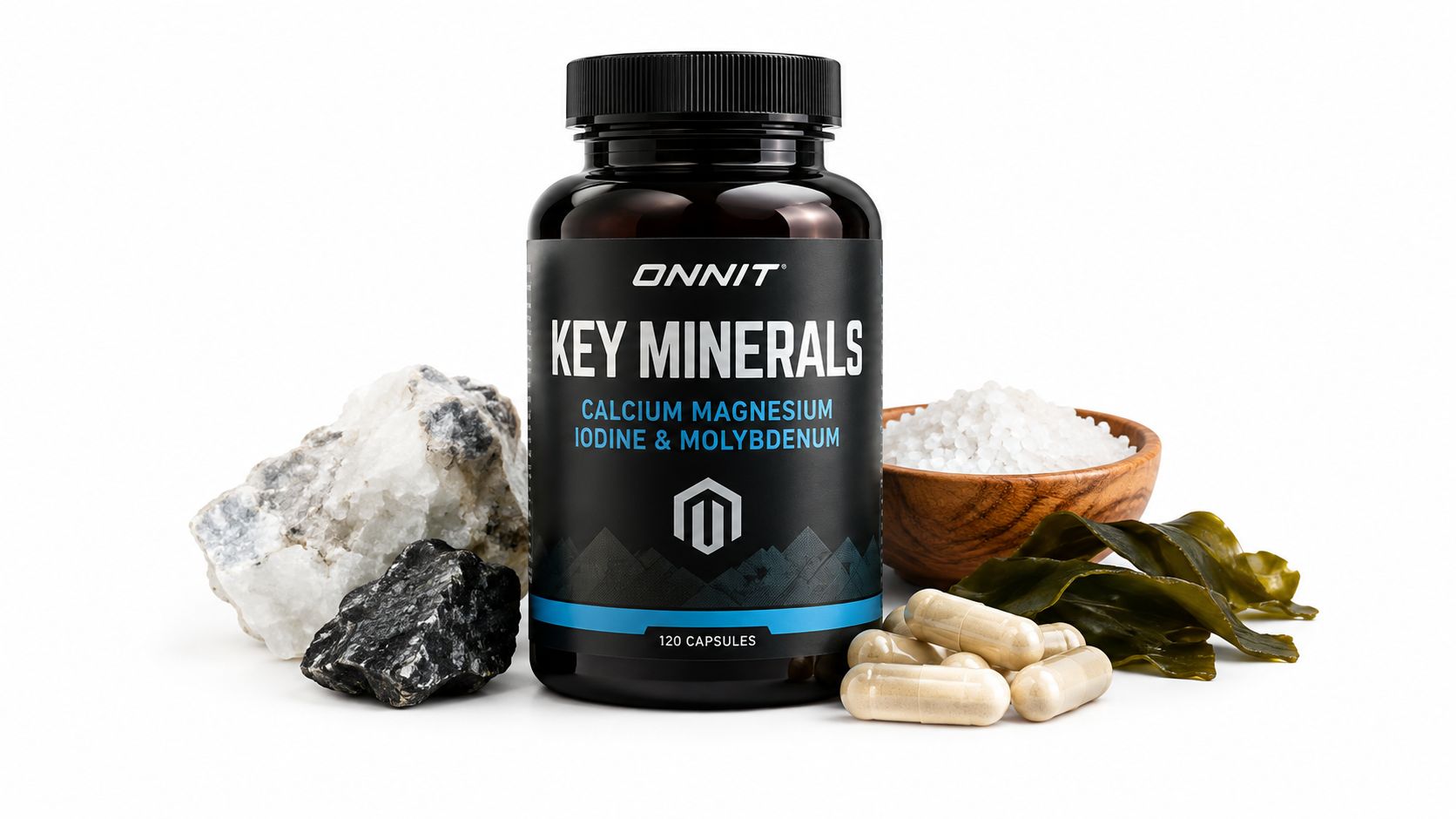
The Onnit Key Minerals Calcium Magnesium Iodine Molybdenum 120 Caps formula is a vegan capsule product containing calcium, magnesium, iodine, and molybdenum. It is positioned around bone health, thyroid balance, and nervous system function. The formula does not answer whether you specifically need magnesium, iodine, or another mineral. Choose the nutrient after identifying the gap, and seek medical evaluation when the issue is a persistent symptom rather than suspected insufficiency.
Multivitamins Versus Targeted Single Nutrients
A multivitamin is useful for covering nutritional basics. It isn't a reliable answer to every men's health complaint.
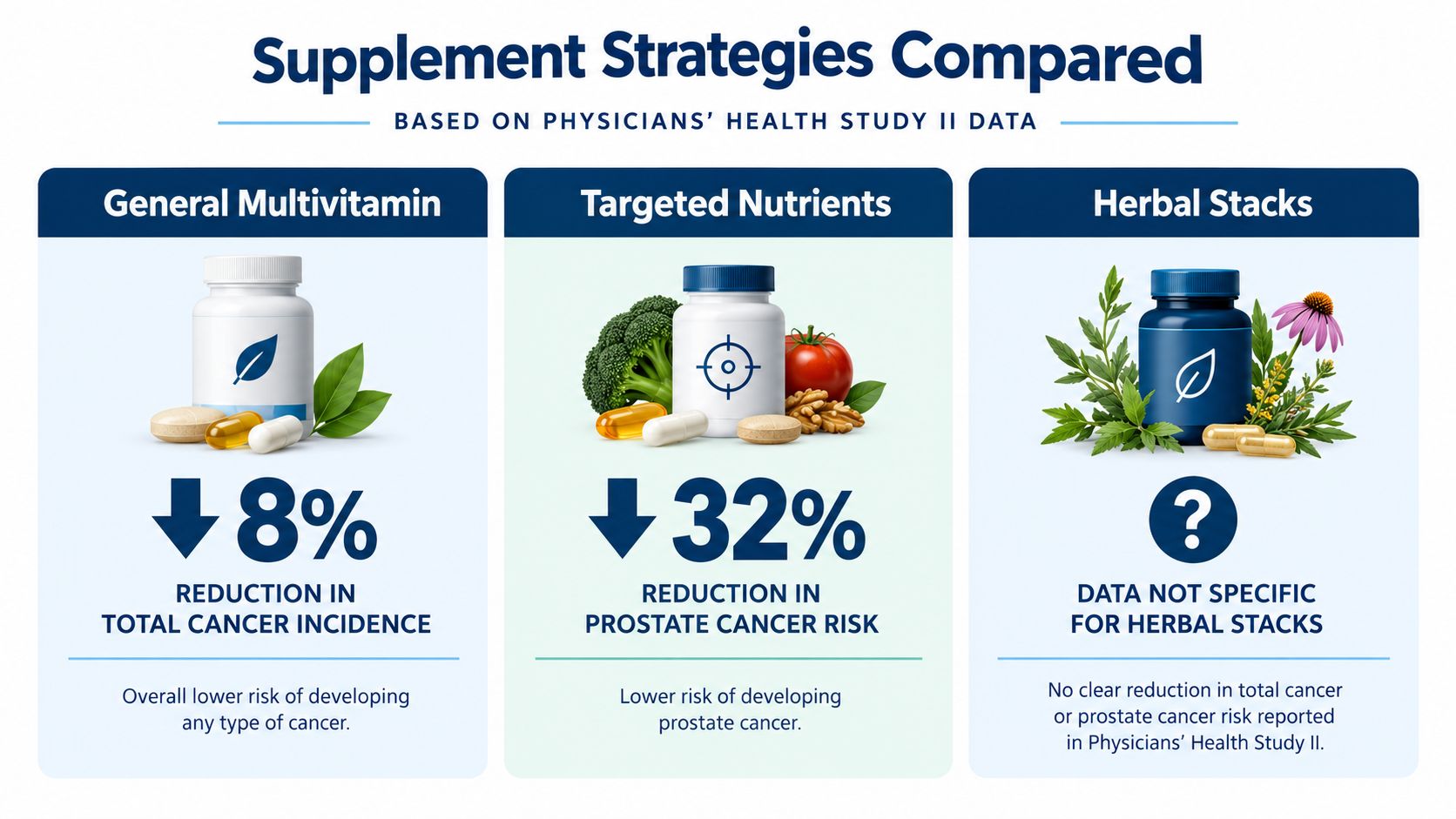
The most important evidence comes from the Physicians' Health Study II, a randomized trial in male physicians that followed participants for 11 years. Men taking a daily multivitamin had an 8% reduction in total cancers compared with placebo, with total cancer rates of 17.0 versus 18.3 per 1,000 person-years (Harvard T.H. Chan School of Public Health summary). That result matters, but it was modest. The same analysis found major cardiovascular event rates of 11.0 versus 10.8 per 1,000 person-years, so the trial doesn't support using a multivitamin as a heart-disease prevention strategy.
What each category can and can't do
A general daily multivitamin makes the most sense for an older man with a limited diet, inconsistent meals, or several small dietary gaps. It can provide a nutritional floor. It can't diagnose a deficiency, reverse an underlying illness, or reliably create more energy in a man whose nutrient status is already adequate.
Men's-specific multis often add herbs, amino acids, or “testosterone support” blends. Those extras make the label harder to audit. Proprietary blends can conceal the amount of each ingredient, and a long ingredient list doesn't equal stronger evidence. A simple formula with transparent amounts is usually easier to evaluate than a dramatic “male vitality” stack.
Single nutrients win when the question is specific. Vitamin D is more logical than a broad multi when laboratory testing identifies low status. B12 is more logical for a vegan man than a formula built around testosterone imagery. EPA and DHA are more relevant when dietary fish intake is low and the product clearly states the active fatty-acid amounts. Zinc belongs in the targeted category, especially because excess long-term intake can disrupt copper balance.
A product such as Bayer One A Day Men's Complete Multivitamin Supplement 200 Tablets fits the general-multivitamin category. Evaluate it like any other product, by checking the nutrient amounts, ingredient forms, testing information, and whether its contents match your diet.
The useful rule: Use a multivitamin to cover the floor. Add single nutrients only when your diet, symptoms, medication history, or testing gives you a reason.
Sexual Wellness and Performance Supplements
A man may buy a “male vitality” product for weaker erections, lower desire, or reduced confidence and end up treating the label instead of the problem. Sexual-performance supplements require a different standard from products intended to fill a nutritional gap. Persistent erectile dysfunction can signal a medical issue, while a supplement cannot reliably diagnose or treat its cause.
The NCCIH guidance on supplements marketed for sexual enhancement warns that no complementary approach has been established as safe and effective for erectile dysfunction. It also warns that these products may contain hidden drug ingredients. Undeclared PDE5 inhibitors are especially concerning because they can interact dangerously with nitrates and other medicines.
Ingredient evidence remains uneven. A 2025 NIH-hosted meta-analysis reported positive effects for some herbal ingredients, particularly saffron and ginseng, but broader medical guidance still finds evidence insufficient for most products. L-arginine and L-citrulline have plausible vascular mechanisms, yet a plausible mechanism does not make either ingredient dependable treatment. Tribulus, maca, tongkat ali, fenugreek, and saw palmetto are heavily marketed, while their erectile-function evidence remains limited or inconsistent.
Evidence audit of common sexual wellness ingredients
| Ingredient | Proposed Mechanism | Human Trial Evidence | Verdict |
|---|---|---|---|
| L-arginine | Nitric oxide production and vascular signaling | Some human evidence, but results aren't uniform | Plausible, not a substitute for evaluation |
| L-citrulline | Raises arginine availability and may support nitric oxide | Human evidence is limited but mechanistically credible | Possible adjunct, not a guaranteed ED treatment |
| Tribulus terrestris | Claimed androgen and libido support | Limited and inconsistent human evidence | Overmarketed |
| Fenugreek | Claimed libido and hormonal support | Human data are mixed and product-specific | Don't buy on the label alone |
| Maca | Claimed libido and sexual desire support | Evidence is limited and doesn't establish ED treatment | Not a first choice |
| Ashwagandha | Stress reduction and possible libido support | Some human data, but not a universal performance solution | Consider only with safety screening |
| Tongkat ali | Claimed testosterone and libido effects | Limited human evidence and variable extracts | Requires unusually careful quality checks |
| Hidden sildenafil analogues | Pharmaceutical-style vasodilation | Undeclared drug exposure, not legitimate supplementation | Avoid |
Apply four checks before considering any sexual-wellness formula:
- Independent testing: Look for a verifiable Certificate of Analysis. A vague “tested” statement proves little.
- Full disclosure: Reject proprietary blends that hide ingredient quantities.
- Manufacturing transparency: The company should identify its business and country of manufacture.
- Claim discipline: Avoid promises of an instant erection, guaranteed performance, or prescription-like results.
A product such as Nugenix Sexual Vitality Booster for Men 63 Caps Nitric Oxide Booster deserves the same scrutiny as any other formula. Review its full label, testing documentation, and medication risks rather than assuming the product name establishes effectiveness. Men who use nitrates, have cardiovascular disease, or experience persistent erectile dysfunction should speak with a clinician before trying a sexual-wellness supplement.
How to Read Labels and Choose Quality Products
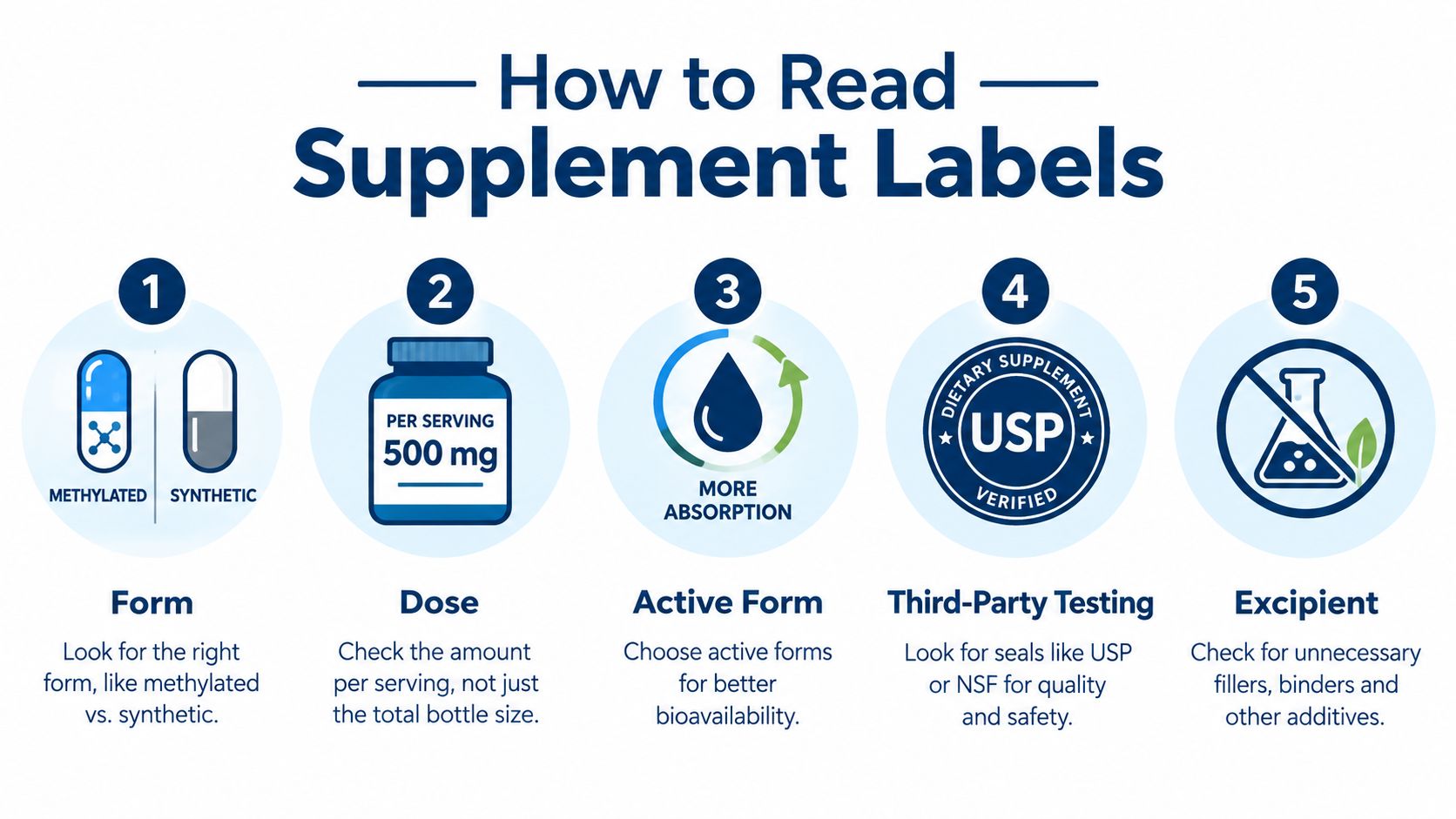
A supplement label becomes manageable when you ask five questions in order: What form is it? What dose is in one serving? Which active form is used? Who tested it? What else is in the capsule?
Start with the serving size. A large number on the front can be misleading if it represents several capsules, a blend, or total compound weight rather than the active nutrient. For omega-3s, compare EPA plus DHA. For zinc, find the elemental zinc amount. For magnesium, distinguish the amount of elemental magnesium from the weight of the attached compound.
Five label checks
- Form: Magnesium glycinate or citrate is generally more useful than magnesium oxide when absorption and tolerance matter. For B12, a clearly labeled active form such as methylcobalamin is a reasonable preference.
- Dose: Check the amount per serving, then compare it with your diet and any other products you take. Don't stack multiple formulas without adding their totals.
- Active form: Vitamin D products should state whether they contain D3 or D2. Vegan shoppers can look for D3 sourced from lichen rather than lanolin. Vitamin D and K2 are fat-soluble, so an oil-based capsule or a fat-containing meal is practical.
- Testing: NSF Certified for Sport, USP, Informed Choice, and ConsumerLab are different programs, so check what the specific certification verifies. Depending on the program, verification may address identity, label accuracy, contamination, or banned substances.
- Excipients: Review sweeteners, dyes, allergens, and unnecessary fillers. Gummies may be easier to take, but they can add sugar and may be less stable for certain nutrients.
Compare two products in under a minute
Put both labels side by side. First, cross out any product that hides amounts in a proprietary blend. Next, compare the active nutrient per serving, form, allergen statement, expiration date, lot information, and testing mark. Finally, check whether the product solves your actual problem or just repeats nutrients already present in your multivitamin.
Units can also cause avoidable mistakes. A clear explanation of whether IU and mg are the same thing helps prevent false comparisons between products that use different measurement systems.
Use this short video as a visual supplement-label refresher:
Safety Interactions and When to Test First
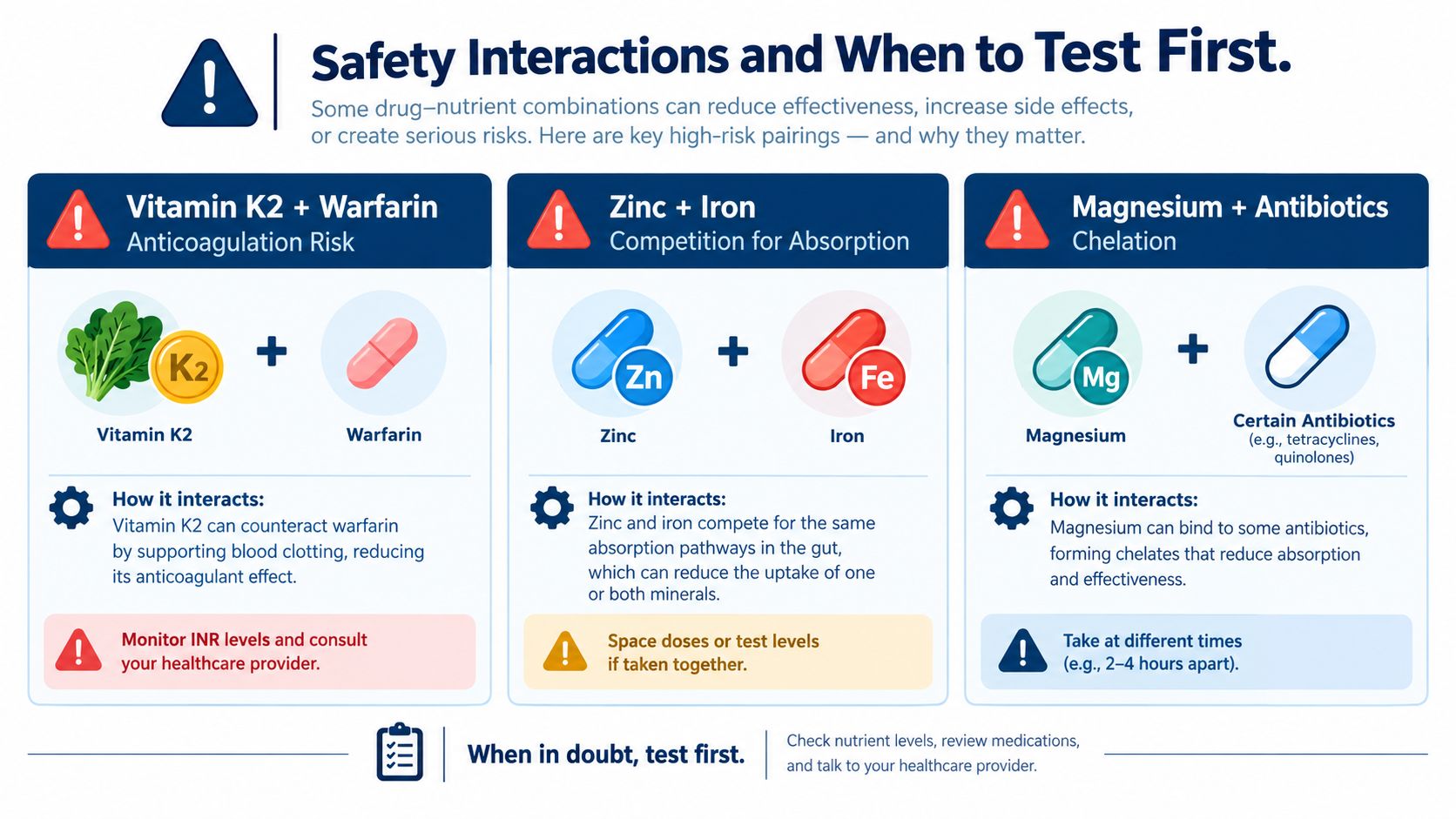
Start with your medication list before choosing a supplement. Nutrients can change absorption, clotting, or drug exposure, and a “natural” label does not remove those risks.
Vitamin K2 requires caution with warfarin because higher vitamin K intake can interfere with anticoagulation management. Zinc and iron can compete when taken together, so avoid automatically combining them in high-dose products. Magnesium can bind certain antibiotics and bisphosphonates in the digestive tract, reducing absorption. Follow your prescriber's or pharmacist's instructions on timing.
Omega-3 supplements also deserve review if you take anticoagulants. At intakes above 3 grams per day, bleeding concerns may become more relevant for people using blood thinners. Do not treat that amount as a routine wellness dose. Discuss higher-dose omega-3 use with a clinician or pharmacist before starting it.
Who should test before supplementing
Testing makes sense for men over 50, men with malabsorption, vegetarians and vegans, men using PPIs, men taking metformin, and anyone with unexplained fatigue. Persistent erectile dysfunction belongs in a medical evaluation, not a cycle of increasingly aggressive performance supplements. A test can identify a nutritional gap, while persistent symptoms may require a broader clinical workup.
Useful tests may include:
- Serum 25-hydroxyvitamin D: The standard marker for vitamin D status.
- Serum B12 with methylmalonic acid: Helpful when B12 status is uncertain or symptoms suggest deficiency.
- Plasma or RBC zinc: May help investigate suspected zinc insufficiency, though results require clinical interpretation.
- RBC magnesium: Sometimes used when magnesium status needs closer evaluation.
Do not self-prescribe a high-dose zinc course for months. A benchmark of 50 mg elemental zinc twice daily for 1 to 4 months has been described for specific reproductive contexts. It is not a general daily recommendation. Professional supervision matters because chronic excess can contribute to copper imbalance (review of zinc and male reproductive health).
Before buying a stronger formula, ask whether a lab result would change your decision. If it would, test first.
Shopping Checklist and Final Recommendation
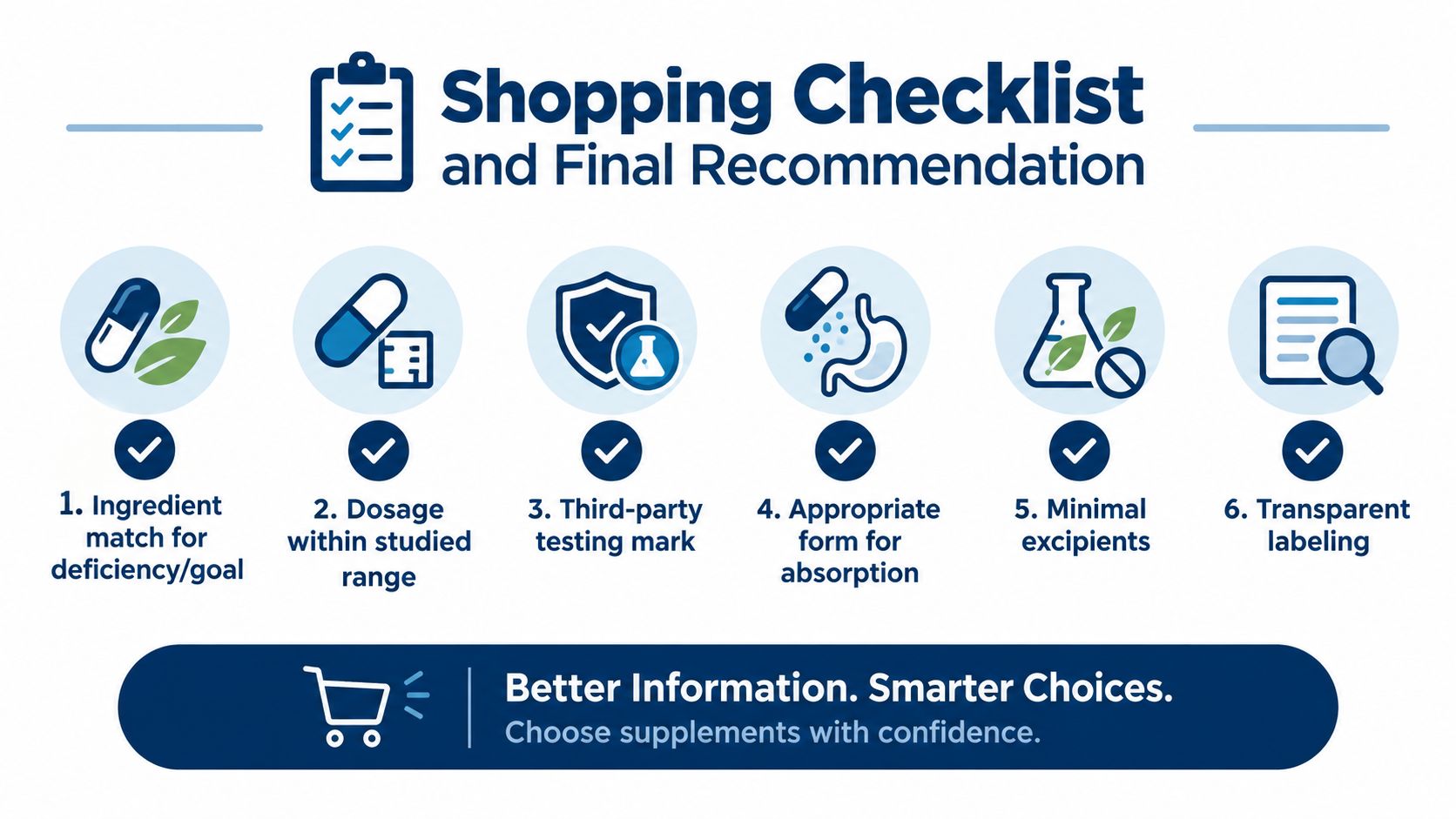
A good purchase should survive six checks. If it fails one of the first three, leave it on the shelf.
- Ingredient match: Tie the product to a documented deficiency, a dietary gap, or a clearly defined goal.
- Studied dose: Choose an amount that fits the evidence and your medical context, not the largest number on the label.
- Third-party verification: Look for a recognizable testing program or a verifiable certificate.
- Appropriate form: Choose vegan D3 from lichen, algae omega-3, or a well-tolerated magnesium form when those features matter to you.
- Clean label: Review allergens, excipients, serving size, expiration date, and lot information.
- Purchase transparency: Check shipping, returns, unopened-product rules, and whether the seller publishes relevant product details.
For practical buying research, read from Cost Plus TRT can provide additional context on men's health topics, but it shouldn't replace product-label review or clinical advice. Supplemynts Inc is an online retailer that organizes vitamins, minerals, herbs, proteins, and purpose-based categories, including men's supplements, omega products, vegan supplements, and mineral formulas. Its published store information includes free shipping within the continental United States and a 60-day return policy, while return conditions should still be checked before ordering.
The default plan
For most men, start with food, sleep, exercise, and bloodwork when symptoms or risk factors justify it. A targeted vitamin D3 product is reasonable when testing identifies low status or a clinician recommends replacement. Magnesium glycinate can make sense when dietary intake is poor and the product's dose is clear. Consider EPA and DHA when oily fish intake is consistently low. Use B12 when you're vegan, have a confirmed gap, or have a medication or absorption reason. Add zinc only when diet, testing, or a specific clinical context supports it.
A daily multivitamin can cover the nutritional floor, but it isn't a performance tool. If your main concern is erectile dysfunction, low libido, or persistent fatigue, book an evaluation instead of stacking increasingly aggressive formulas.
Supplemynts Inc offers an online range of vitamins, minerals, herbs, proteins, omega products, and men's health supplements organized by ingredient and purpose. Visit Supplemynts Inc to compare clearly labeled options, review product and return information, and choose a supplement that matches your actual nutritional need rather than a performance promise.







Please complete your information below to login.
Sign In
Create New Account