


You're in the aisle, or maybe scrolling tabs late at night, comparing two tubs that both say zero carb and high protein. One looks clean, the other looks a little more “fitness-y,” and both promise the same thing, so the question becomes which one will fit your body, your macros, and your stomach.
That confusion is normal. The best low carb protein powder isn't just the one with the lowest carb number on the front label, it's the one that gives you enough protein, uses a form you can digest well, and doesn't rely on sweeteners or fillers that make you quit after three shakes.
A lot of buyers start with carb grams because keto, calorie control, and blood sugar goals make that number feel simple. But once you get past the headline, the better choice usually comes down to three quieter questions, how much protein you're really getting, which protein source you're buying, and how the formula is sweetened. Those details matter just as much as the carb count.
Table of Contents
- Introduction to Finding Your Best Low Carb Protein Powder
- What Low Carb Really Means for Protein Powder
- Comparing Protein Sources for Low Carb Goals
- How to Read Labels Sweeteners and Additives Without Guesswork
- Choosing the Right Low Carb Powder for Your Diet and Lifestyle
- Smart Ways to Use Mix and Enjoy Low Carb Protein Powder
- Your Final Checklist for Buying With Confidence
Introduction to Finding Your Best Low Carb Protein Powder
A shopper can stand in front of two nearly identical tubs and still end up making very different choices. One label might look plain and serious, another flashy and dessert-like, but the split is usually hidden in the nutrition panel and ingredient list.
That's why low carb buyers often need a different filter than general protein shoppers. If you're following keto, watching calories, or just trying to keep sugar low, you're not only looking for protein, you're looking for protein density. The goal is simple, get more protein per scoop without accidentally buying a carb-heavy blend disguised as a fitness product.
Practical rule: if a powder is low in carbs but also low in protein quality, it's not a good deal for daily use.
This guide takes the confusion out of that decision. It starts with the numbers that matter, then moves into protein sources, label reading, sweeteners, and use cases for keto, vegan, lactose-sensitive, and sensitive-stomach buyers. By the end, you should be able to glance at a label and tell whether a powder is a real low-carb fit or just marketing with a protein claim.
What Low Carb Really Means for Protein Powder
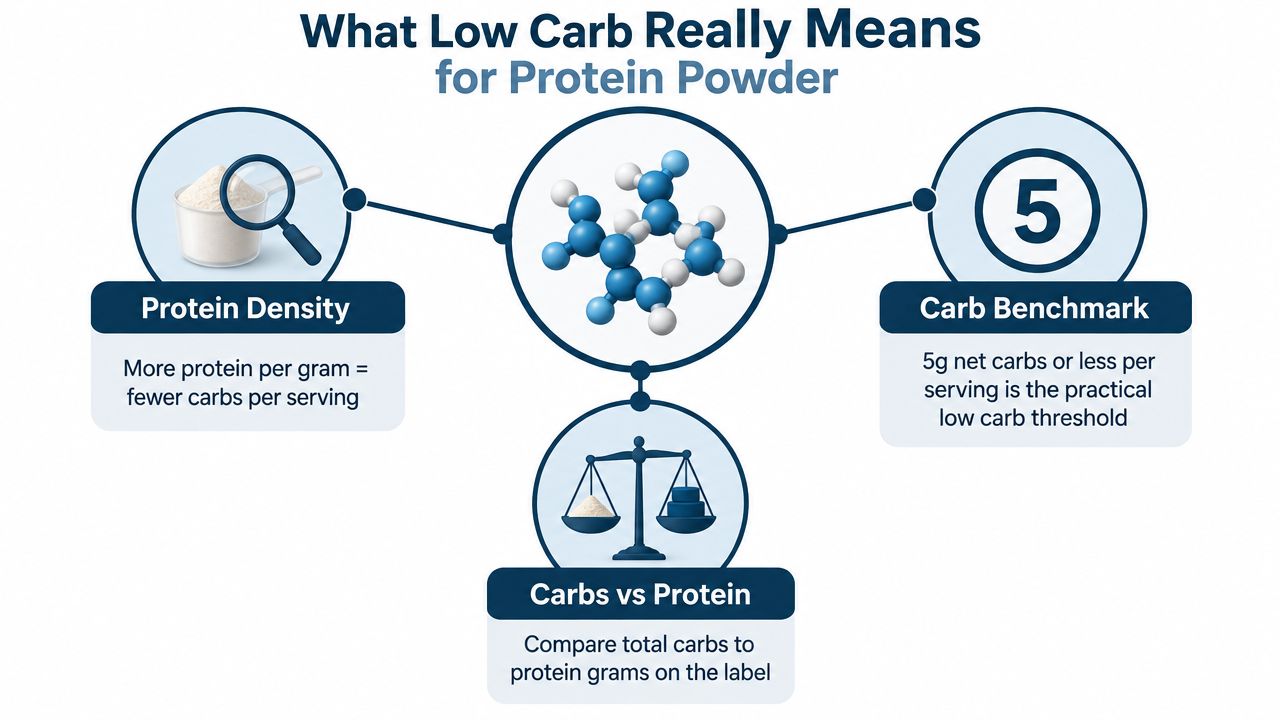
Low carb protein powder is easier to understand if you think in terms of density, not just grams. A powder is doing its job when most of what you scoop is protein, not sugar, starch, or flavoring material.
The clearest benchmark in today's market is simple, about 0 to 2 grams of carbs per serving with roughly 20 to 25 grams of protein. That's the pattern seen in many leading whey isolate products, including a widely sold zero-carb powder that lists 25 g of protein, 0 g total carbohydrate, 0 g sugar, and 100 calories per 29 g serving, and another low-carb whey isolate that provides 20 g of protein with 2 g of carbohydrates and 100 calories per serving Target product listing.
How the label math works
The easiest shortcut is the protein-to-carb ratio. If a serving gives you 25 grams of protein and zero carbs, that's a very different product from one that gives you 20 grams of protein and 8 grams of carbs, even if both are marketed as “healthy.”
Calories help too. A powder that stays around 90 to 100 calories while delivering 20 to 25 grams of protein is usually built for lean nutrition, not bulked-up flavoring. That's why whey isolate became the default format for low-carb buyers, the processing removes much of the lactose, fat, and sugar that remain in whey concentrate, so the protein load stays high while the carb load stays low Healthline comparison of isolate and concentrate.
Net carbs versus total carbs
Some shoppers focus on net carbs, others stick with total carbs. For protein powders, both matter, but the practical move is to look at the whole serving first, then ask what's creating the carbs. If the ingredients list leans on sugar alcohols, fibers, or fillers, the label may look better than the formula feels in real life.
If your target is keto-style eating, a powder with 0 to 2 grams of carbs and a strong protein count is usually the cleanest starting point.
That's the reason low carb shoppers now expect more than a “protein” label. They expect a formulation where the carbs stay almost invisible while the protein still does the heavy lifting.
Comparing Protein Sources for Low Carb Goals
Not every protein source behaves the same way in a low carb formula. Some sources naturally keep carbs low while offering excellent digestibility, while others need extra processing or blending to come close.
The technical advantage usually starts with an isolate rather than a concentrate or whole-food blend. Protein quality depends on digestibility and essential amino acid availability, and animal proteins such as whey, milk, casein, and egg sit at the top end of protein-quality benchmarks. Many plant proteins score lower unless they're isolated and processed to remove antinutritional factors MDPI review on protein quality and digestibility.
Low Carb Protein Sources Compared
| Protein Source | Typical Carbs per Serving | Digestibility and Best For |
|---|---|---|
| Whey isolate | Very low, often near zero | Fast-digesting, strong amino acid profile, best for keto and post-workout use |
| Whey concentrate | Usually higher than isolate | Good protein, but more likely to carry lactose and carbs |
| Casein | Low to moderate | Slower digesting, useful for satiety and nighttime use |
| Egg white protein | Low | Dairy-free, complete protein, useful for sensitive users |
| Collagen | Usually very low | Easy to mix, but not a full muscle-building protein on its own |
| Pea or soy isolate | Low when well refined | Best plant-based low carb option when processed carefully |
| Whole plant blends | Can be variable | Often better for variety, but carbs and digestibility may vary more |
A useful external comparison for shoppers weighing plant formulas against whey is plant based protein vs whey. It's especially helpful if you're trying to decide whether you care more about dietary preference or muscle-support efficiency.
For shoppers who want a direct example of a sugar-free whey isolate style product, this flavored sugar-free whey isolate supplement is the kind of listing that shows how the category is commonly positioned.
The main takeaway is simple, not all low carb powders are equal for performance. A collagen powder may be low carb, but it won't behave like a complete protein source in the same way whey, egg, or a well-refined plant isolate will. If your goal is muscle support, recovery, or a meal-like shake, protein quality matters as much as carb count.
How to Read Labels Sweeteners and Additives Without Guesswork
You are standing in a store, comparing two tubs that both claim to be low carb. One has fewer carbohydrates, while the other provides more protein with a shorter ingredient list. Reading the panel helps you decide which one fits your body and routine, not just which package has the smallest carb number.
Start with the serving size
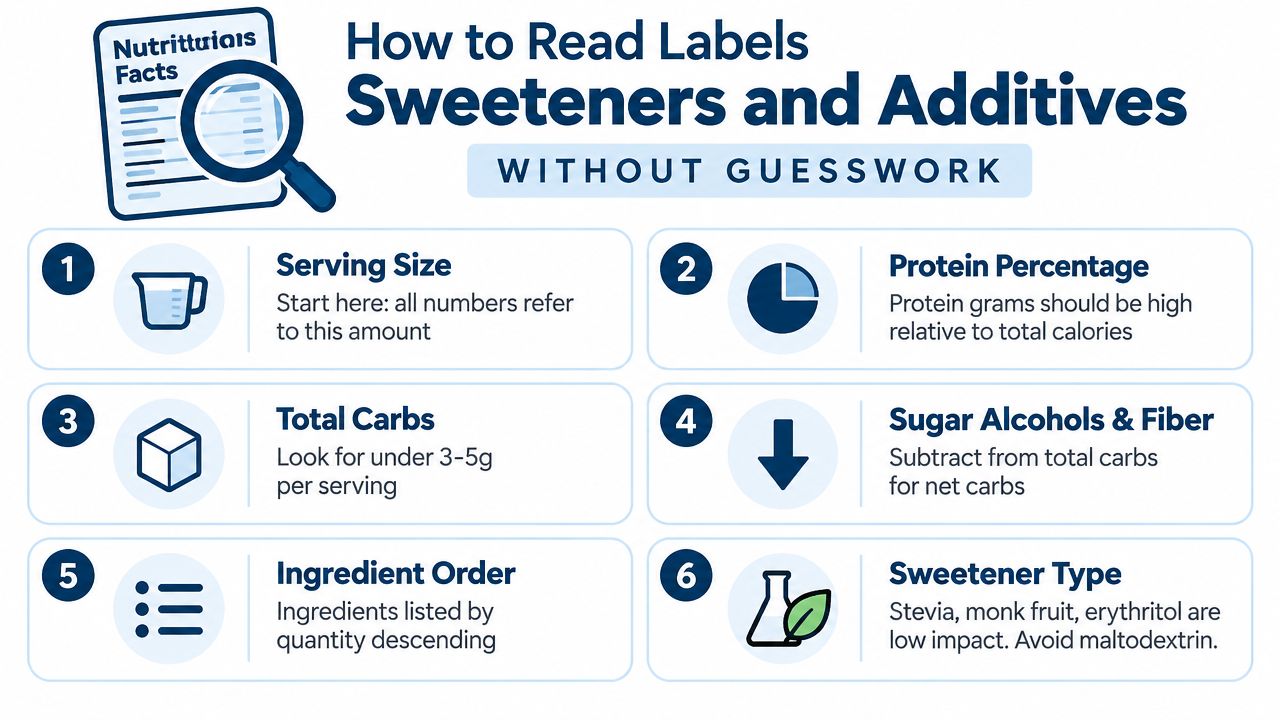
Begin with the serving size. A powder can appear very low carb because its listed scoop is unusually small. Every figure on the nutrition panel applies to that amount, not to the entire tub or the serving you may pour.
Compare protein relative to calories next. A protein-forward formula gives you substantial protein without relying heavily on flavoring ingredients, oils, or other extras. If the scoop is modest and the ingredient list is long, the product may devote more space to taste and texture than to protein.
Sweeteners change more than flavor
Zero-carb formulas commonly use sucralose, acesulfame-K, stevia, monk fruit, or sugar alcohols. Their effects on digestion are not identical, and evidence about gut effects remains mixed sweetener types overview. Check this part of the label carefully if you drink protein powder every day or already react to highly sweetened products.
A practical rule is simple:
If a powder tastes great but leaves you bloated, it's not a good daily low-carb choice.
Sweetener tolerance can matter more than a small difference in carbohydrate content. A powder that causes discomfort will not support a consistent routine, even if its macros look ideal. Keto shoppers may prioritize the lowest net carbs, while people with sensitive stomachs may prefer a gentler sweetener system and slightly different macro tradeoffs.
Watch for fillers that crowd out protein
Ingredient order provides another useful clue. If thickeners, flavor carriers, or other fillers appear near the beginning, the formula may contain less protein than its front label suggests. Independent testing can also check protein content and contaminant risk when products differ from their label claims garage gym reviews on clean protein testing.
Use this quick check:
- Protein first: compare protein with total calories.
- Short ingredient list: fewer extras can mean fewer surprises.
- Sweetener match: select the style your stomach handles well.
- Independent verification: look for quality testing when available.
The goal is clarity, not a flawless ingredient list. Identify the serving size, protein density, additives, and sweetener style. Those details reveal whether a powder suits your carb target, digestion, and daily use before you buy it.
Choosing the Right Low Carb Powder for Your Diet and Lifestyle
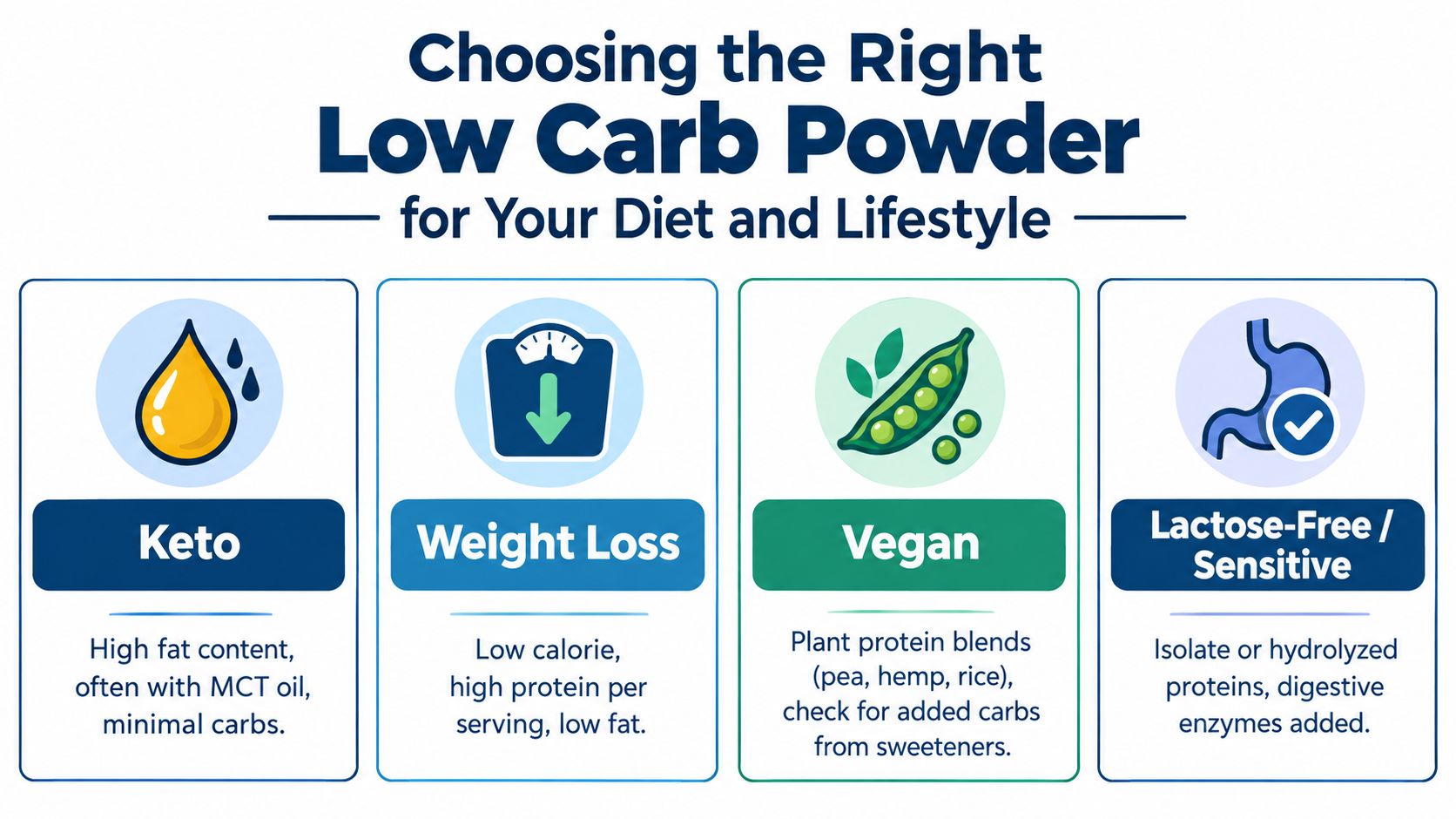
The right powder depends on what problem you're solving. A keto buyer, a vegan buyer, and someone with lactose sensitivity aren't shopping for the same thing, even if all three want low carbs.
Keto buyers want the tightest carb range
For keto, the safest path is usually a powder with extremely low carbs and a simple ingredient list. That usually points toward whey isolate or another highly refined protein source, especially when you want to keep shakes from becoming accidental snack foods. If the powder is also easy to digest, that's a bonus, not a luxury.
Vegan buyers need a different filter
Vegan low carb shoppers should pay attention to the protein blend, not just the carb number. Recent market data shows that multi-source protein blends are now estimated to make up 45 to 55% of volume in the U.S. low-carb plant protein powder market, and functional fortification with greens, mushrooms, adaptogens, and probiotics has been growing about 18 to 25% annually since 2023 IndexBox market analysis. That means many vegan powders are moving beyond single-source formulas and toward blended, fortified products.
For a plant-based shopper, the best question isn't just “how low are the carbs?” It's “does the blend feel complete, and will the extras help or bother me?” If you want a curated example in that lane, this keto-friendly collagen protein powder example shows how the market often positions specialized low carb formulas.
Sensitive stomachs need a comfort test
If you're lactose-sensitive or easily bloated, isolate or hydrolyzed proteins are usually easier to start with than concentrates. Egg white protein can also be a practical option when dairy is a problem. For people who feel better with less sweetness, unflavored powders often beat dessert-style blends, even if they're less exciting.
Weight-loss buyers should think about satiety
Low-carb doesn't automatically mean low effort to drink. If you're using a shake as part of a weight-loss plan, you may want a formula that feels filling without adding a lot of extra calories. Some buyers like a little fat for satiety, while others want a leaner shake they can pair with food.
One product style that reflects this approach is MCT powder with whey protein, which shows how some formulas try to balance low carb goals with a more filling feel.
Smart Ways to Use Mix and Enjoy Low Carb Protein Powder
A great powder still fails if it clumps, tastes strange, or never fits your routine. The easiest way to keep using it is to make the mixing process predictable and the flavor fit your day.
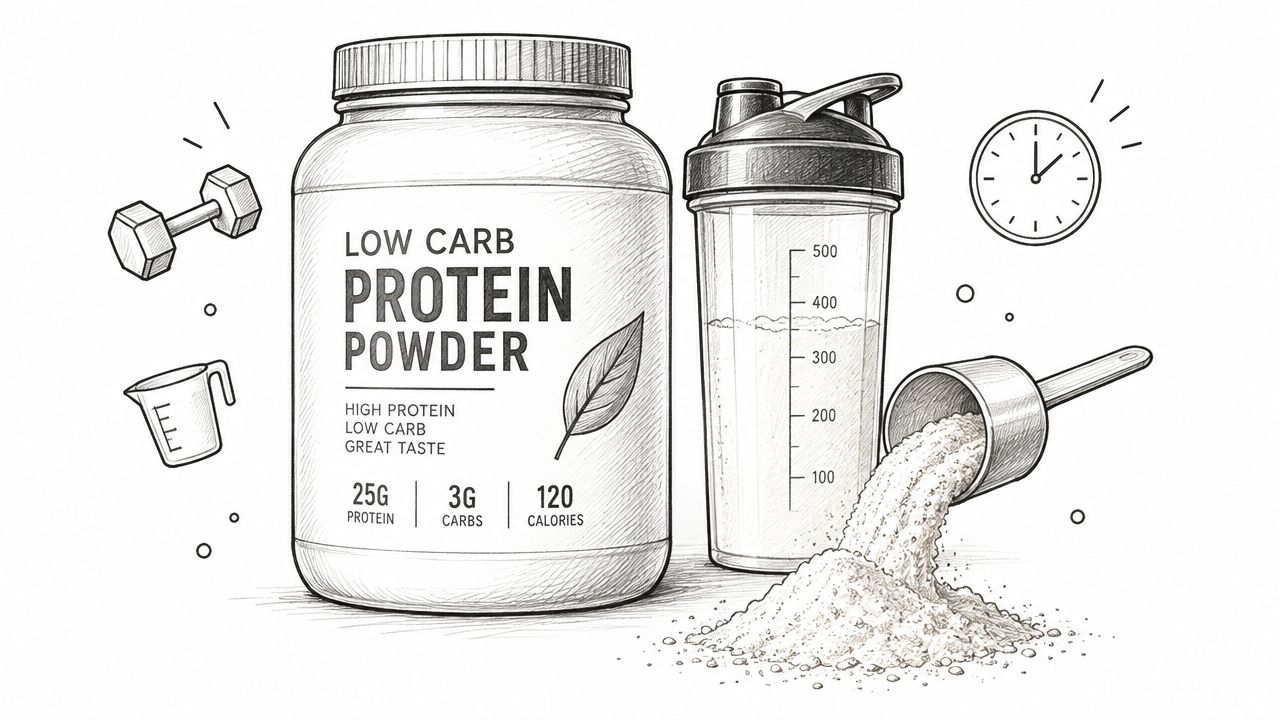
Match the powder to the moment
A whey isolate style powder works well when you want something fast after training. If you're using it as a meal bridge, mixing it into yogurt or a thicker smoothie can make it feel more satisfying. For coffee drinkers, unflavored or lightly flavored powders usually blend best and keep the carb load low.
If you want a practical workout-oriented reference, protein shake tips for Central Massachusetts lifters is a useful resource for thinking about timing around training.
Mix for texture, not just taste
Cold liquid usually mixes better than warm liquid for many powders, especially if you're using a shaker bottle. Start with a smaller amount of liquid than you think you need, shake hard, then add more if the texture gets too thick. That avoids the chalky mouthfeel that makes people abandon an otherwise good product.
A few easy use patterns:
- Morning coffee blend: mix a small amount first, then add coffee slowly.
- Smoothie base: pair with ice, unsweetened milk, and a mild fruit if the carb budget allows.
- Yogurt topper: use less liquid so the powder thickens instead of thinning the bowl.
- Baking swap: unflavored powders usually behave better in muffins or pancakes than sweetened ones.
Don't overshoot your own needs
More isn't always better. A second scoop may sound efficient, but it can also make the drink heavier than you wanted. If you already get enough protein from food, a single serving may be plenty.
Storage matters too. Keep the container sealed, dry, and away from heat so the flavor stays stable. The more consistently a powder tastes and mixes the same way, the easier it is to keep it in your routine.
Your Final Checklist for Buying With Confidence
Start with the label, then match the powder to your priorities. Check the protein-to-carb balance first, especially if you need a low carb formula rather than a standard protein drink. A short ingredient list can help, but protein quality still matters. Whey isolate, egg protein, and well-formulated plant blends each suit different diets and digestion needs.
Sweetener tolerance deserves equal attention. A powder can fit your carb target and still cause discomfort if your stomach handles certain sugar alcohols, fibers, or thickeners poorly. Read the full ingredient list before buying, not just the nutrition panel. Look for independent verification when available, because low carb on paper does not always guarantee complete label accuracy.
Use this quick checklist:
- Carbs: choose a practical amount for your diet, including keto targets.
- Protein: select a serving with enough protein to justify the scoop.
- Source: match whey isolate, egg, or a plant blend to your diet and protein-quality preferences.
- Sweeteners: choose the type your digestion tolerates.
- Testing: favor products with quality verification when possible.
The best low carb protein powder is the one you can use comfortably and consistently. Match its macros, protein source, and sweetener profile to your routine, rather than choosing the flashiest front label.
If you want a simpler way to shop, visit Supplemynts Inc to browse products by purpose and ingredient type. Its curated catalog and shopping tools can make label comparisons easier.







Please complete your information below to login.
Sign In
Create New Account