


You're comparing two bottles of aloe vera capsules online. One says whole leaf, another says inner-leaf gel, and a third promises a digestive cleanse without clearly naming the part of the plant inside. The serving sizes look similar, but the labels may describe materially different substances.
That confusion is understandable. Aloe vera isn't one uniform ingredient. The clear inner gel, yellow latex, and whole-leaf material can carry different compounds, different intended uses, and different safety questions. Once you learn to identify the leaf fraction and check hydroxyanthracene-derivative control, the front-label wellness language becomes much less important.
Table of Contents
- Why Aloe Vera Capsules Confuse So Many Shoppers
- What Aloe Vera Capsules Actually Contain
- Digestive, Skin, and General Wellness Claims
- Typical Ingredients and Dose Considerations
- How to Choose a Quality Aloe Vera Capsule
- Safety, Side Effects, and Interactions to Know
- Practical Questions About Daily Use and Special Populations
Why Aloe Vera Capsules Confuse So Many Shoppers
Aloe vera capsules are often presented as if the plant has one standard profile. In practice, a product may contain dried inner-leaf gel, decolorized whole-leaf extract, whole-leaf powder, or latex-containing material. Those descriptions aren't interchangeable, even when two bottles use the same plant name and appear side by side in an online supplement aisle.
The easiest way to understand the issue is to treat the aloe leaf like a layered food. The inner gel is the clear central material. Around it sits the latex, a bitter yellow layer associated with stimulant-laxative compounds. The outer rind surrounds both. A manufacturer can process these layers separately or combine them, so “aloe” alone tells you very little about the final capsule.
Practical rule: Read the botanical fraction before reading the promised benefit.
A label that says inner-leaf gel gives you more useful information than a large “digestive support” claim on the front. “Whole leaf” signals a broader preparation that may include material from multiple layers. “Latex” points directly toward the fraction with laxative activity. “Decolorized” describes processing intended to remove colored compounds, but it still deserves a quantitative aloin specification rather than blind trust.
For a visual introduction to aloe's different meanings in product descriptions, The Cactus Outlet aloe selection offers useful context around the plant and its forms. The purchasing skill to take away is simple: identify which part of the leaf was used, then ask how the manufacturer controls its hydroxyanthracene derivatives, including aloin.
By the end of this guide, you should be able to inspect an aloe label like a food label rather than a promise. You'll know which claims have a real historical basis, which ones stretch beyond the evidence, and which missing details should make you pause before buying.
What Aloe Vera Capsules Actually Contain
You can hold two capsules labeled “aloe vera” and still be comparing different ingredients. An oral capsule usually contains dehydrated aloe leaf material, dried and ground into powder before being placed inside a shell. The shell makes the supplement easier to take, but it does not standardize the plant chemistry. The leaf fraction and processing method determine what remains in the powder.
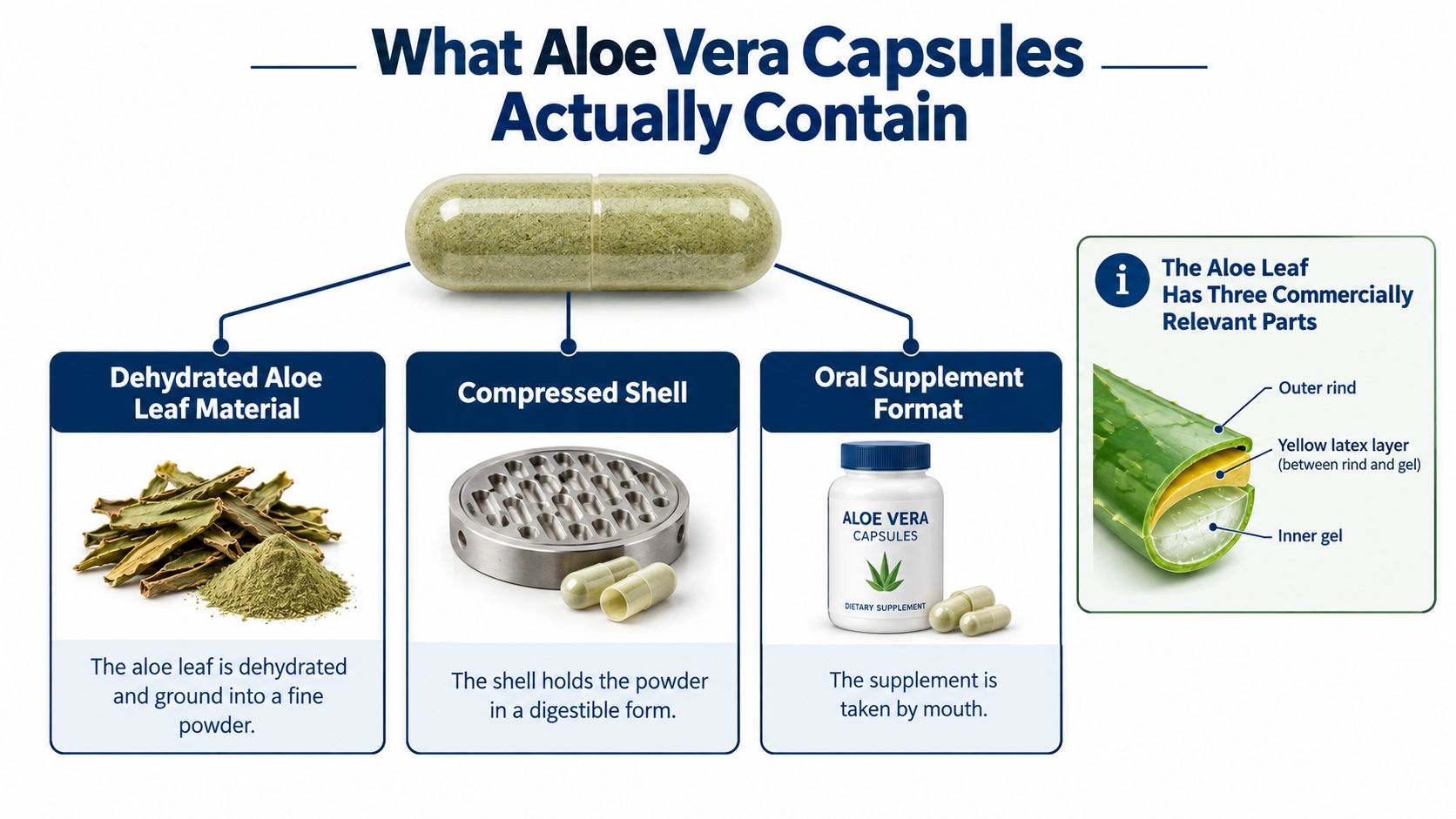
A capsule made from inner-leaf gel only is chemically a different ingredient from one made from whole leaf, even at the same milligram weight. The gel is the clear, mucilaginous tissue inside the leaf. After drying, it becomes a powder, and labels may call it inner leaf, inner-leaf gel, or decolorized gel. These terms generally indicate an intended reduction of the stimulant-laxative constituents associated with the outer portions.
Latex
Aloe latex is the yellow, bitter material between the rind and the gel. It contains hydroxyanthracene derivatives, often shortened to HADs, including aloin A and B. These compounds can stimulate bowel movements and may produce gastrointestinal effects, so the presence or controlled removal of this fraction matters more than the capsule's total aloe weight.
The U.S. Food and Drug Administration published a final rule on May 9, 2002, determining that aloe and aloe-extract stimulant-laxative ingredients in over-the-counter drug products were not generally recognized as safe and effective, or were misbranded. The rule became effective on November 5, 2002, and excluded aloe from the final OTC laxative monograph unless manufacturers established the required evidence. The action addressed OTC laxative use, yet it remains relevant when assessing oral products that contain latex. The Federal Register record of the FDA aloe rule provides the regulatory history.
Whole-leaf preparations
Whole-leaf products combine material from the gel and outer parts of the leaf. Some undergo processing intended to reduce latex constituents. Others disclose too little to show how much remains. A stated aloe weight therefore cannot tell you how much aloin or other HADs the capsule contributes.
A product listing such as this aloe vera capsule product page shows the format shoppers commonly encounter. Check three details: the leaf fraction, the processing method, and whether the label quantifies the compounds that create the greatest safety concern. Those details turn “aloe vera” from a broad marketing label into a more specific purchasing decision.
Digestive, Skin, and General Wellness Claims
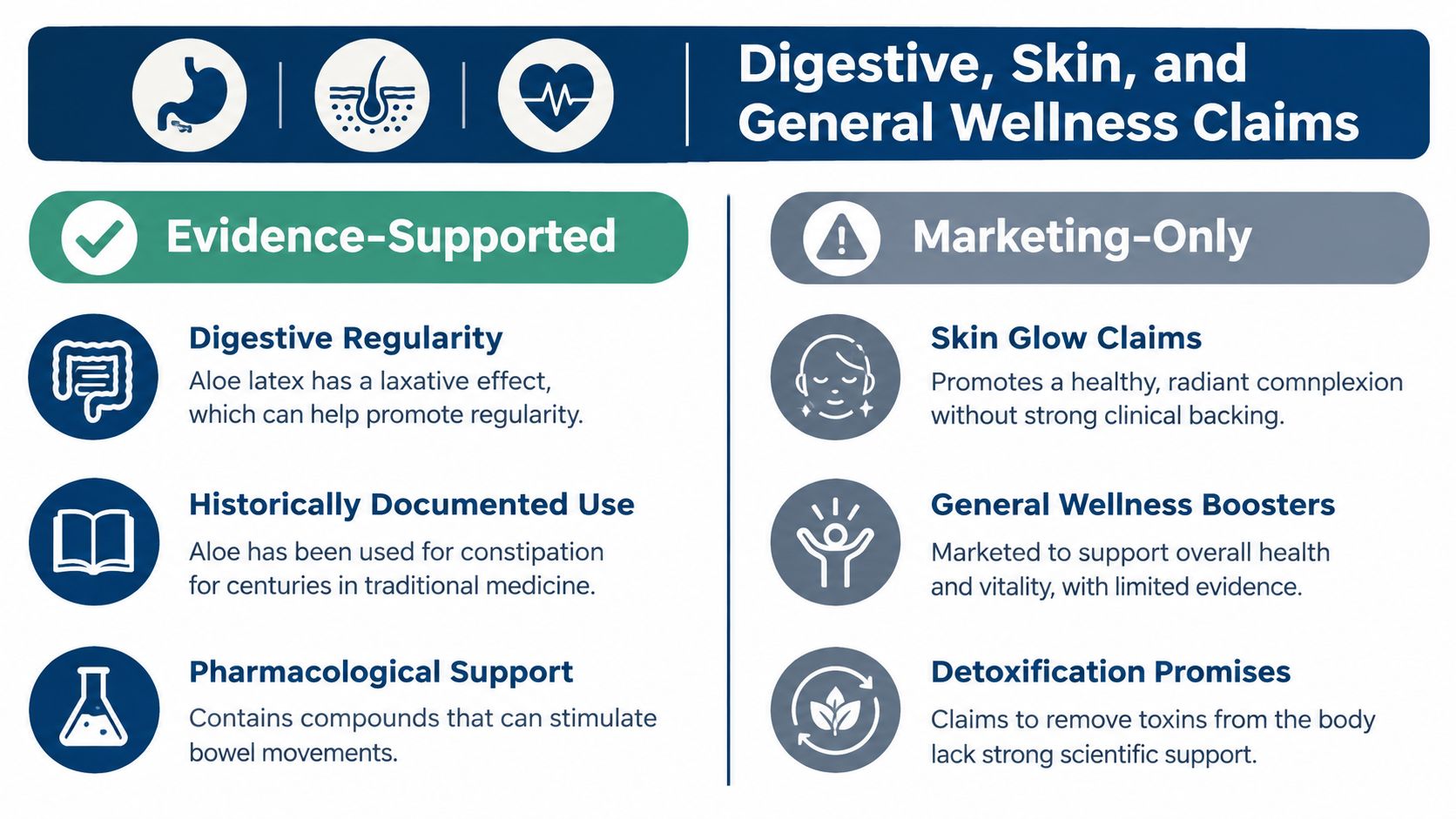
Aloe capsules create confusion because the same plant name can point to very different materials. One capsule may lean on latex, the part with a historical laxative activity claim. Another may contain inner-leaf gel, which is often marketed as if it carried the same effects.
For bowel regularity, the clearest support belongs to aloe latex, not to aloe in general. The World Health Organization described short-term use for occasional constipation and listed an adult dried-latex dose of 40 to 110 mg, equal to roughly 10 to 30 mg of hydroxyanthraquinones per day, or 100 mg as a single evening dose. These figures come from the World Health Organization aloe monograph. They are a reference point, not a blanket guide for modern capsules, especially when labels do not state how much latex or how many hydroxyanthracene derivatives are present.
That is why product claims need careful reading.
- Digestive regularity: A laxative effect has the strongest traditional and pharmacological basis, but it is tied mainly to latex constituents. A capsule sold for “cleanse” support may be built around the very compounds that call for the most caution.
- Skin support: Topical aloe experience does not automatically transfer to swallowed capsules. Oral benefit for skin is a separate question, so a soothing external product like this aloe after-sun gel belongs in a different category from a capsule.
- General wellness: Claims about detoxification, immunity, inflammation, or broad vitality stretch beyond what oral aloe evidence can clearly support.
A review of the clinical literature found only a small controlled evidence base, including 10 controlled clinical trials involving 803 participants, with six randomized controlled trials and four other controlled clinical trials. The authors concluded that the clinical effectiveness of oral or topical aloe was not sufficiently defined. For the published record, see the systematic review in Cochrane Database of Systematic Reviews.
A product page that moves from aloe has a history of laxative use to this capsule supports every aspect of wellness has skipped several important steps.
Typical Ingredients and Dose Considerations
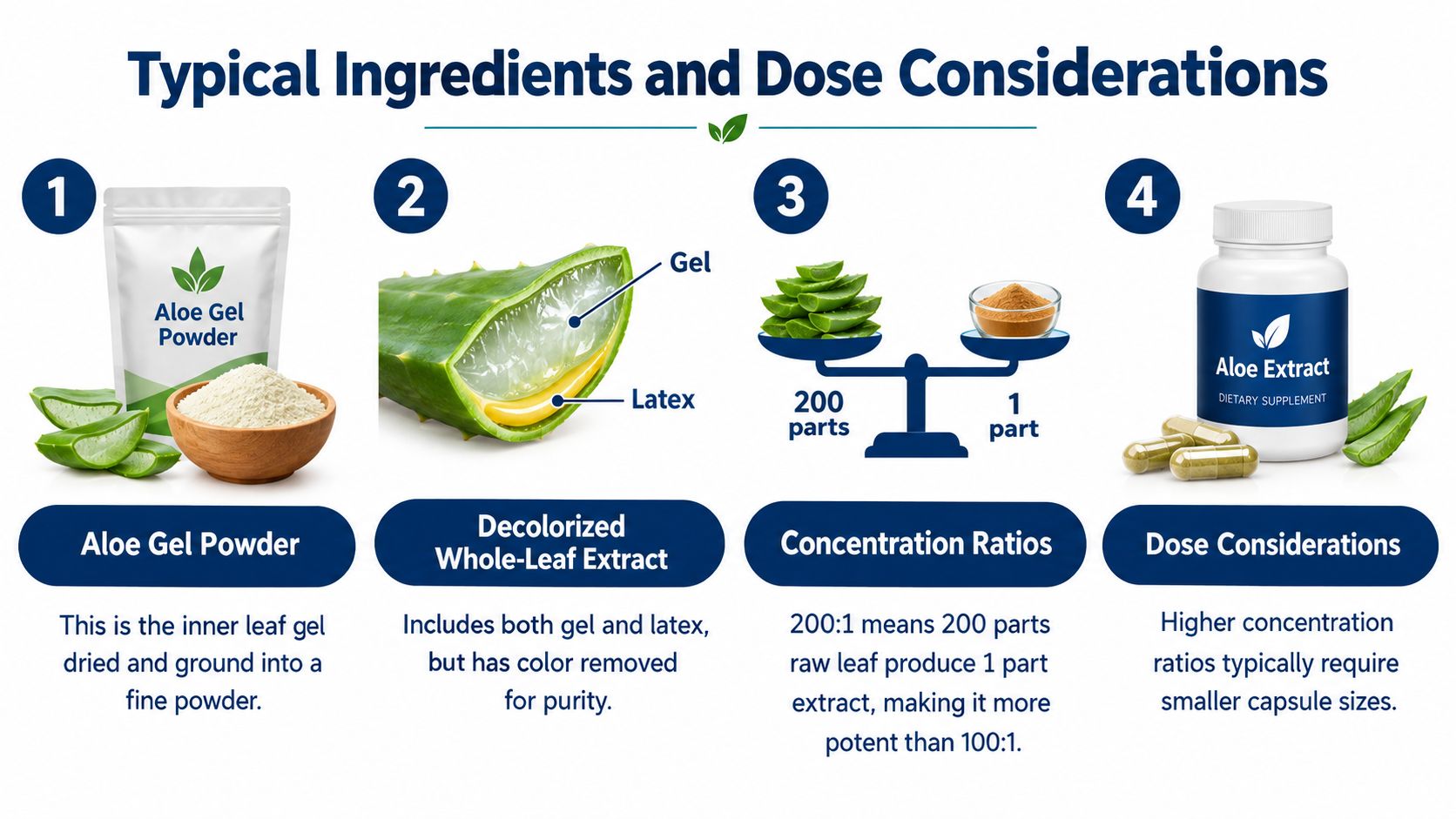
Start with the active ingredient panel, not the capsule color. A label may list aloe gel powder, decolorized whole-leaf extract, or a concentrated extract with a ratio such as 100:1 or 200:1. A ratio describes how much starting plant material was used to make the extract. It doesn't tell you how much aloin remains.
For example, a 200:1 extract sounds more concentrated than a 100:1 extract, but concentration alone doesn't reveal whether the material came from inner gel or whole leaf. Nor does it establish the final hydroxyanthracene-derivative exposure. The useful companion detail is a quantitative specification for aloin or total HADs.
Read the active material
Aloe gel powder usually refers to dried inner-leaf gel, but the label should still identify the botanical fraction and processing method. Decolorized whole-leaf extract may include material from more than one layer while undergoing processing intended to reduce colored and unwanted constituents. Neither phrase should replace an aloin result.
A serving size can also mislead. The number of milligrams printed beside “aloe” may represent raw-leaf equivalent, extract weight, or a blend. Ask whether the number refers to the powder inside the capsule or an equivalent amount of fresh plant material.
Inspect the supporting ingredients
Common inactive ingredients may include vegetable cellulose, rice flour, magnesium stearate, and silicon dioxide. Vegetable cellulose can suit people seeking a non-gelatin shell, while the others may function as bulking, flow, or manufacturing aids. Their presence isn't automatically a quality problem, but a proprietary blend that hides each ingredient's amount makes the formula harder to evaluate.
The serving instructions matter just as much as the ingredient list. The WHO dried-latex benchmark of 40 to 110 mg, with approximately 10 to 30 mg of hydroxyanthraquinones per day, applies to a specific laxative context, not to every aloe capsule. A shopper should use it as a reminder that dose and duration are inseparable from leaf fraction. A product with unclear latex content can't be judged safely from capsule count alone.
Label-reading shortcut: If the label provides an aloe weight but no plant fraction and no aloin or HAD specification, you still don't know the most safety-relevant part of the dose.
How to Choose a Quality Aloe Vera Capsule
A good aloe purchase is less about finding the biggest number on the front and more about completing a quick label audit. The front may say “pure,” “natural,” or “digestive support.” The back panel should tell you whether the manufacturer has controlled the material that matters.
Five checks before buying
Identify the leaf fraction. Prefer a label that clearly says inner-leaf gel or decolorized whole-leaf. Treat “whole leaf,” “latex,” and an unexplained “aloe extract” as different categories, not interchangeable synonyms.
Look for quantitative aloin control. A voluntary industry benchmark is 10 ppm aloin for orally consumed products, but that benchmark isn't a universally established safe dose. The European Food Safety Authority's safety communication explains why several HADs raise genotoxicity concerns and why a health-protective daily intake couldn't be established.
Ask for batch evidence. A certificate of analysis should identify the tested batch and show the result for aloin or relevant HADs. “Tested for purity” is less useful than a named analyte and a measurable result.
Check the shell and sourcing. Vegetable cellulose or pullulan may suit a vegan diet, while gelatin may not. This is a dietary choice, not proof of aloe quality. Supplier transparency and accessible testing information matter more than shell marketing.
Review the use instructions. Look for a clear serving size, storage guidance, and a reasonable explanation of intended duration. A product that encourages indefinite use without discussing the leaf fraction deserves extra scrutiny.
NIEHS reports that solid or semisolid aloe products can contain aloin levels 10 to 100 times higher than liquid products, while labels generally don't have to disclose aloin concentration. That makes “natural digestive support” a weak quality signal. The National Toxicology Program and NIEHS material provides this labeling context.
| Checkpoint | What to Look for | What to Avoid |
|---|---|---|
| Leaf fraction | Inner-leaf gel or decolorized whole-leaf | Unexplained whole leaf or latex |
| HAD control | Quantitative aloin result or certificate of analysis | “Pure” without test details |
| Serving information | Clear amount and directions | Proprietary blends with no per-ingredient amounts |
| Capsule shell | Vegetable cellulose or pullulan if preferred | Assuming the shell proves product quality |
| Supplier transparency | Batch testing and identifiable manufacturer | Front-label promises without technical detail |
A product page such as this hair, skin, and nails formula containing aloe also demonstrates why shoppers need to inspect the complete formula. Aloe may appear as one component among several, so don't assume that a product's purpose category tells you the leaf fraction or HAD level.
Safety, Side Effects, and Interactions to Know
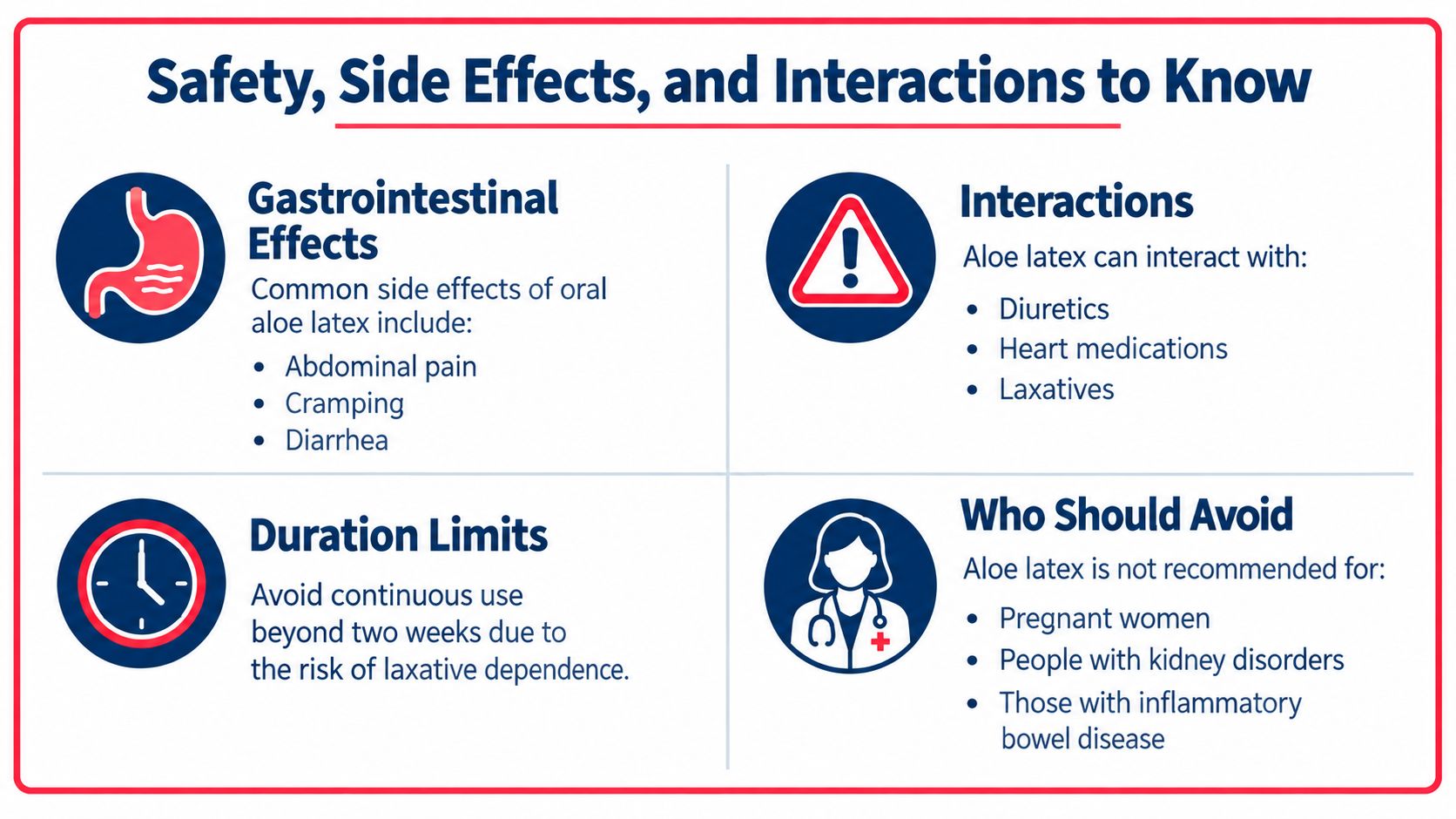
The main practical risks of oral aloe capsules are gastrointestinal effects, medication interactions, and uncertainty about long-term exposure. Oral aloe latex may cause abdominal pain, cramping, and diarrhea. Diarrhea can contribute to fluid and electrolyte losses, which may increase problems associated with cardiac glycosides such as digoxin.
The National Center for Complementary and Integrative Health's aloe guidance also describes cases of acute hepatitis associated with oral aloe-leaf extracts taken for periods ranging from three weeks to five years. That doesn't mean every inner-leaf capsule causes liver injury. It does mean unexplained liver symptoms or abnormal liver tests deserve prompt medical attention, particularly if an aloe product is part of the routine.
Why whole-leaf safety signals matter
The National Toxicology Program's two-year study of non-decolorized whole-leaf aloe extract found clear evidence of carcinogenic activity in male and female rats, based on large-intestinal tumors. Animal findings don't translate into a direct human risk estimate, but they are a serious safety signal. They help explain why decolorization and aloin control matter when a product is intended for oral use.
The UK government review of hydroxyanthracene derivatives also concludes that a health-protective daily intake couldn't be established for the relevant compounds. Its safety position on HADs supports a cautious approach to products with poorly characterized latex exposure.
Who should pause first
Get advice from a clinician or pharmacist before using oral aloe if you:
- Take digoxin or other prescription medicines: Fluid, electrolyte, and bowel changes can affect medication safety.
- Use glucose-lowering treatment: Preliminary evidence suggests aloe may lower blood glucose, so monitoring and professional guidance matter.
- Are pregnant or breastfeeding: NCCIH identifies oral aloe in gel, latex, or whole-leaf forms as potentially unsafe in these circumstances.
- Have liver or kidney disease: Existing organ conditions make unexplained adverse effects harder to assess.
- Develop cramps, diarrhea, or unusual fatigue: Stop the product and seek advice if symptoms are persistent, severe, or accompanied by signs of dehydration or liver trouble.
For a broader example of why supplement decisions should be separated from performance or body-enhancement marketing, readers may find this clinical take on glute pills useful. The same principle applies here: a product category doesn't replace an ingredient-level safety review.
Practical Questions About Daily Use and Special Populations
Can you take aloe vera capsules every day indefinitely? Don't assume so. Daily use depends on the leaf fraction, HAD or aloin control, dose, duration, and your other medicines. A product containing latex or poorly characterized whole-leaf material is a poor candidate for routine, indefinite use.
What should you do if diarrhea or cramping begins? Stop the capsule rather than treating the reaction as proof that the product is “working.” Replace lost fluids, and seek professional advice if symptoms persist, become severe, or occur alongside dizziness, weakness, or other concerning signs.
What about diabetes, liver disease, kidney disease, pregnancy, or breastfeeding? These situations call for clinician or pharmacist review before use. People taking glucose-lowering medication should be especially cautious because preliminary evidence suggests aloe may lower blood glucose. Oral aloe may be unsafe during pregnancy and breastfeeding, and people with liver or kidney conditions shouldn't use an unclear formulation without individualized guidance.
The decision framework is straightforward: leaf fraction first, HAD control second, dose and duration third, personal health context throughout. The word “aloe” is only the starting point.
Supplemynts Inc offers an online selection of dietary supplements organized by ingredient and health purpose, including digestive health and vegan supplement categories. Visit Supplemynts Inc to compare products, review available details, and choose with the same label-focused care you've applied to aloe vera capsules.







Please complete your information below to login.
Sign In
Create New Account