


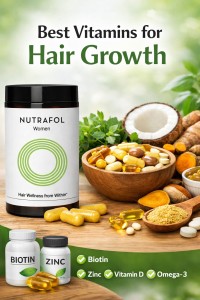
Best Vitamins for Hair Growth
If thinning, shedding, or slow growth is showing up, the right vitamins and minerals can support stronger follicles, healthier scalp balance, and better growth cycles from the inside out.
Hair health starts at the cellular level. Genetics and hormones influence growth, but nutrient gaps can quietly reduce follicle performance and increase shedding. A targeted strategy using the best vitamins for hair growth can help support keratin structure, scalp circulation, and follicle resilience.
The guide below breaks down the most important nutrients for hair growth, plus how to use them safely and effectively.
Top Vitamins and Minerals for Hair Growth
| Nutrient | Why It Matters | Common Sources |
|---|---|---|
| Biotin (Vitamin B7) | Supports keratin structure and helps maintain healthy hair quality. | Eggs, salmon, seeds, nuts |
| Vitamin D | Supports follicle cycling and may help keep growth phases healthy. | Sun exposure, fatty fish, fortified foods |
| Iron | Delivers oxygen to follicles; low iron is commonly linked to shedding. | Red meat, spinach, lentils, legumes |
| Vitamin C | Antioxidant support and collagen production; improves iron absorption. | Citrus fruits, peppers, berries |
| Zinc | Supports follicle repair and balanced scalp oil function. | Seafood, pumpkin seeds, whole grains |
| Omega-3 Fatty Acids | Supports scalp hydration and helps manage inflammation. | Salmon, sardines, walnuts, flaxseed |
Why Nutritional Deficiencies Can Trigger Hair Thinning
Hair follicles are highly active. When the body runs low on critical nutrients, hair growth can shift into a “conserve mode,” shortening growth phases and increasing shedding. Iron, vitamin D, and zinc are especially important because they support follicle metabolism, scalp balance, and oxygen delivery.
You May Benefit From Hair Growth Vitamins If:
- ✓ Increased shedding shows up during brushing or showering.
- ✓ Diet is low in protein, iron-rich foods, or healthy fats.
- ✓ Low vitamin D or iron has been flagged in lab testing.
- ✓ Stress, restrictive dieting, postpartum changes, or hormonal shifts are affecting hair density.
How to Use Hair Vitamins for Best Results
Start with food first: protein, iron-rich foods, colorful fruits and vegetables, and healthy fats. If shedding continues, consider lab testing for iron (ferritin), vitamin D, thyroid markers, and B12. Choose supplements with transparent dosing, avoid megadoses (especially vitamin A), and stay consistent for at least 90 days before judging results.
Product Option for Full-Spectrum Hair Support
For a premium, multi-ingredient approach that targets hair health from multiple angles, consider a clinically-informed nutraceutical supplement. A popular option is Nutrafol Women Hair Growth Nutraceutical Supplement (120 Capsules), designed to support follicle strength, stress-related shedding, and overall hair density as part of a consistent wellness routine.


Please complete your information below to login.
Sign In
Create New Account